



Dry bulk shipowner Star Bulk has confirmed that its vessel Star Gwyneth will be able to proceed to a repair yard under its own power after being struck by an unknown projectile while at anchor in the Arabian Gulf.
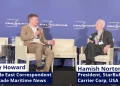
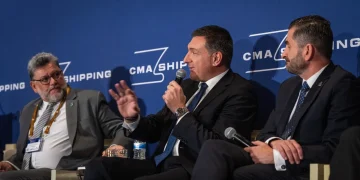
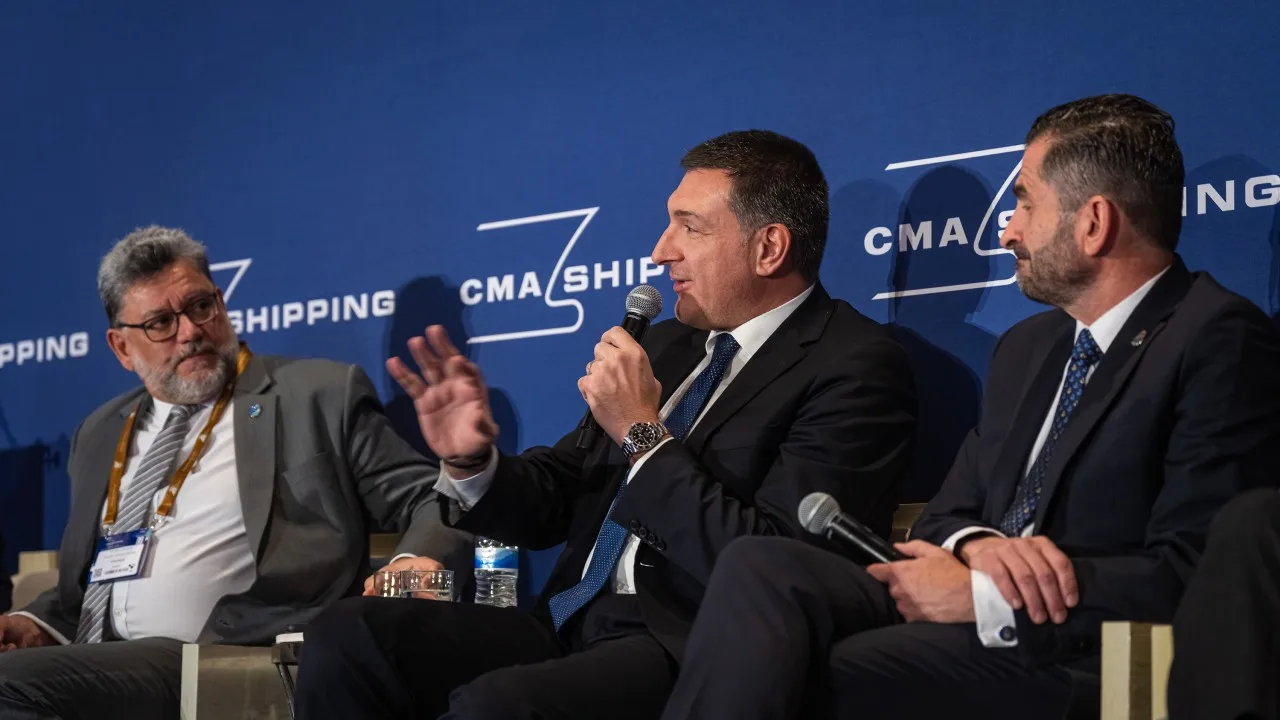
Speaking at CMA Shipping in Stamford, Connecticut, Star Bulk president Hamish Norton said the incident caused only minor structural damage and did not result in pollution, injuries or water ingress.
According to Norton, the vessel had just discharged a grain cargo and was lying at anchor when the projectile hit the first cargo hold above the waterline. He dismissed reports suggesting the ship had developed a list after the attack, saying those claims were false.
He explained that the impact created a hole well above the waterline, meaning no water entered the vessel. All crew members were safe, although he acknowledged the incident must have been deeply traumatic for those on board.
Norton said the ship will now proceed under its own power to a repair yard.
Beyond the immediate damage, he also commented on the wider market implications of the Middle East crisis for dry bulk shipping.
According to Norton, around 150 bulk carriers are currently trapped in the Persian Gulf. That represents roughly 3% of the global dry bulk fleet in vessel numbers, while the Gulf accounts for about 3% of global dry bulk trade by tonnage. However, he noted that many of the trapped vessels are smaller ships, mainly supermaxes and some panamaxes, meaning the percentage of the fleet’s total carrying capacity affected is lower than 3%.
He said that, commercially, more cargo is effectively trapped in the region than ships, which is negative for freight markets and charter rates. If the disruption continues, he warned, the broader impact on the world economy will be harmful.
At the same time, Norton said higher bunker prices are supportive for the dry bulk market, because rising fuel costs reduce the profit-maximising speed of vessels and effectively absorb more fleet capacity.
On operational policy, he explained that when hostilities began on 28 February, Star Bulk had little choice but to allow chartered vessels into the Gulf if charterers insisted. However, once the company had the legal freedom to determine routing decisions itself, it chose not to send ships into the region.
He stressed that crew safety is the overriding factor and said any crew member who does not wish to enter a war zone is entitled to request repatriation, a right the company fully respects.