Maritime Nov 9, 2026
Stop Measuring Women in Shipping and Start Recognising Their Leadership
Irene Rosberg argues that the maritime industry must move beyond gender statistics and focus on women's career progression, access to responsibility and opportunities to lead in a rapidly changing shipping sector.
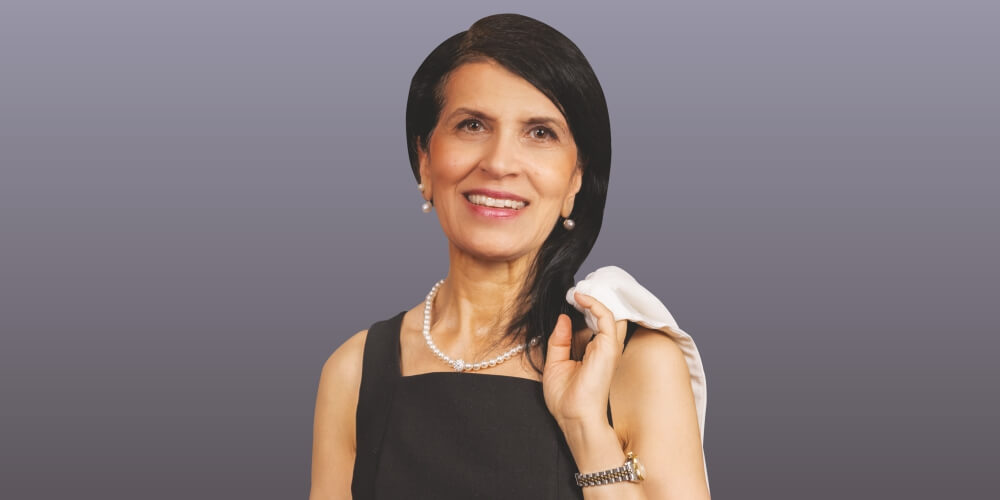
The maritime industry's efforts to improve gender diversity should no longer focus primarily on how many women enter the sector. For Irene Rosberg, Programme Director of the Executive MBA in Shipping and Logistics (The Blue MBA) at Copenhagen Business School, the more important question is whether women are given the opportunities, responsibilities and career development needed to reach senior positions.
Rosberg regularly faces questions about the number of women enrolled in the Blue MBA programme. She understands the interest behind these questions, particularly as shipping companies and industry organisations seek evidence of progress towards better gender representation. However, she believes that counting female participants provides only a limited picture of what is actually happening within the industry.
The real indicators of progress lie further along the career path. How many women are entrusted with operational responsibilities? How many move into commercial management, control budgets or take charge of ships and businesses? How many are given responsibility for profit and loss (P&L), considered for executive positions or remain in maritime careers after 10 or 15 years?
These are the questions that should increasingly shape discussions about gender equality in shipping.
Beyond the raw recruitment numbers
Getting more women into maritime careers remains an important goal, especially at sea, where women’s representation is still astonishingly low. But getting more women into the industry is not an end goal that can be used to measure success.
Rosberg says women should not be hired to fill diversity quotas or promoted to improve a company’s image in its annual report. Promotion should be based on competence, experience, talent and ambition, with equal access to opportunities necessary for the development of these qualities.
It is a mutual responsibility. Shipping companies must make sure that women have real access to education, professional development and positions of meaningful responsibility. At the same time, women have to invest in their own preparation, strengthen their expertise and be ready to assume demanding roles when the opportunity arises.
You can't make a great leader just because you're ambitious. The willingness to learn continuously, professional knowledge and the acceptance of responsibility are still indispensable. Rosberg stressed that equality of opportunity should never mean lowering professional standards. It should mean giving everyone a level playing field to meet demanding standards.
Cultural differences are still an issue
There have been some advances but structural and cultural barriers still remain in women’s advancement in shipping.
As one of the world’s most international industries, maritime operates in markets with different attitudes toward women in positions of authority. A woman heading a team, commanding a ship or negotiating a commercial deal may encounter resistance in one country that will be far less likely in another.
Such differences must be recognized but cultural traditions should not be an excuse to tolerate unequal treatment.
The shipping industry has already shown that it can develop common international expectations in areas like safety, professional competence and operational standards. Rosberg thinks the same should be applied to leadership, with professional ability, not gender, determining who gets recognition and responsibility.
Changing maritime industry changes leadership
The traditional route to senior maritime positions was usually through extensive seagoing experience. But the demands of modern shipping leadership are growing, and such backgrounds are of great value.
Today, maritime executives must increasingly balance commercial acumen with digital proficiency and awareness of artificial intelligence, cybersecurity, decarbonization, regulatory changes and geopolitical uncertainty.
This transformation is also opening up opportunities to re-think who can get to the top of the industry.
Companies should look more to whether people have the knowledge, experience and decision-making capability to run modern maritime organizations rather than primarily assessing candidates on whether they have taken a conventional career path.
The wider scope of leadership skills could therefore help in widening the pool of potential leaders, offering other pathways for professionals with different backgrounds and career experiences.
Education and professional development need to translate into real opportunities
Education is a central driver of this transition. Professional development programs can be used by maritime professionals to acquire new skills, change disciplines and keep up with commercial, technological and regulatory changes.
“Professional development is not just a women’s issue,” says Rosberg, “but these opportunities are especially important for women looking to advance in a traditionally male-dominated industry.
Men are also feeling the impact of technological innovation, shifting commercial models and increasingly demanding regulations. Women should not be treated as a separate category of maritime professional requiring different definitions of competency.
Mentoring programs and professional networks can be a valuable support, especially for those who historically have had limited access to senior role models. But these programs can’t substitute for the hands-on experience required to prepare people for leadership.
But companies need to do more than offer mentoring opportunities or applaud networking initiatives. Women need to be on the ground, in challenging assignments, in roles with real commercial exposure and decision-making authority.
Leadership is developed through responsibility. Somebody needs to be willing to give women the jobs and the authority to show what they can do.”
Measuring career progression instead of representation
For Rosberg, the maritime industry should redirect its attention towards more meaningful indicators of gender equality.
Instead of concentrating primarily on the number of women entering companies, training programmes or the wider shipping sector, organisations should examine their subsequent career development.
Relevant indicators include the number of women advancing into management, controlling budgets, taking operational responsibilities and moving into technology, finance and commercial leadership. Their inclusion in succession planning should also be monitored, alongside the number of women leaving the industry and the reasons behind their departure.
Such information would provide a much clearer understanding of whether shipping is creating genuine opportunities for women to build long-term careers.
The objective should not simply be to achieve a particular percentage of female employees. It should be to establish an industry where capable professionals receive the development, challenges and promotions necessary to progress, regardless of gender.
Shipping still needs more women, particularly in areas where they remain significantly underrepresented. But the ambition must extend beyond improving representation figures.
As Rosberg concludes, genuine progress will come when being a woman becomes one of the least remarkable things about a successful maritime leader. That is the kind of change the industry should be measuring.
END OF REPORT