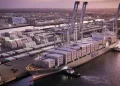




The Trump administration has made public its Maritime Action Plan (MAP), an official roadmap aimed at revitalizing the maritime industrial power of the United States and, in particular, at rebuilding a commercial shipbuilding capacity deemed strategic. The document — prepared at the inter-agency level — aligns several priorities: increasing shipyard capacities, developing the workforce, protecting the industrial base, and strengthening national resilience.
The text emphasizes a key point: the reconquest of shipbuilding is a long-term project that will require concrete mechanisms for financing, governance, and coordination. One idea stands out strongly: the possibility of relying on massive foreign investments to accelerate industrial redeployment, thru existing public mechanisms (loan guaranties, aid to shipyards, training programs) and a “bridge” strategy where the first ships would be built abroad while industrial assets are developed on American soil.
Another measure that catches the market’s attention: the proposal of a universal fee on commercial ships built outside the United States docking in American ports. The MAP mentions a model based on the imported tonnage, presented as a potentially very significant source of revenue over ten years. The political message is clear: if foreign ships benefit from access to the American market, they must contribute to the maritime recapitalization of the country.