



US exporters are increasingly finding themselves in the dark over cargo bound for the Middle East, as the war with Iran forces ocean carriers to suspend or drastically alter services into the region.
Several containers originally destined for Gulf ports are now being discharged at unexpected locations, leaving shippers and forwarders trying to determine where the cargo has landed and how it can still reach final customers.
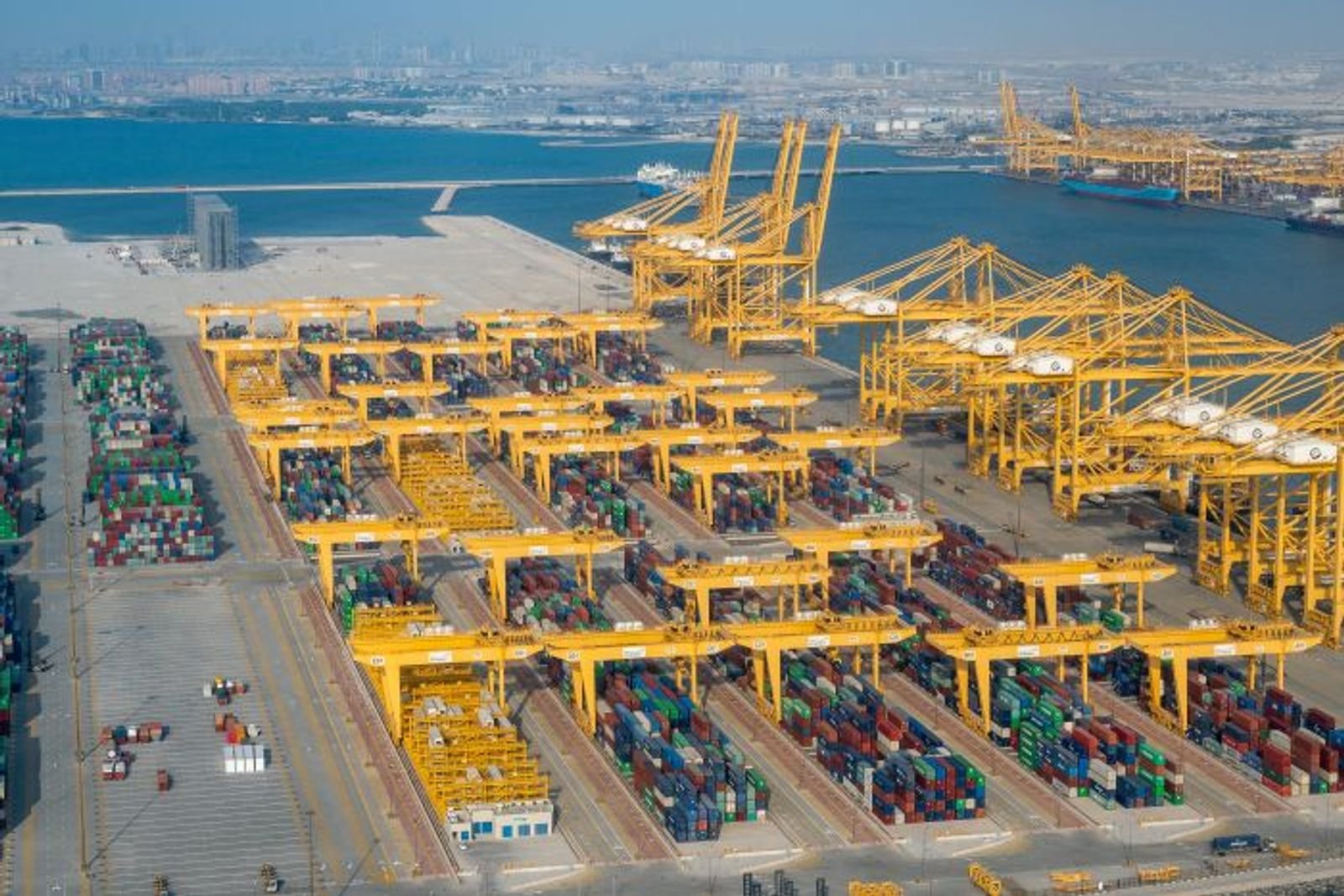
According to forwarders, Mediterranean Shipping Co. this week invoked an “end of voyage” clause on export shipments headed to Jebel Ali in Dubai. The clause allows the carrier to discharge containers at the next available port on the vessel’s rotation rather than continue to the original destination. It also comes with an additional $800 surcharge.
Stephen Zambo, president of third-party logistics provider AGL Group, said his company currently has around 70 MSC containers on the water destined for the Middle East. His team is now trying to identify where those boxes may be discharged and preparing customers for extra costs and transit delays. AGL is also monitoring three containers onboard the ONE Majesty, the vessel attacked this week in the Strait of Hormuz. Although the ship sustained some damage, it was reportedly expected to continue its scheduled voyage.
For now, exporters describe the situation more as a serious operational disruption than a full-scale supply chain breakdown. But concern is rising quickly over what happens if the conflict drags on.
Tim Avanzato, director of global logistics at paper and plastic products maker Lanca Sales, said the immediate issue is manageable because much of the cargo can still be redirected to other markets. The deeper fear, however, is the ripple effect of a prolonged war, especially through energy markets. If oil prices continue to rise, the cost impact could spread far beyond freight.
The stakes are high on this trade lane. MSC alone handles roughly half of annual US container volumes moving to the Middle East, representing around 290,000 TEUs a year, according to PIERS. Maersk and CMA CGM are the next-largest carriers on the route.
Some US exporters still have alternatives, but others are more exposed. Certain softwood products, for example, are milled specifically for Middle Eastern demand, making redirection far more difficult. “The lumber producers are now trying to figure out what to do with the product they have,” Zambo said.
Shippers are already reviewing new routing options. CMA CGM, which suspended all Middle East bookings last week, has reopened bookings for alternative ports such as Khor Fakkan in the UAE and Sohar in Oman, both outside the Strait of Hormuz. The carrier is also offering service via Jeddah in Saudi Arabia, with inland trucking solutions from there.
But Jeddah brings its own risk, as it requires transit through the Red Sea, where Iran-aligned Houthi attacks remain a concern. Some executives are instead looking at Egypt’s Port Said as a safer transshipment point at the northern end of the Suez Canal.
Beyond the immediate disruption to cargo flows, many shippers say their biggest concern is now the impact of energy inflation. Rising crude prices are already feeding into higher fuel surcharges, increased shipping costs and more expensive intermediate chemicals. If the conflict continues for weeks, what is now seen as a logistical inconvenience could turn into a much broader commercial crisis.