



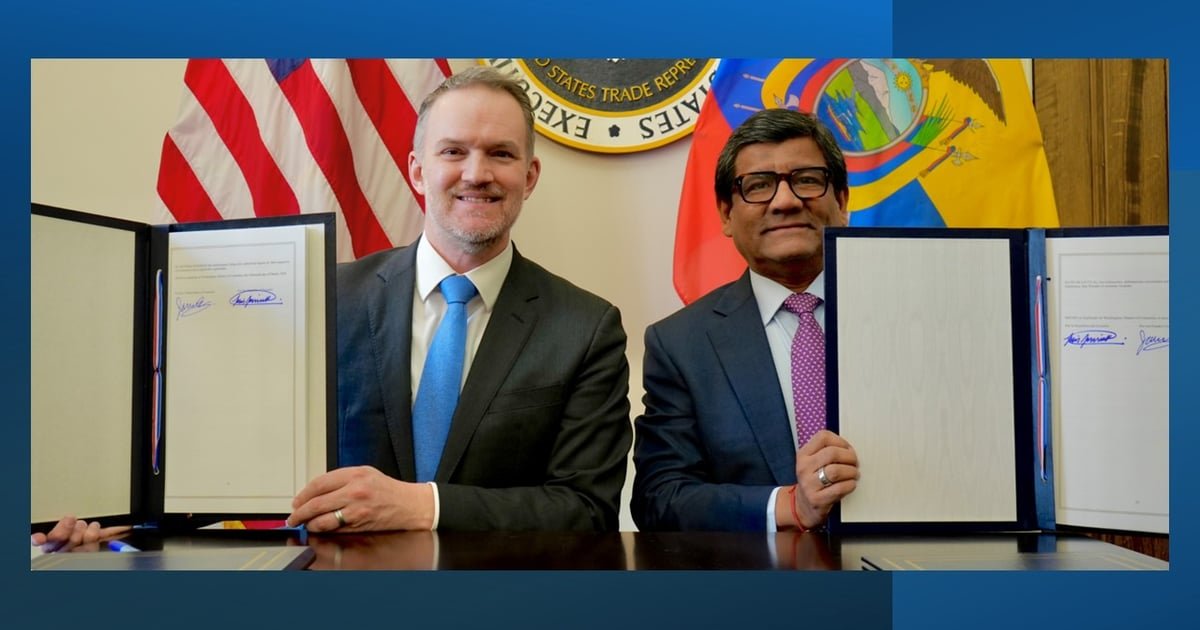
The United States and Ecuador have signed a reciprocal trade agreement, formalizing tariff and non-tariff commitments first outlined in a framework arrangement last year.
The agreement comes at a time when the United States is still reshaping its broader tariff regime, creating uncertainty for trading partners even as bilateral deals continue to move forward.
Under the new pact, the US will apply most-favored-nation duty rates to a range of Ecuadorian goods, including flowers, coffee, fruits, spices, gas and certain chemical compounds. Washington also agreed to give Ecuador preferential treatment in future tariff actions, a clause that could prove especially significant given the current volatility in US trade policy.
The timing is notable. Just last week, Washington launched two new Section 301 investigations, one of which includes Ecuador among the countries under review for forced-labor-related trade enforcement. Those probes have historically served as the basis for new tariffs.
In exchange, Ecuador agreed to reduce, remove or cap tariffs on a broad list of US-origin goods. It also committed not to apply the Andean Price Band System to US agricultural imports. Further measures include duty-free quotas for products such as corn, sorghum, ethanol, poultry, pork, dairy products and soybean oil.
Quito also pledged to improve market access for US goods more broadly by removing certain licensing requirements and restrictions, including those affecting remanufactured products. It said it would recognize US standards in several sectors, including medical devices, pharmaceuticals, motor vehicles and agricultural products.
The agreement also contains commitments on intellectual property, environmental protections and bans on imported goods made with forced labor. Ecuador further agreed to eliminate value-added and digital services taxes in areas covered by the deal.
The trade pact will take effect 30 days after both countries complete the legal procedures needed to implement it. Still, its practical significance may depend heavily on how the broader US trade landscape evolves.
With tariffs, legal disputes and new investigations all moving at once, many US trading partners are still struggling to gauge how stable Washington’s commercial commitments really are.