Maritime Nov 12, 2026
US Midterm Election Results Fuel Trade Policy Uncertainty Amid Persistently High Ocean Freight Rates
Democratic control of both chambers of Congress could reshape tariff discussions and US-China trade relations, while trans-Pacific shipping rates remain elevated despite signs of easing import demand.
The outcome of the latest US midterm elections is adding another layer of uncertainty to international trade and logistics, at a time when ocean freight markets are beginning to cool following an exceptionally prolonged peak shipping season.
The Democratic victory in both chambers of Congress creates a more complex political environment for the Trump administration, particularly regarding tariff policy, relations with China and broader international trade negotiations. At the same time, importers continue to contend with elevated container shipping costs and operational challenges across major transport corridors.
According to Freightos (NASDAQ: CRGO), a freight rate platform and contributor of SONAR market data, the political shift could expose the administration to competing economic and political pressures.
Concerns among voters about the cost of living may encourage the White House to reconsider further tariff increases and seek ways to reduce energy prices, potentially including diplomatic efforts to de-escalate the conflict in Iran. However, facing a more challenging legislative environment could also prompt President Donald Trump to rely more heavily on executive powers in trade and foreign policy matters.
When the new Congress takes office in January, Democrats will have greater oversight and budgetary authority. This could make negotiations with China more complicated, even in areas where the president retains the power to act independently.
US-China maritime tensions show signs of easing
Despite the changing political landscape, maritime relations between Washington and Beijing have recently moved toward a less confrontational approach.
Both countries have agreed to extend the suspension of reciprocal port fees until January 10, 2027. The decision temporarily protects shipping companies and cargo owners from additional punitive charges associated with the bilateral trade dispute.
Freightos considers the extension part of a broader continuation of the existing trade truce between the two economic powers. It also provides additional time for negotiations ahead of an expected meeting between Donald Trump and Chinese President Xi Jinping in China later this month.
Whether these developments will translate into a more durable trade agreement remains unclear. Discussions are increasingly influenced by issues extending beyond tariffs, including technology, national security and shipbuilding policy.
US import volumes start to fall after long peak season
The political uncertainty comes as the US container market slowly moves away from an exceptionally long period of strong import activity.
Import volumes started to build in May and continued that trend through the summer, in part as companies rushed to get merchandise into the country before potential tariff increases.
U.S. ports’ loaded imports in September totaled 2.37 million twenty-foot equivalent units (TEUs), according to the National Retail Federation (NRF). That’s a 3.4% increase from August and a 12.6% increase from last year.
Therefore, September was the third busiest month in the history of NRF’s reporting.
The group said import activity was sustained by renewed tariff pressures in the second quarter that encouraged importers to bring shipments in early, and by consumer spending that was relatively resilient in the face of inflation.
But the latest forecasts indicate a slow reduction in volumes.
NRF forecasts October imports of 2.26 million TEUs, a decrease of about 5% from September. November is predicted at 2.05 million TEUs, down around 14% from the September peak.
The organization projects total imports for the entire year to reach 26 million TEUs, a 2% increase compared to 2025.
Freight rates across Pacific still at peak season levels
“Trans-Pacific ocean freight rates are still relatively high, although import demand is beginning to moderate.
Spot rates dipped a bit this week as carriers struggled to push through the planned general rate increases. But prices are still close to those of the peak season.
A FEU (forty-foot equivalent unit) to the US West Coast currently costs around $8,200 and around $9,700 to the US East Coast.
The higher rates suggest that the decline in imports has yet to translate into a dramatic drop in trans-Pacific shipping rates.
The situation illustrates the continuing squeeze on cargo owners, particularly those shipping via major Asian export hubs and U.S. gateways.
Disruption risk remains from West Coast labor talks
Beyond ocean freight rates, supply chain operations across the United States are continuing to be hampered by inland transportation constraints.
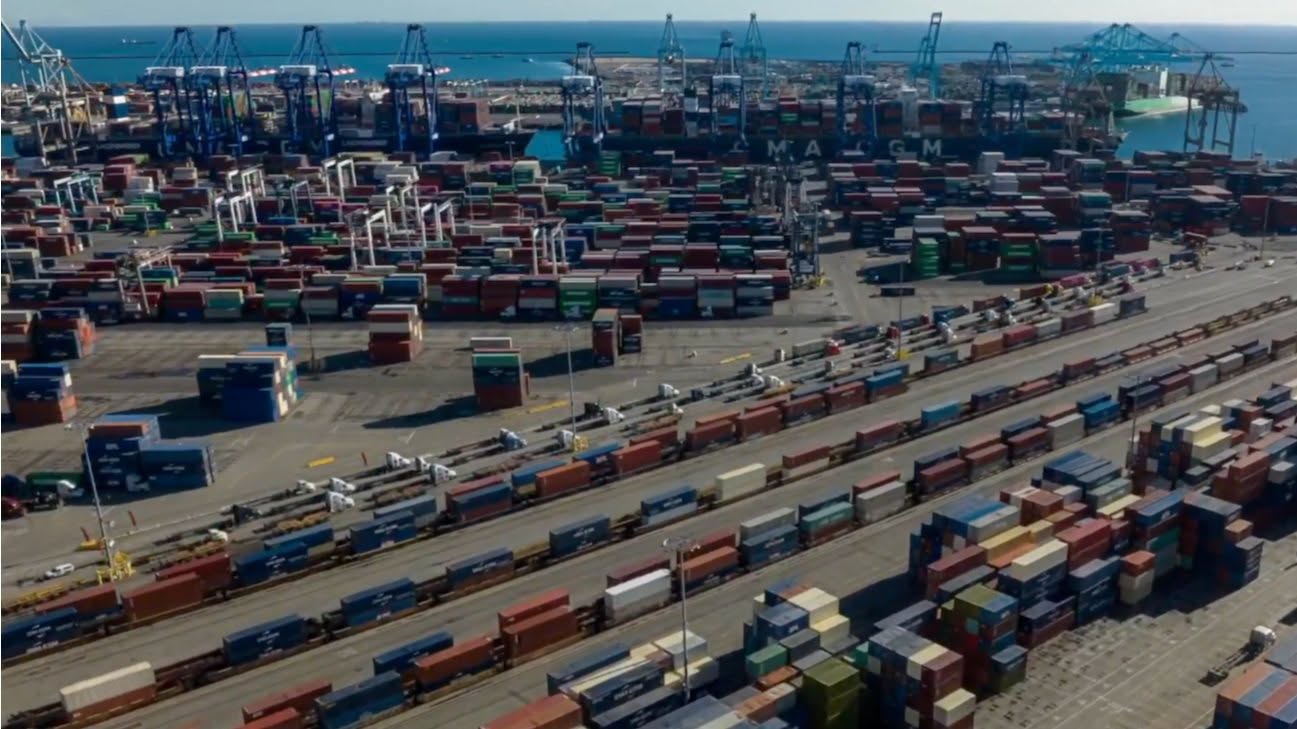
At some West Coast ports, containers have faced extended dwell times waiting for intermodal rail transportation. Even with much of the merchandise for the holiday season already in the country, delays are making it tougher to move cargo through inland distribution networks.
Labor negotiations are also adding to the uncertainty.
The International Longshore and Warehouse Union (ILWU) Local 26 representing watchmen at several container terminals in Los Angeles and Long Beach has agreed to extend its labor contact until November 20.
Negotiations are under way with employers in the Pacific Maritime Association.
A potential strike could cause more disruption at two of the nation's most important container gateways, making it harder to move goods at a time when importers are already struggling with the inland distribution of peak-season merchandise.
Asia-Europe freight markets also lose steam
The curtailment on rate increases is not limited to trans-Pacific services alone. Carriers also failed to secure planned price increases on key Asia-Europe trade lanes, Freightos said.
Rates to Northern Europe fell 5% to about $3,400 per FEU over the past week. Rates for shipments to the Mediterranean fell less sharply by 1 percent to about $4,300 per FEU.
But even with these weekly reductions, prices are still substantially higher than they were a year ago.
Rates in Northern Europe are still 50% higher than they were a year ago, while Mediterranean rates have increased by 88%.
The data shows that international container shipping is still significantly more expensive than in the same period last year, although recent market moves point to a certain moderation.
Difficult outlook for trade policy and freight costs
Political instability, high shipping prices and slow changes in import demand are providing a cocktail of factors which are making life difficult for international supply chains.
The result of the US election could influence tariff policy and the trajectory of trade relations with China, but the administration may face reduced flexibility if Democrats control Congress.
At the same time, the maritime sector is facing high freight rates despite a slowdown in carrier pricing momentum and possible labor disruptions at major US West Coast terminals.
With the global trade environment continuing to evolve, importers, shipping lines and logistics operators will therefore need to closely watch political developments and market conditions in the coming months.
END OF REPORT