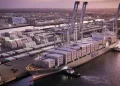
Venezuela’s container infrastructure, and particularly that of its main ports, is said to be in a state of advanced deterioration, causing major operational delays. Maritime stakeholders describe a reality where operations that should take hours now stretch over several days, a consequence of years of underinvestment, disorganization, and political tensions.
At the center of the case: a maritime services concession related to the port of Puerto Cabello, considered strategic for the country. An international consortium is now seeking to recover its investment and revive its rights, while ports are presented as a cornerstone for any attempt at economic recovery. The issue goes beyond port technology: it directly affects the country’s ability to streamline its imports, secure its exports, and stabilize its supply chains.
The subject also interests major shipowners and regular line operators, as the continuity of service depends as much on the reliability of the terminals as on regulatory stability. The coming months should clarify the trajectory: equipment upgrades, reorganization of port governance, and potential contract renegotiations. For logisticians, the message is clear: in certain markets, the “infrastructure + governance” risk is becoming as decisive a planning factor as ship capacity.