



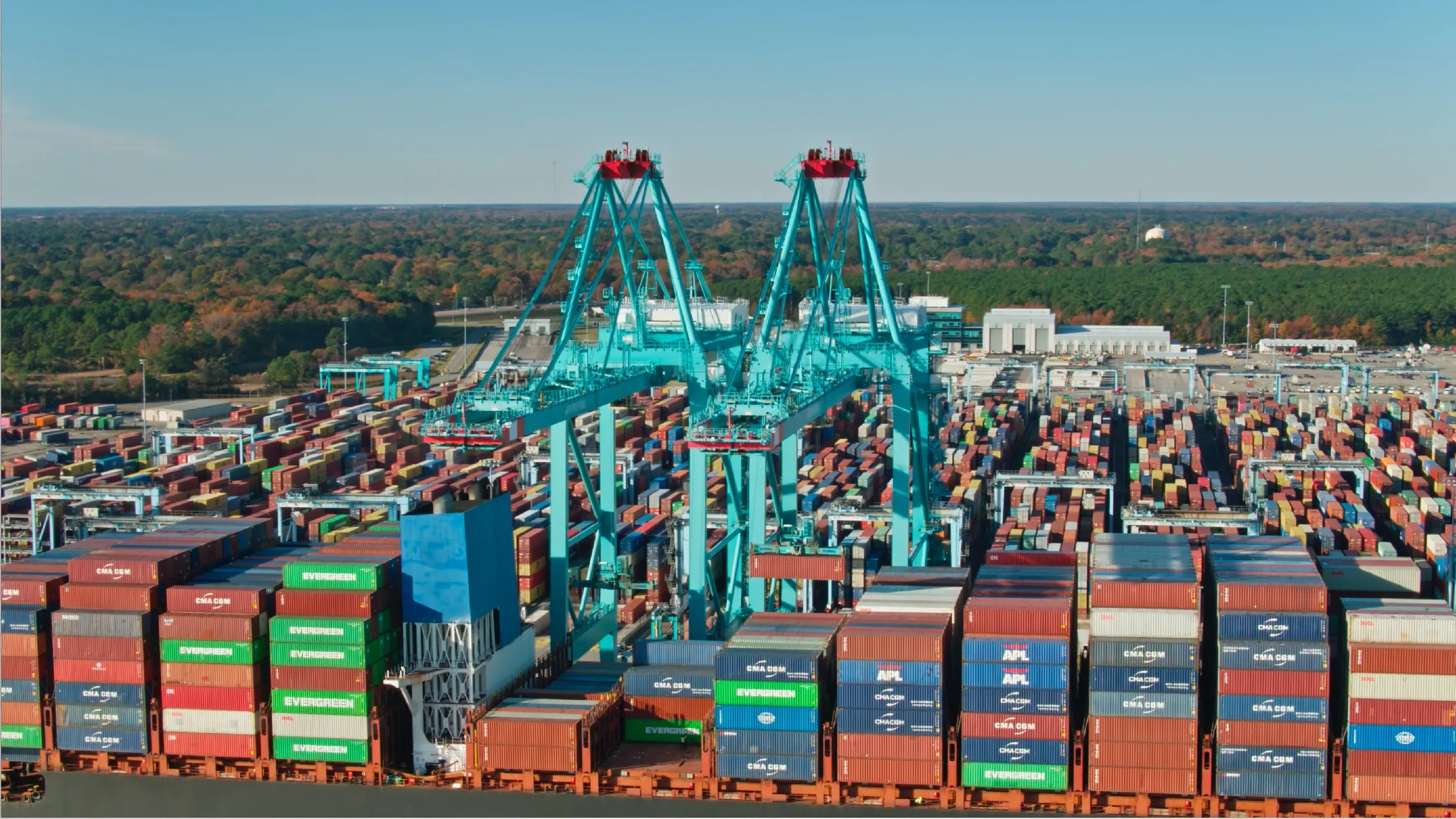
The Port of Virginia has taken a decisive step in the race for maritime competitiveness, completing a major dredging project that makes Norfolk Harbor the deepest port on the US East Coast.
With a newly achieved depth of 55 feet, the port can now accommodate ultra-large container vessels (ULCVs) with significantly higher load capacity—addressing a long-standing operational limitation faced by carriers operating along the coast.
The project, part of a broader $1.4 billion investment program launched in 2023, includes expanded rail connectivity and the construction of a new berth designed specifically for mega-ships. Once completed in 2027, the port is expected to handle up to 5.8 million TEUs and manage five large vessels simultaneously.
For ocean carriers, the implications are immediate. Deeper waters mean fuller ships—and fuller ships translate into higher profitability. Industry estimates suggest that every additional meter of draft can unlock between $3 million and $4 million in cargo capacity.
Until now, East Coast ports have struggled to fully utilize ULCVs. While vessels exceeding 14,000 TEUs regularly call at US ports, they have been operating below optimal capacity due to depth constraints. On average, ships arriving on the East Coast have been sailing at drafts significantly below their maximum.
The Virginia upgrade aims to change that dynamic.
The project also includes widening sections of the navigation channel, allowing for two-way traffic and improving vessel turnaround times by an estimated 15%.
Despite these infrastructure gains, the port’s recent performance reflects broader market challenges. Total volumes fell 4% in 2025 to 2.43 million TEUs, with both imports and exports experiencing declines.
Still, port authorities remain confident that the enhanced infrastructure will attract higher volumes over time, positioning Virginia as a key gateway for transatlantic and long-haul trade.