



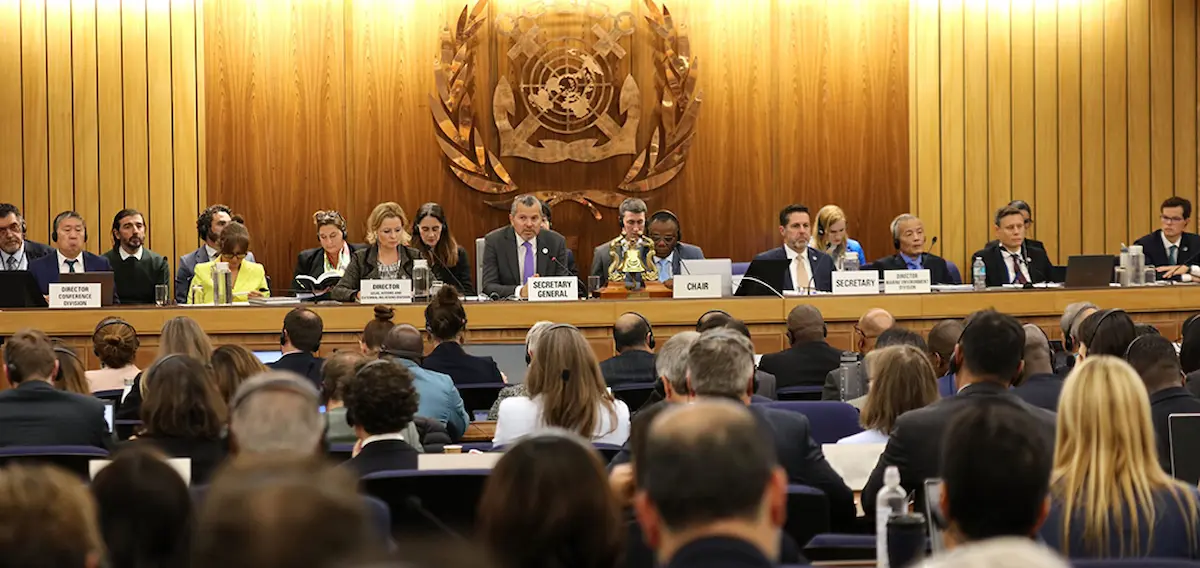
The maritime decarbonization agenda is facing a new moment of skepticism in Asia. At a high-level exchange in Singapore that brought together many of the sector’s decision-makers, one signal came thru clearly: most of the leaders present do not believe in a simple one-year slip on the International Maritime Organization’s future “Net Zero” framework. Asked about the likelihood of a limited delay, the dominant perception was that a longer postponement is now the most credible scenario.
The debate is not just about technology: it is also political. The discussions have mixed geopolitics, sanctions, shipbuilding, and climate regulations. On the environmental front, one point crystallizes doubts: the financing and collection mechanism associated with the decarbonization trajectory. Without consensus among influential states, the framework risks being significantly reshaped — or postponed — before effective adoption.
For shipowners, charterers, and shippers, the stakes are twofold. On one hand, regulatory uncertainty complicates investment decisions (alternative fuels, retrofits, new orders). On the other hand, it delays the standardization of the rules of the game, which maintains a fragmentation of approaches between regions.
This climate of caution does not mean a halt to “green” projects, but rather a rise in pragmatism: companies are looking for trajectories compatible with multiple scenarios, while monitoring the IMO calendar. In clear terms, the message sent from Singapore is simple: the transition continues, but the international roadmap could take longer than expected — and no one wants to bet on a single date.
- Latest
- Trending

ADVERTISEMENT