



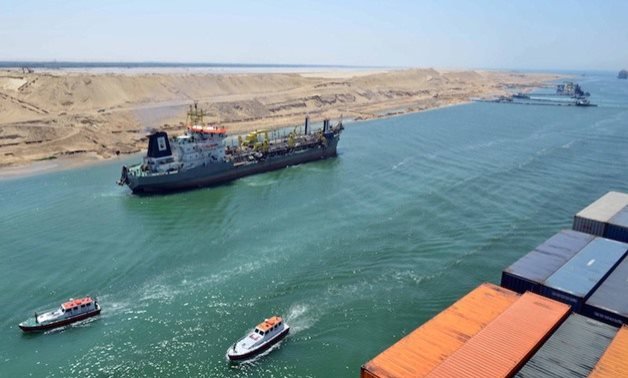
Prospects of a meaningful return of container shipping services to the Red Sea and Suez Canal in 2026 have been dealt a severe blow following fresh military strikes in the Middle East.
Earlier this year, carriers had cautiously begun reassessing the viability of Suez Canal transits after a relative easing of Houthi missile attacks in the Red Sea. However, renewed hostilities involving the United States, Israel and Iran have reversed that fragile progress.
Peter Sand, chief analyst at Xeneta, warned that the latest escalation has “shattered” expectations of a large-scale return to the Red Sea corridor next year. According to Sand, any renewed Houthi activity would compel carriers to prioritise crew, vessel and cargo safety over shorter sailing distances.
“Plans for a phased return in 2026 will remain on hold until the security outlook stabilises,” he said, noting that several operators have already taken pre-emptive action.
CMA CGM recently reversed an earlier decision to reinstate selected services — including FAL1, FAL3 and MEX — through the Red Sea, citing a complex and uncertain international environment. Maersk has similarly rerouted its ME11 and MECL services via the Cape of Good Hope due to security concerns.
The implications extend beyond operational routing decisions. Longer voyages around southern Africa effectively absorb approximately 2.5 million TEU of global container shipping capacity, increasing fleet utilisation and tightening supply.
A large-scale return to Suez would have released that capacity back into the market, shortened transit times and potentially triggered a sharp correction in freight rates. Instead, the continued diversion around the Cape is expected to moderate the pace of rate declines.
“With a broad return now unlikely in 2026, freight rates on major trades may continue to soften, but not as dramatically as previously forecast,” Sand explained.
The prolonged diversions have also had knock-on effects across other transport modes. Airfreight — particularly air-sea combinations — initially benefited from ocean carriers’ extended transit times and network restructuring. While that advantage has diminished over time, certain time-sensitive segments have continued to rely on faster alternatives.
The latest geopolitical developments reinforce the vulnerability of global supply chains to regional instability. For container lines, the calculus remains clear: operational resilience and crew safety outweigh the commercial benefits of shorter Suez routings.
Until the security situation improves, the Cape of Good Hope is set to remain the default corridor for east–west container trades.







