



Shippers weighing how to move ocean freight disrupted by the Middle East war are expected to make key routing decisions by early next week, DHL CEO Tobias Meyer said on Thursday.
Meyer noted DHL is beginning to see companies consider offloading Asia export cargo at ports in the Indian subcontinent for onward movement into the Gulf, though he stressed it has not yet become a clear trend. For now, many customers are taking a “wait-and-see” stance that DHL expects to last “a couple of days, not a couple of weeks,” he said during the German group’s 2025 results briefing.
While Meyer did not name specific ports, Sri Lanka’s ports authority has been promoting Colombo as a potential hub, and some forwarders have also highlighted Kenya’s Mombasa as an alternative transshipment option for Middle East-bound cargo.
Meyer warned that food supplies could become especially critical if the ocean freight situation does not improve “in the coming days,” emphasizing that the region is not self-sufficient in food. He said cargo owners could fly urgent goods and supplement that with long-distance trucking, particularly from Saudi Arabia.
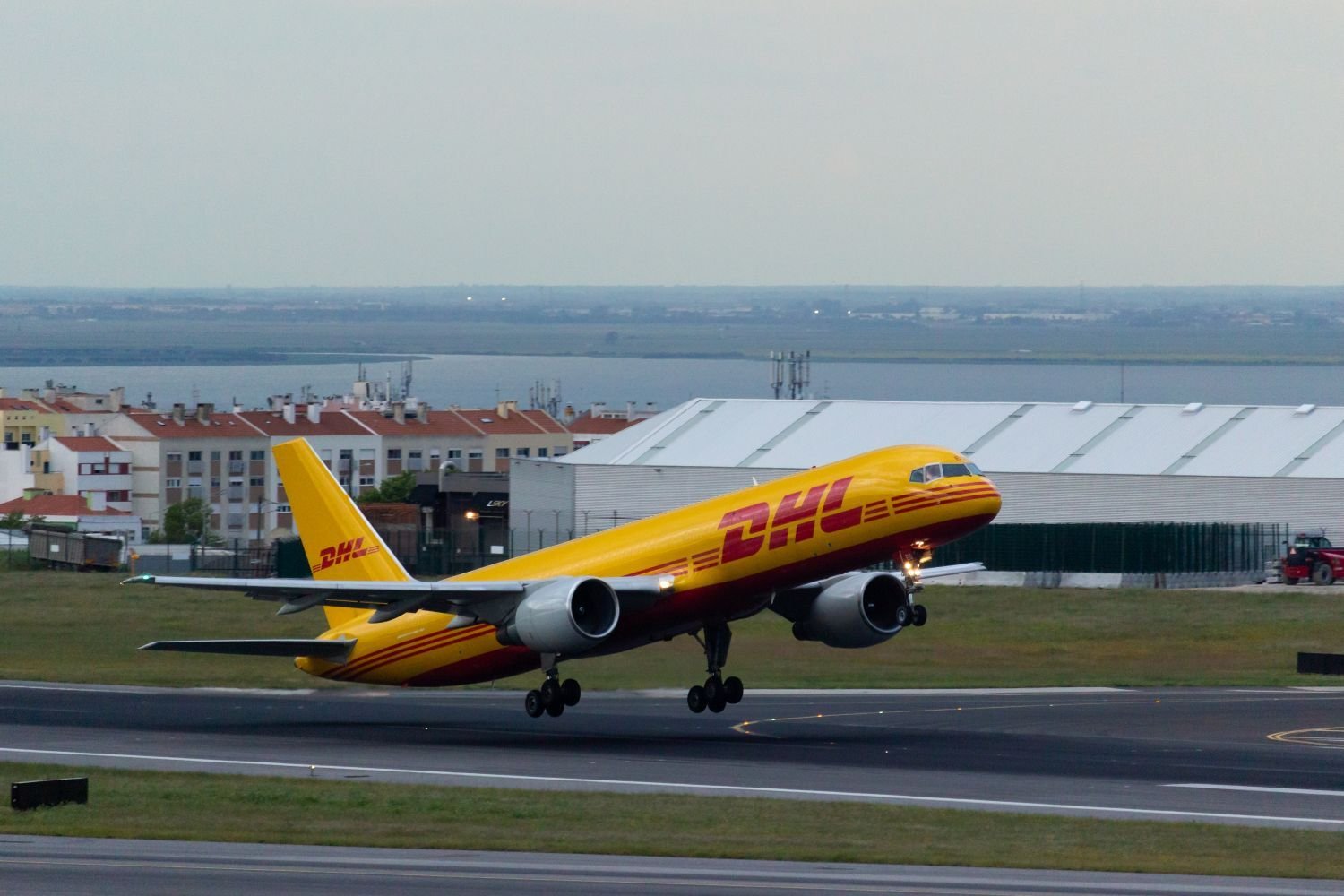
On the air side, Meyer pointed to a modest improvement, with operators such as DHL able to fly aircraft out of the region. That could increase available capacity even as regional airspace remains tightly controlled and only a limited number of flights are permitted.
His comments came as ocean carriers announced a wave of contingency measures linked to the war. Hapag-Lloyd told customers with cargo in transit it would offer options including changing destination to an alternative port or returning the cargo to the original loading port. If customers provide no instructions, the carrier said it will declare an “end of voyage” and store the cargo at an alternative location.
CMA CGM said vessels scheduled to call at Bahrain, Kuwait, Oman, the UAE and Saudi Arabia would be diverted to other ports under force majeure provisions. Customers would then be asked to provide onward instructions, with options including delivery by road or rail or an agreed change to an alternative port.
Maersk said most ports in the region remain open, including Jebel Ali and Abu Dhabi in the UAE, Doha in Qatar, Dammam and Jubail in Saudi Arabia, and Sohar and Salalah in Oman. Bahrain is also open, but with security checks. Even so, Maersk, Hapag-Lloyd and CMA CGM have stopped accepting bookings for all but essential freight such as food and medicine.
Meyer expects disruption to ocean freight to lift demand for DHL’s air cargo and ground services as cargo owners switch modes to move critical shipments. “We typically benefit from such turmoil… historically, that’s the case,” he said.
DHL’s 2025 performance: pressure on Express and Global Forwarding/Freight
Meyer said 2026 is likely to remain “volatile” after a mixed 2025 for DHL’s two biggest divisions. In Express, uncertainty related to U.S. tariffs drove a 26% drop in the weight of daily express shipments to the U.S., while shipments to the rest of the world remained stable. Express operating profit rose 2.5% to $3.7 billion in 2025, while revenue fell 3% to $28.3 billion. In the fourth quarter, operating profit was flat year on year, while revenue declined 4% to $7.6 billion.
Global Forwarding/Freight was hit by lower freight rates, with ocean and air volumes largely unchanged at 3.3 million TEUs and 1.8 million metric tons. Operating profit slumped 30% to $878 million, while revenue declined 5% to $21.6 billion.