



Pilbara Ports has signed a memorandum of understanding with Yara Pilbara as it moves toward developing a low-carbon ammonia bunkering hub in Western Australia.
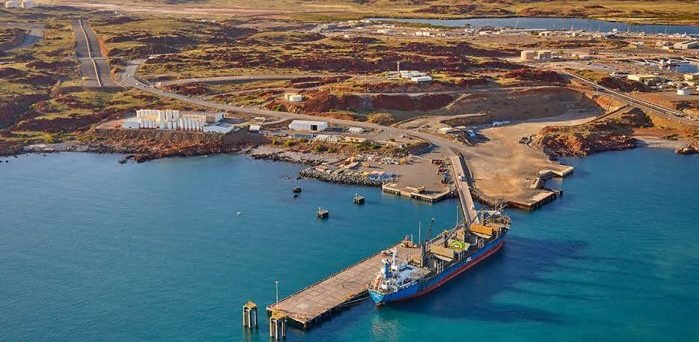
Pilbara Ports operates Port Hedland—one of the world’s largest dry bulk shipping facilities. The MoU covers government and stakeholder advocacy, developing a training program for safe ammonia handling, and planning the necessary fueling infrastructure at the ports of Dampier and Hedland.
Pilbara Ports CEO Samuel McSkimming said the “green iron corridor” between the Pilbara and East Asia has the scale, stable demand, port infrastructure and risk management experience to support major investment in maritime decarbonisation. He also pointed to the region’s renewable resources, carbon capture and storage potential, and ammonia-based industrial base as an advantage for green fuel production.
Fortescue, which has major operations in the region, is among the companies pushing ammonia as a marine fuel. Pilbara Ports noted bunkering at Port Hedland and Dampier would change operational patterns, as ships could take on fuel at the start of an outbound leg to cover an entire round voyage. The presence of Yara Pilbara’s ammonia production also changes supply dynamics on the trade.
Yara Pilbara COO Laurent Trost said the company is committed to working with the port to decarbonise shipping routes and described the vision of the Pilbara as a bunkering hub as highly promising. Pilbara Ports’ longer-term ambition is for 100% of bulk export vessels departing the Pilbara to run on low-carbon fuels.