



Dubai-based ship recycling specialist GMS has called on the European Union to approve Indian ship recycling yards under the EU Ship Recycling Regulation, arguing that political hesitation is preventing sustainable facilities from operating in the global market.
Despite India being the world’s largest ship recycling nation, not a single Indian yard currently appears on the EU’s approved list of recycling facilities.
This is despite 110 Indian yards already holding Hong Kong Convention Statements of Compliance issued by classification societies that are members of the International Association of Classification Societies.
GMS said the situation reflects what it described as a lack of political will within the European Union rather than deficiencies in the facilities themselves.
Indian yards have submitted at least 35 formal applications to the European Commission and have undergone multiple inspections and audits over the past decade. Yet none have been granted EU approval.
India dominates the global ship recycling sector alongside Bangladesh and Pakistan, with Turkey ranking a distant fourth in global dismantling capacity.
According to GMS, some recycling facilities in Europe rely on highly energy-intensive steel processing methods that are actually less sustainable than the techniques used on the Indian subcontinent.
Steel recovered from dismantled ships in Europe is often melted down before being exported as scrap to Asia. In 2023 alone, Europe exported 19.2 million tonnes of scrap metal.
The energy required to melt steel and transport it overseas significantly increases the carbon footprint compared with recycling practices in South Asia.
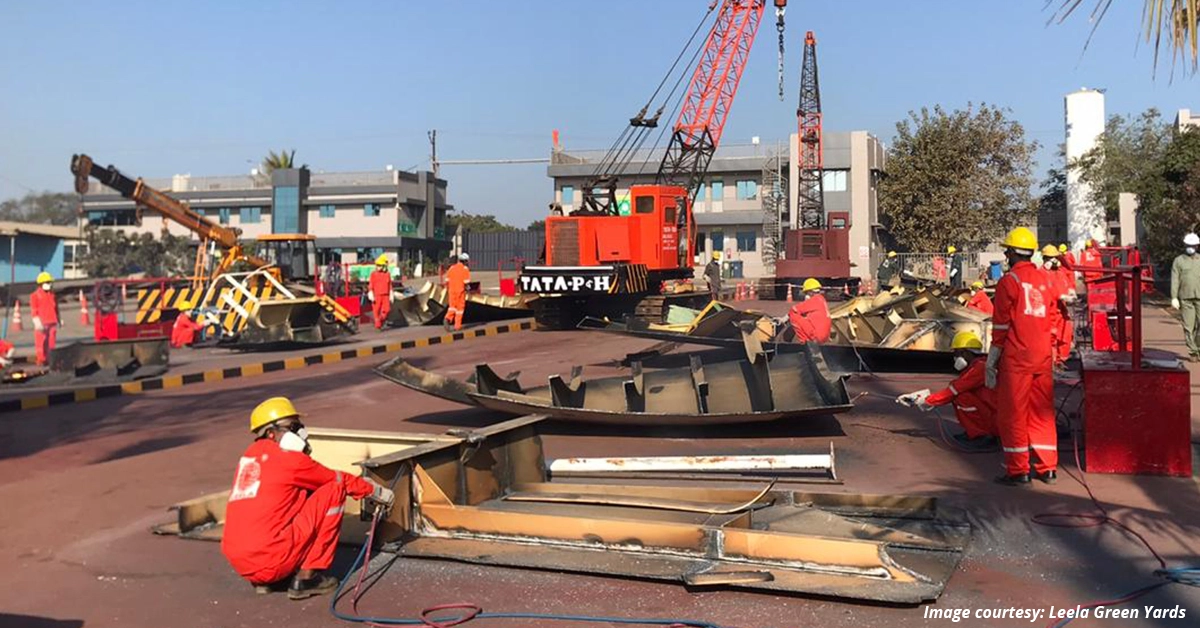
GMS said that approximately 75% of steel recovered from ships dismantled in India’s Alang recycling yards is directly re-rolled into plates and beams without energy-intensive melting processes. This approach reduces carbon emissions by around 58% compared with producing steel from raw materials.
Indian recycling yards are also able to recover more than 98% of materials from dismantled vessels.
Another complication is the lack of alignment between the Hong Kong Convention on ship recycling and the Basel Convention governing hazardous waste transport.
GMS believes this conflict could be resolved through facility-level assessments rather than blanket geographic exclusions.
Industry analysts warn that the shortage of recycling capacity could become a serious issue in the coming decade. According to BIMCO estimates, approximately 15,000 ships will need to be recycled by 2032.
For comparison, India — the largest ship dismantling country — has recycled around 8,500 ships over the past forty years.