



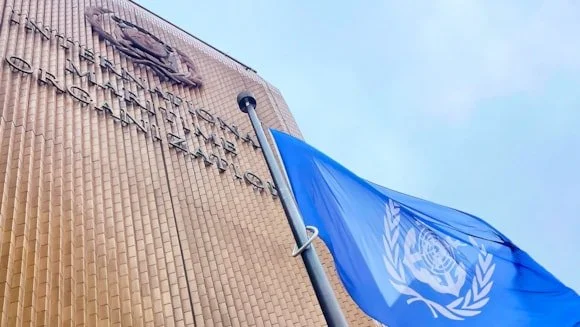
The International Maritime Organization has convened an extraordinary two-day IMO Council meeting to address the growing risks facing seafarers trapped by the escalating conflict in the Arabian Gulf.
The emergency talks come as the closure of the Strait of Hormuz continues to disrupt commercial shipping and limit access to ports across the region. Efforts led by Donald Trump to assemble a coalition of allies and naval powers to help reopen the corridor reportedly received only a muted response from European and Asian governments, leaving shipowners and crews facing prolonged uncertainty.
IMO secretary-general Arsenio Dominguez has asked shipping companies with vessels caught in the conflict to provide detailed information on the condition of their crews, including access to food, water and other basic supplies, so that aid can be prioritized where the need is most urgent.
Speaking to the Financial Times, Dominguez said the situation was increasingly concerning because vessels were no longer able to operate freely in the Strait or across the Gulf. With some port facilities also coming under attack, access to supplies was becoming more difficult and, over time, ships could begin running short not only of provisions for crews but also of fuel needed to continue operating safely.
The IMO has cautioned ship managers against taking unnecessary risks by attempting to force a departure from the region while the security situation remains unstable. Dominguez argued that military escorts may offer short-term assistance, but they do not provide a sustainable or fully reliable solution in a theatre where threats can come from underwater systems, surface vessels and drones.
A coalition of 20 shipping organisations, including Intertanko, Intercargo, the International Chamber of Shipping (ICS), Bimco, the Nautical Institute and WISTA, has submitted an agenda paper to the meeting outlining practical steps for governments and regulators.
According to Intertanko managing director Tim Wilkins, the associations are calling for coordinated action in three main areas.
The first is seafarer welfare: facilitating crew changes, ensuring ships can maintain communications with families, and guaranteeing access to sufficient stores. The second is safety of navigation: providing consistent guidance to vessels transiting the area, particularly in light of GNSS jamming, crew fatigue and the authority of the master. The third is coordinated security, with a clear message that attacks on civilian ships must stop and that a global crisis requires a globally coordinated response.
The industry paper warns that seafarers in the area are facing extreme threats to their physical safety and urges the IMO Council to consider the most effective way to advance the proposed measures.
Separately, another submission backed by a large group of member states asks the IMO Council to reaffirm the importance of seafarer safety and welfare, condemn Iran’s attacks on vessels and regional states, and demand an end to actions aimed at closing the Strait of Hormuz to commercial shipping.
Iran has presented a sharply different position. In its own submission, Tehran argues that the deterioration in maritime security is a direct result of US and Israeli attacks on Iran and says the current shipping disruption cannot be separated from that underlying cause.
Whatever the diplomatic framing, the practical reality for crews remains the same: a worsening security environment, shrinking freedom of movement and rising urgency for international coordination.