



DP World is reshaping the way it presents its marine services business, reflecting how far the group has moved beyond its origins as a ports and terminals operator.
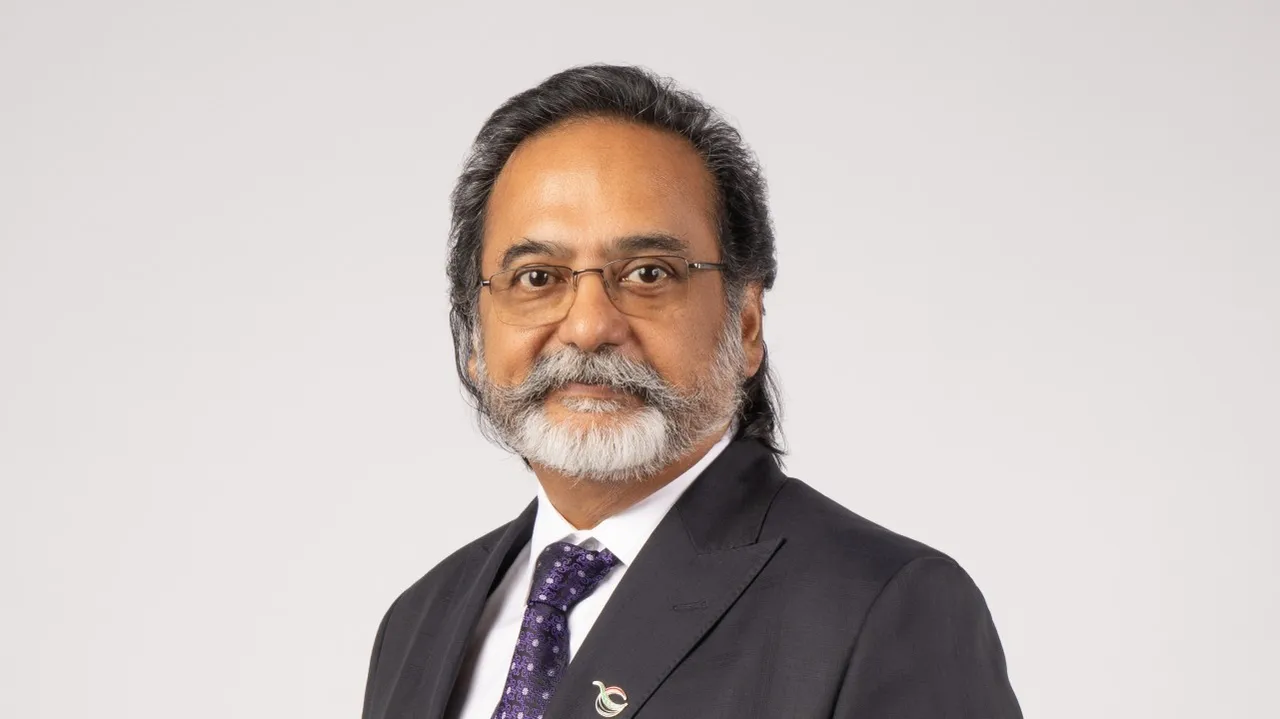
While port infrastructure remains the foundation of the company, DP World today has a much broader footprint across logistics, marine services and even trade finance. That evolution was at the centre of a recent Seatrade Maritime News podcast interview with Ganesh Raj, global chief operating officer of marine services at DP World, who outlined how the group has built a business spanning container feeders, multimodal transport, port services and specialised vessels.
The scale of that marine services platform is significant. DP World ranks among the world’s top 15 container carriers, connects more than 200 ports, moves over 2m teu annually and records more than 16,000 port calls.
Raj said the strategic question for the company was whether a pure-play focus on ports and terminals would remain relevant in the long term. The answer, he explained, was no, prompting a broader investment push into businesses closely connected to ports and terminal operations.
That expansion has included a series of acquisitions of established names such as Unifeeder, P&O Maritime Logistics and P&O Ferrymasters. In December, DP World took the next step by rebranding those businesses respectively as DP World Shipping Solutions, DP World Maritime Solutions and DP World Multimodal Solutions.
Raj said the thinking behind the rebrand was rooted in the group’s wider ambition to solve customer supply chain challenges through a more integrated offer. Bringing the businesses under the DP World name, he said, makes it easier to present that wider capability to customers instead of offering a fragmented set of brands that may not have been clearly associated with DP World.
He acknowledged that the acquired brands carried real value, but said the company concluded that a comprehensive DP World-branded proposition would serve customers better than maintaining several separate identities.
Within that broader structure, DP World Shipping Solutions remains primarily focused on container traffic and on linking hub ports with satellite ports — a model that Raj said differs from that of traditional global liner operators such as Maersk. He described the company’s development as a progression from port and terminal operations into marine network operations able to connect hubs and secondary ports through its own services.
As the business expands geographically, Raj said the distinction between feeder and mainline operations is becoming less clear. Services stretching from China to the Middle East are one example of how trade flows are changing and how DP World is adapting accordingly. China and wider Asia remain key growth markets for the business.
That evolution is also visible in vessel deployment. Where the company once operated ships in the 2,500 teu range on certain trades, it is now using vessels of around 8,500 teu on the same sectors.
Raj argued that it no longer makes sense to draw rigid lines between feeder and mainline segments. In a market shaped by rapidly changing trade economics, he said, companies like DP World need to provide the solutions customers now expect.
Looking ahead, he added that DP World Shipping Solutions also wants to reduce its dependence on the charter market by building a more balanced fleet mix between owned and chartered assets.