



A month after the first US and Israeli strikes on Iran, the maritime fallout has become one of the most serious disruptions the shipping industry has faced in decades.
The Strait of Hormuz, one of the world’s most critical chokepoints, has effectively become a frontline zone. The conflict has left thousands of ships trapped, raised war risk premiums to extreme levels and exposed commercial crews to direct attack, debris strikes and prolonged uncertainty.
The significance of Hormuz is hard to overstate. Roughly 20% of global oil and gas flows normally pass through the waterway, along with about 10% of world container throughput, in addition to major volumes of fertiliser exports and food imports for the region.
Although Iran cannot legally close the strait unilaterally, the security threat quickly became real enough to stop normal traffic. Within hours of the first strikes on 28 February, warnings circulated on VHF Channel 16 claiming the waterway was closed, and many vessels immediately chose to turn back into the Arabian Gulf or wait in the Gulf of Oman rather than attempt a transit.
Ports and ships were soon under pressure. By the second day of the conflict, strikes had been reported on Jebel Ali in Dubai and Duqm in Oman. The first known attack on a merchant vessel followed shortly afterwards, when the 11,622 dwt tanker Skylight was struck off Oman, leaving four crew injured, one dead and one seafarer missing.
According to the International Maritime Organization, there have so far been 18 confirmed incidents involving ships attacked or hit in the region between 1 and 19 March. Nine seafarers are known to have died, four remain missing and several others have been seriously injured.
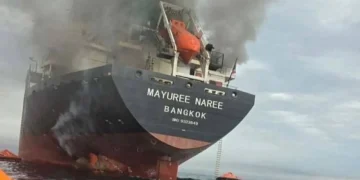
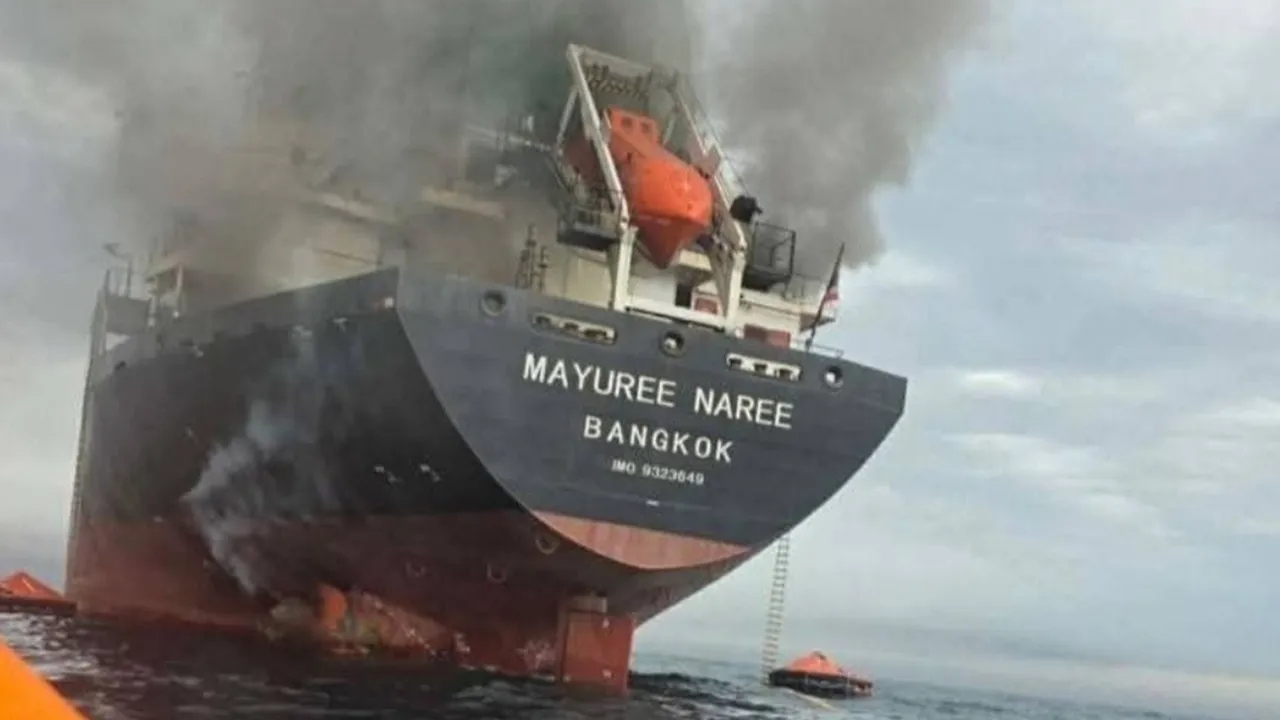
The danger has made regular transits through Hormuz all but impossible for most operators. Combined with sharply rising war risk insurance premiums, the threat has left only a handful of ships willing to attempt the passage, some with serious consequences, such as the Thai-flagged bulker Mayuree Naree.
As a result, an estimated 1,000 internationally trading vessels and around 20,000 seafarers are stranded across the Gulf region. Some ships have been hit directly, while others have been affected by debris from missile defence systems. For crews, the situation has brought not only physical danger but mounting stress, compounded by reports of ships running short of water, food and fuel.
Over the past week, there have been signs of limited change. No new commercial vessel attacks have been confirmed since 19 March, and Iranian authorities have stated that the Strait of Hormuz is open to “non-hostile ships”, provided they do not support aggression against Iran and comply with declared security rules.
In practice, however, the approval process is highly uncertain. Ships reportedly need authorisation from Iranian authorities and may face a $2m toll payable in Chinese yuan or cryptocurrency. Some governments, including China, India, Pakistan, Malaysia and Thailand, have also engaged in bilateral talks with Iran to secure passage for ships linked to their countries.
Even then, the issue of nationality is rarely straightforward. A Marshall Islands-flagged ship, for example, may be beneficially owned in the US or Greece, or may be carrying cargo linked to countries Iran considers hostile. For many owners, the uncertainty alone makes the risk too high.
That complexity was illustrated when two Hong Kong-flagged Cosco vessels — CSCL Indian Ocean and CSCL Arctic Ocean — attempted to leave the Gulf through Hormuz on Friday, only to be turned back by the Islamic Revolutionary Guard Corps, along with another container ship. Cosco has since reopened bookings into Gulf markets, but is relying on landbridge routes via Khor Fakkan and Fujairah across the UAE instead of direct transits through the strait.
War risk cover remains another major obstacle. Even if Iran were to approve a vessel’s passage, insurers may still view the regional risk as critical. The Joint Maritime Information Center continues to classify the area at its highest threat level, and brokers warn that any toll payment to a sanctioned Iranian entity could potentially invalidate insurance coverage.
As of now, US President Donald Trump has extended the deadline for Iran to fully reopen Hormuz until 7 April, warning that the US could strike Iranian energy infrastructure again if the passage does not reopen. While Trump has said ceasefire talks are progressing, Iranian officials have publicly denied that negotiations are underway.
In the longer term, a multinational secure corridor for commercial shipping has been suggested, similar in concept to arrangements seen in the Black Sea during the Ukraine conflict. But unless a ceasefire is reached, such a plan would remain extremely dangerous.
Veterans of the tanker wars of the 1980s know that even naval escort offers limited protection in such an environment. As Arjun Vikram-Singh, founder and chief executive of Quantum BSO, recalled from firsthand experience aboard the VLCC Caribbean Breeze when it was struck in 1987, no government can truly guarantee safe transit through a strait so exposed to short-range missile and drone attacks.