



Questions are emerging over the effectiveness of the US blockade on traffic to and from Iranian ports, as open-source tracking data appears to challenge official claims that no vessels have broken through.
The blockade came into force at 14:00 UTC on 13 April and appears to be enforced from the Arabian Sea rather than directly along Iran’s coastline. Since then, multiple vessels have reportedly turned around or stopped in the Gulf of Oman as they approached the area.
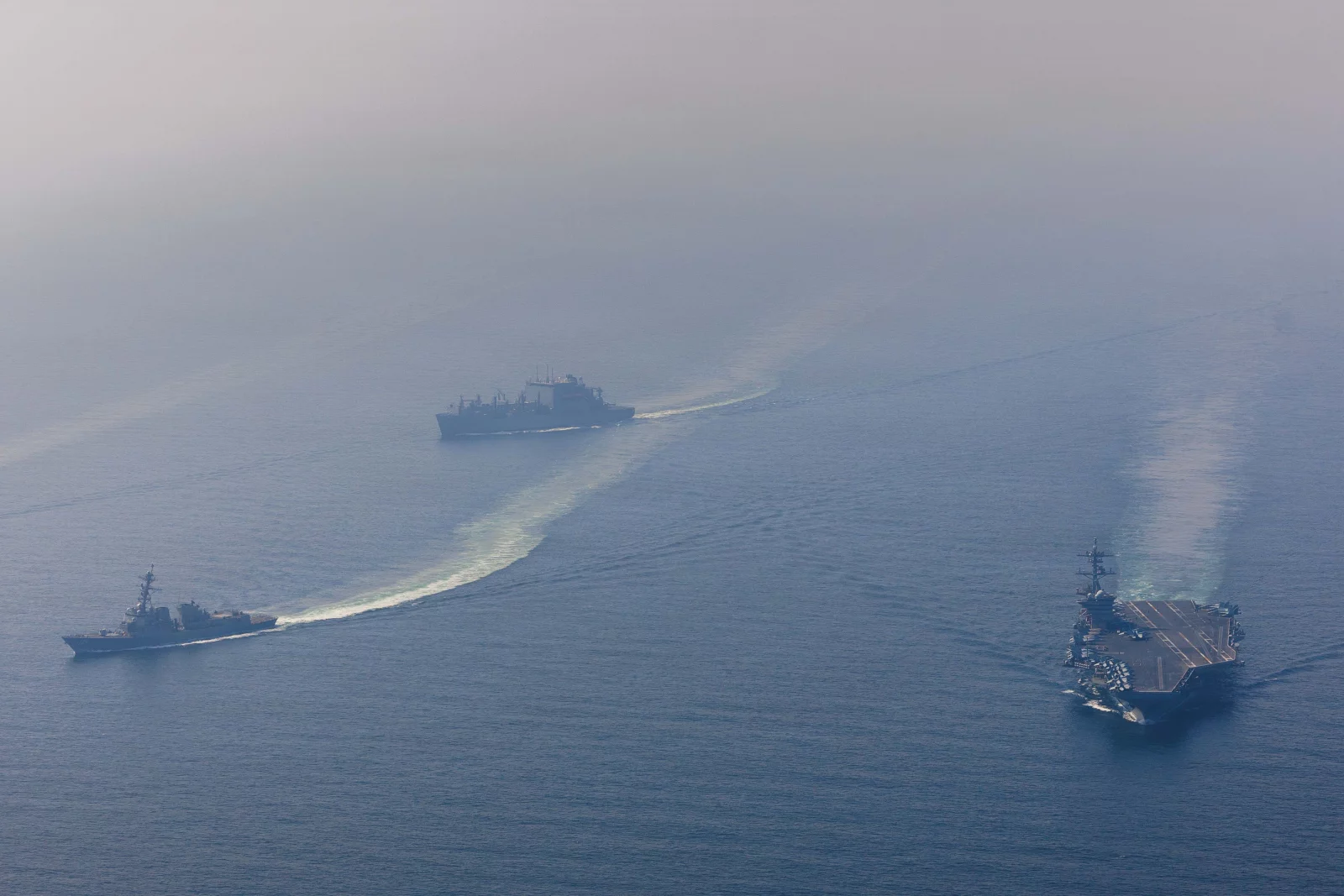
US Central Command said that within the first 52 hours of enforcement, ten vessels had been turned back and that no ships had successfully crossed the blockade line. In a separate post on 16 April, Centcom added that an Iranian-flagged cargo vessel had attempted to evade the blockade after departing Bandar Abbas, but was redirected by the guided-missile destroyer USS Spruance and sent back toward Iran.
However, AIS data from Pole Star Global indicates that at least three vessels — Iranian-flagged container ships Kashan and Golbon, and Comoros-flagged cargo ship Blue Sky 4 — tracked close to the Iranian coastline east of the Strait of Hormuz in what appeared to be an effort to avoid the blockade. All three later stopped in Iranian waters near Chabahar.
Kashan also briefly entered Pakistan’s exclusive economic zone before turning back, a movement that seems broadly consistent with Centcom’s description of an attempted evasion.
At the same time, TankerTracker.com said satellite imagery showed several additional tankers had already made it past the blockade and were inside Iranian waters. One of those tankers, it said, was Iranian-owned. The group also claimed that several sanctions-compliant tankers heading to Iraq had switched off their AIS transponders.
What is clear is that overall traffic through the Strait of Hormuz has fallen again after a short-lived improvement in early April. According to AXSMarine, the ceasefire earlier this month had pushed daily crossings up to 17 on 12 April, but the introduction of the US counter-blockade saw those figures drop back into single digits within 24 hours.
The combination of US blockade measures and Iranian restrictions in the Strait appears to have convinced many owners that avoiding transit altogether is the safest option for now.
One vessel, the Bahamas-flagged chemical tanker Nobler, owned by Qingdao Shengxiang Shipping, did transit the Strait on 15 April after departing Sharjah and reportedly bound for Sohar in Oman.