



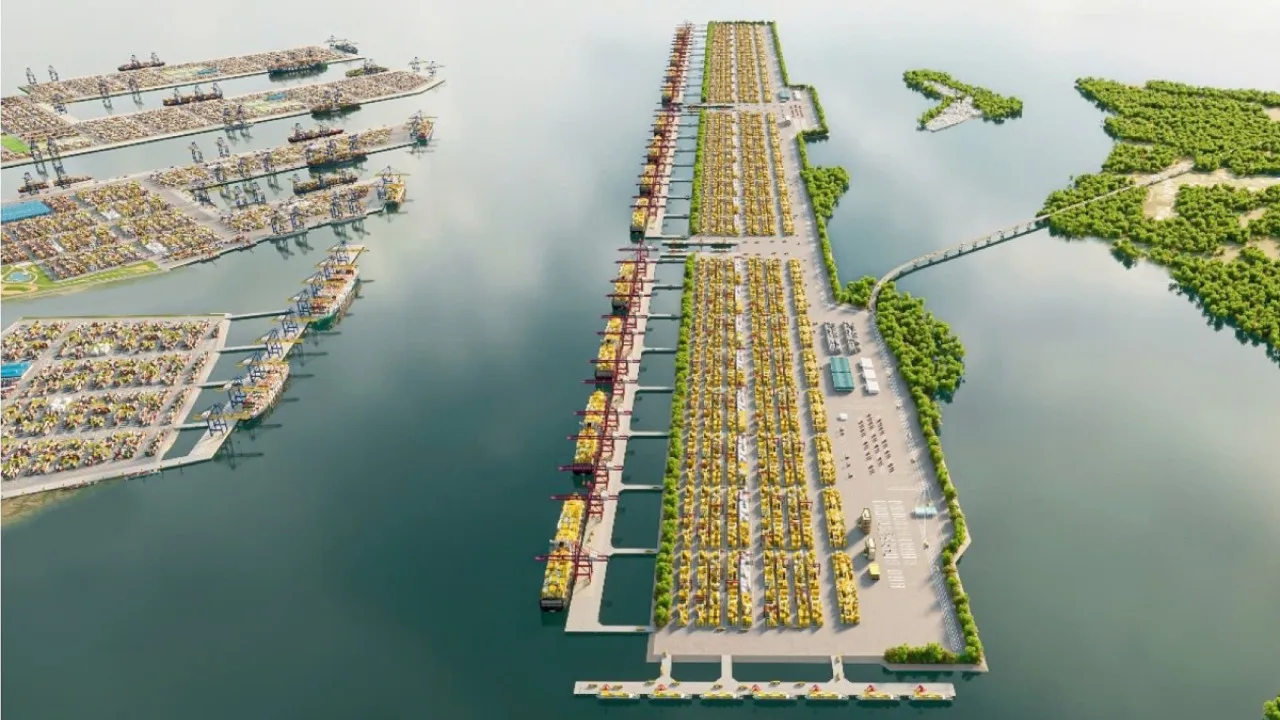
Authorities in Ho Chi Minh City have approved a consortium that includes Terminal Investment Limited (TiL), the port arm of MSC, to develop the Can Gio International transhipment port project, a major new container hub intended to boost Vietnam’s position in global logistics.
The approved consortium comprises Vietnam Maritime Corporation, Saigon Port Joint Stock Company and TiL, which will hold a 49% stake in the venture.
The project will cover nearly 571 hectares and include a planned main berth length of around 7.5 km. By 2030, the port is expected to handle 4.8m teu annually, with capacity projected to rise to 16.9m teu by 2047. The total investment is estimated at $4.9bn.
Originally developed in 2022, the Can Gio project is expected to become a major international transhipment hub once completed. Vietnamese media reports say the development is needed to support growing cargo volumes through Ho Chi Minh City’s seaports, which are forecast to rise by around 5% during the 2021-2025 period.
By 2030, the port is expected to include between two and four terminals with a combined quay length of 1 km to 2 km, capable of handling ultra-large container vessels of up to around 250,000 dwt and 24,000 teu. Throughput during that phase is estimated at between 22.8m and 57m tonnes of cargo, equivalent to 2.4m to 4.8m teu.
By 2050, the facility could expand to around 13 terminals as demand for international transhipment and longer-term cargo growth increases.
The city administration has required investors to comply strictly with the investment policy approved by the prime minister on 16 January. The port must support both international transhipment and Vietnam’s own import-export needs without disrupting operations at nearby ports.
Investors will not be allowed to transfer the project within 10 years of receiving land and water allocation, must disburse at least $1.9bn within the first decade, and are expected to complete construction within 20 years.
MSC already operates routes linking major Vietnamese ports including Hai Phong, Da Nang and Cai Mep-Thi Vai, and transports more than 1m teu of Vietnam’s import-export cargo each year.