



J.B. Hunt executives say there is mounting evidence that tightening in the US truckload market reflects a structural shift rather than a short-lived fluctuation, as the company posted stronger-than-expected first-quarter earnings and pointed to early signs of improving demand.
Speaking to analysts after the results, management said customer conversations have become more constructive as routing guides begin to fail and non-compliant capacity continues to leave the market. In their view, the current market movement looks increasingly like the early stage of a more sustained upcycle.
J.B. Hunt reported first-quarter earnings per share of $1.49, beating consensus expectations by four cents and improving by 32 cents year on year. Revenue rose 5% to $3.06bn, or 4% excluding fuel surcharges, ahead of forecasts for $2.95bn. Operating income increased 16% to $207m as the company benefited from cost reductions and productivity gains.
The group said it removed another $30m in expenses during the quarter, taking the annual run-rate benefit from its cost reduction programme to $130m.
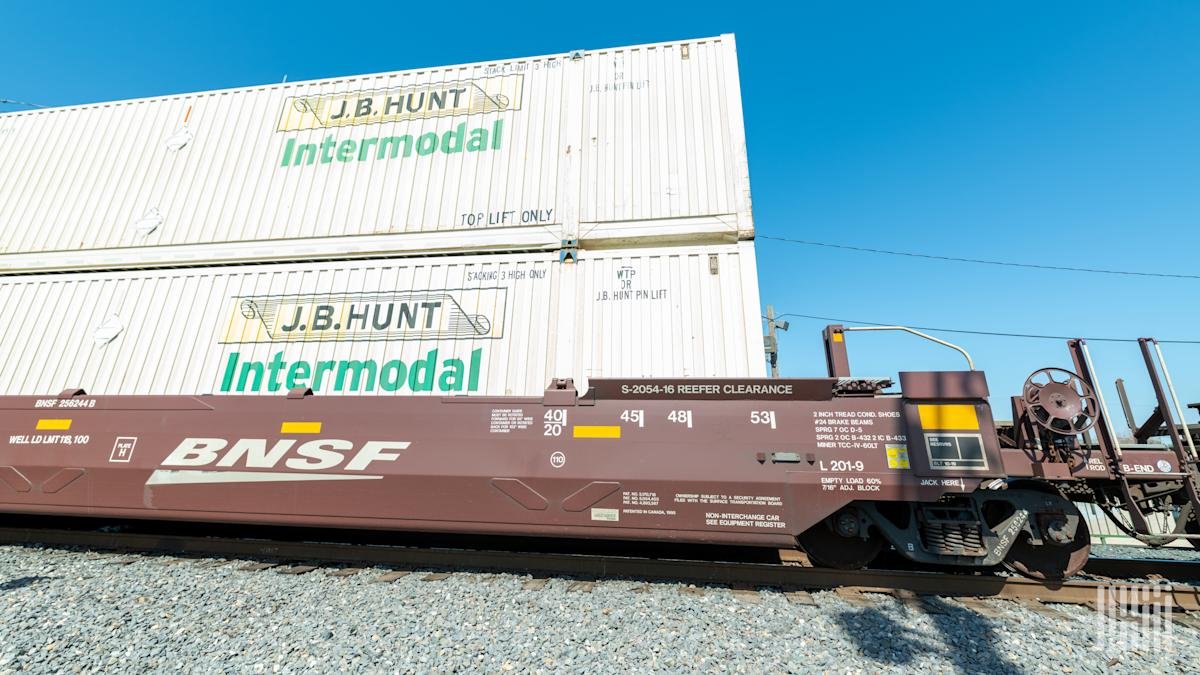
Intermodal remained a key area of focus. Revenue in the segment increased 2% to $1.51bn as load volume rose 3%, although revenue per load declined by 1%, or 2% excluding fuel surcharges. Even so, the company recorded its highest first-quarter intermodal volume ever and posted a record volume week in March with 46,000 loads.
By month, intermodal loads were down 1% in January, up 1% in February and up 8% in March. Volumes on transcontinental lanes were flat, while eastern network volumes rose 7% after already posting strong growth in the prior-year period.
Management said the economics of intermodal are improving as higher truckload rates and rising fuel costs make rail-based alternatives more attractive. According to FreightWaves data cited during the call, intermodal currently offers savings of 22.5% compared with truckload, above the more recent range of 10% to 15%.
Although pricing improvement has not yet caught up with inflation, J.B. Hunt said it is seeing better pricing in headhaul lanes and across its Eastern network, while westbound backhaul pricing remains negative and west coast transcontinental pricing stays competitive.
The company’s dedicated contract services business also showed encouraging signs. Revenue rose 2% to $841m, driven by higher revenue per truck per week, while the average number of trucks in service remained flat. J.B. Hunt sold service on 295 trucks during the quarter and maintained its full-year goal of adding between 800 and 1,000 trucks.
In brokerage, volumes rose sharply but margins came under pressure as spot market purchased transportation costs increased. The unit posted a $4.7m operating loss — its 13th consecutive quarterly loss — with gross profit margin falling to 12%. Management said it is focused on repricing contracts and reducing direct costs.
Overall, the company’s message to the market was clear: improving fundamentals, tighter capacity and stronger demand signals suggest the truckload shift is deeper than many shippers initially believed.