




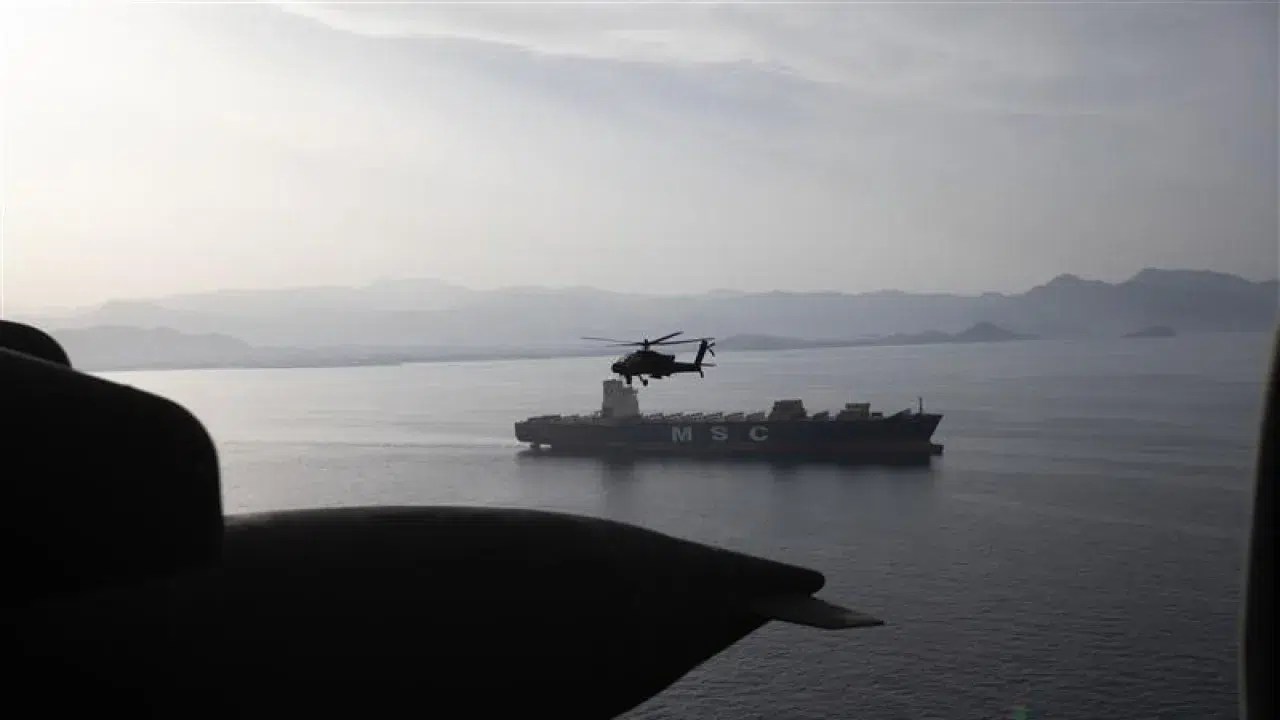
A temporary reopening of the Strait of Hormuz allowed eight container ships to exit the Arabian Gulf before the corridor was once again closed amid escalating tensions.
According to maritime consultancy Linerlytica, six of the vessels were operated by MSC and successfully transited the strait on April 18. Among them was the 19,224 teu MSC Clara, the largest ship present in the area at the time.
The other MSC vessels included MSC Grace (16,000 teu), MSC Margrit XIII (13,102 teu), MSC Madeleine (9,200 teu), MSC Francesca (11,660 teu) and Epaminondas (6,673 teu).
All vessels switched off their AIS transponders during transit. While most have since resumed transmitting signals, MSC Francesca and Epaminondas remain untraceable.
Two additional ships — Bhagya Laxmi (1,030 teu) and SSF Valence (2,702 teu) — also managed to leave the Gulf, reducing the total number of container vessels in the region to fewer than 100 units. Combined capacity has dropped to around 270,000 teu, compared with a peak of 430,000 teu.
Not all ships were able to pass. Four CMA CGM vessels were forced to turn back after Iran reclosed the strait following the US seizure of the IRISL-operated Touska on April 20.
The 5,125 teu vessel had been sailing from Port Klang to Bandar Abbas when it was intercepted by US forces.
Despite the tightening restrictions, Linerlytica noted that sanctions enforcement has had limited impact so far, with at least seven Iranian-linked vessels reportedly bypassing blockades in the past week.
Freight markets are reacting unevenly. Asia–Europe spot rates continue to decline due to weakening capacity utilisation, while Pacific routes remain more resilient, with the Shanghai Containerized Freight Index reporting a fourth consecutive weekly increase.