



Singapore has issued a strong warning over the growing fragility of the global maritime system, as senior government officials say the foundations of international trade are coming under increasing strain.
Speaking at the opening of Singapore Maritime Week, acting Transport Minister Jeffrey Siow said maritime trade remains the invisible thread connecting billions of people, with more than 80% of global trade moving by sea. Yet, he warned, the very system that has underpinned global prosperity and is protected by international law is now under threat.
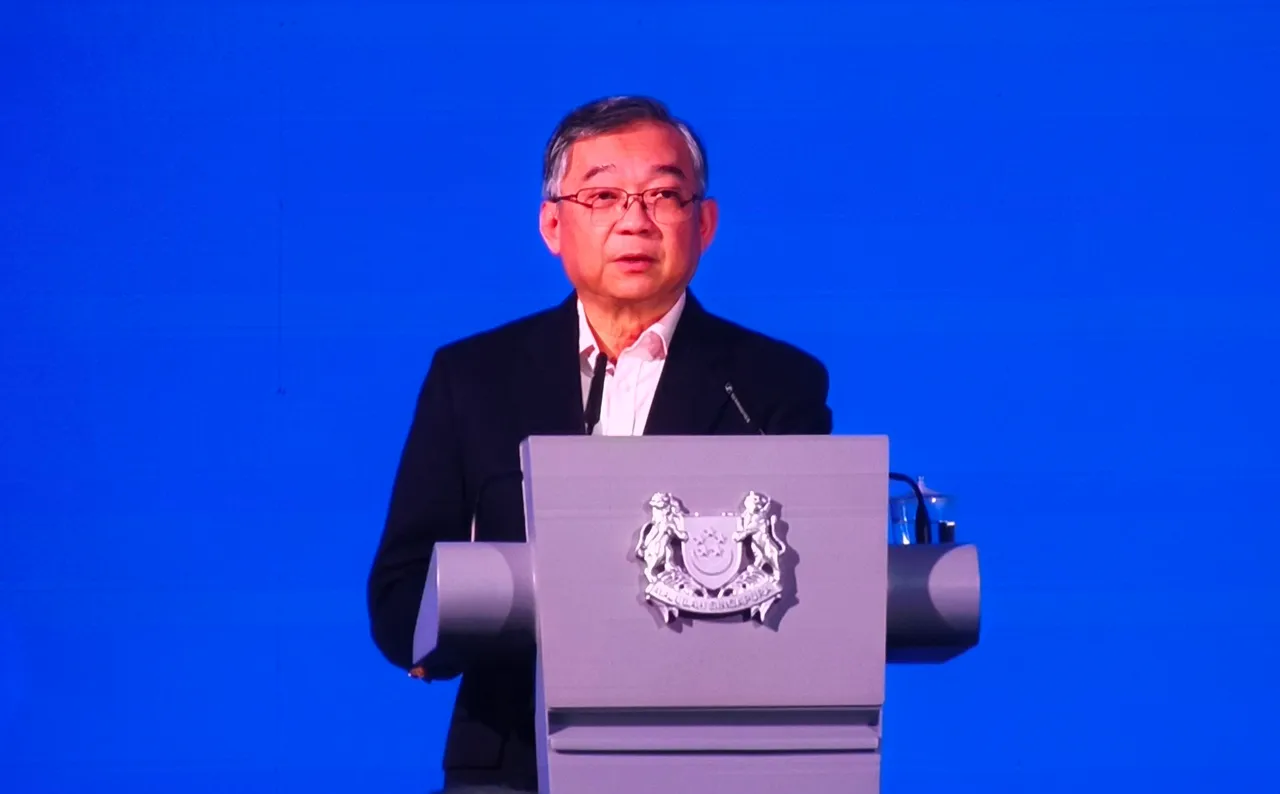
During the annual Singapore Maritime Lecture, Deputy Prime Minister Gan Kim Yong reinforced the central role of the United Nations Convention on the Law of the Sea, describing UNCLOS as a key pillar of the international rules-based maritime order. But he also noted that what was once a multilateral system built on shared commitment is becoming increasingly fragile.
He pointed specifically to the Strait of Hormuz, where shipping disruptions since the outbreak of conflict involving the U.S., Israel and Iran have highlighted how instability at a single maritime chokepoint can reverberate rapidly through the global economy.
What began as a disruption in one narrow waterway, he said, quickly spread across energy prices, transport costs and production chains. In his view, this is no longer simply a regional issue, but a systemic shock whose effects can be felt worldwide within days and linger for months.
Gan also argued that deeper structural shifts are now shaping global trade. Supply chains are no longer driven solely by economic efficiency; they are increasingly being redesigned around resilience and security.
Export controls, sanctions and investment restrictions are becoming more widespread, while maritime routes are now assessed not only for cost and speed, but also for risk and reliability. As a result, he said, the global maritime system is becoming more contested and more closely tied to geopolitical rivalry.
He added that the wider global trading framework itself is fragmenting, with shared rules, standards and institutions all coming under pressure, creating more uncertainty and complexity for international business.
Asked what Singapore was doing diplomatically regarding Singapore-registered vessels trapped in the Gulf, Gan reiterated that his government could not negotiate with Iran over freedom of transit passage, because that right cannot be made conditional.
He said that if Singapore entered into such a negotiation and accepted conditions for safe passage, it would in effect be accepting that the right of transit passage is conditional, which it is not under UNCLOS.
Singapore also highlighted the strategic importance of the Strait of Malacca, one of the busiest maritime routes in the world, where more than 100,000 transits by ships above 300 gross tons were recorded in 2025, equal to around 281 vessel movements per day.
Gan said Singapore, Malaysia and Indonesia continue to work closely together through a cooperative framework to ensure safe passage, protect seafarers and prevent pollution in the straits, helping maintain smooth operations through one of the world’s most critical shipping corridors.