



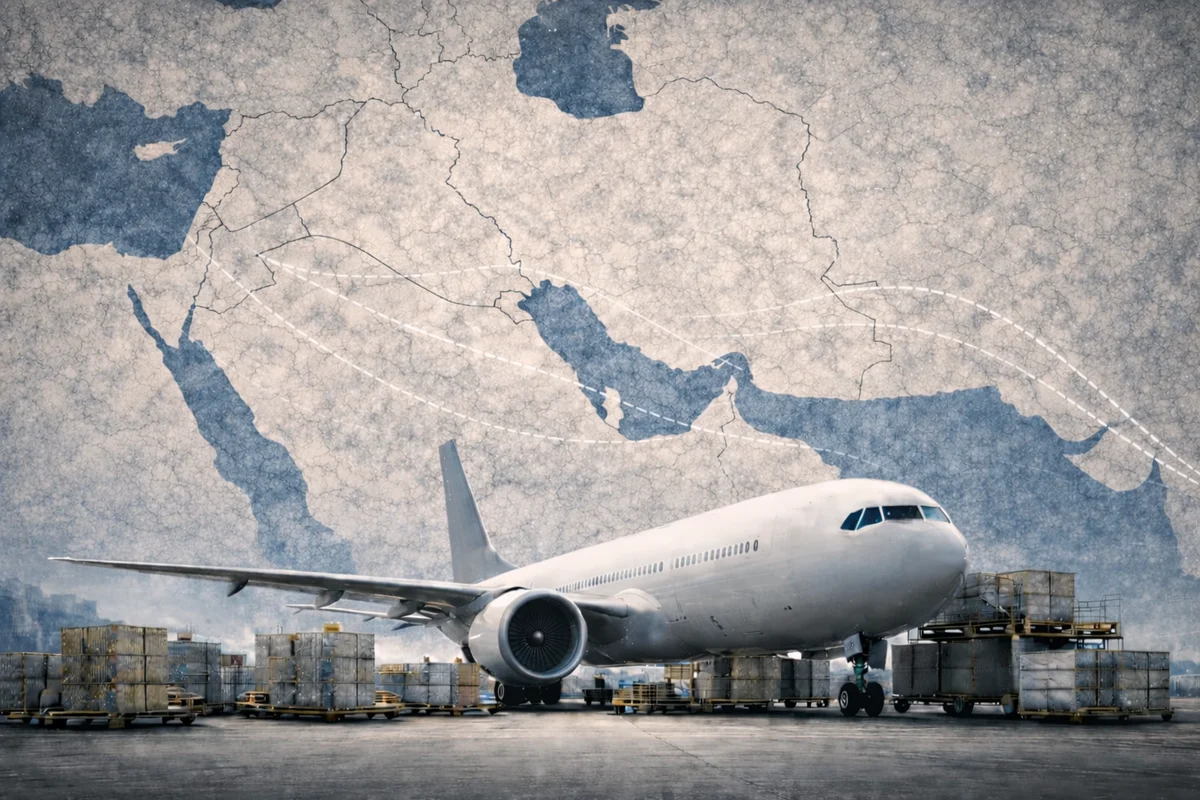
The recovery of air cargo operations in the Middle East has been abruptly disrupted following renewed missile and drone attacks targeting the UAE on 4 May.
According to SEKO Logistics, the escalation has reintroduced significant uncertainty into the market, just days after partial reopening of regional airspace on 2 May.
The company estimates that the global air cargo capacity shortfall now stands between 12% and 16%, with up to 13% directly linked to airspace closures across the region.
Several countries remain fully closed, including Iran, Iraq, Kuwait and Syria. Israel continues to operate under heavy restrictions, allowing only pre-approved cargo movements. Partial limitations also affect Qatar, Bahrain, Jordan, Saudi Arabia, Pakistan and the UAE, including Dubai, Abu Dhabi and Sharjah.
Although UAE hubs had recovered between 70% and 90% of normal activity levels following the brief reopening, the latest attacks have triggered renewed disruptions, including delays, congestion and operational suspensions — particularly for urgent cargo.
Air corridors across the Gulf are now effectively treated as no-fly zones for a large portion of global commercial traffic.
Middle Eastern carriers, which account for roughly 25% to 30% of global air cargo volumes, are once again under pressure after initial disruptions in late February.
Asia-Europe routes are expected to be the most affected, with rerouting and increased fuel consumption driving up rates. Asia-Africa lanes remain heavily disrupted, while Asia-Americas and transatlantic routes are experiencing indirect cost pressures, with rates rising between 15% and 35%.
SEKO notes that rerouted flights typically add two to five hours of flight time and increase fuel consumption by 30% to 50%, reducing available payload capacity and further tightening the market.