



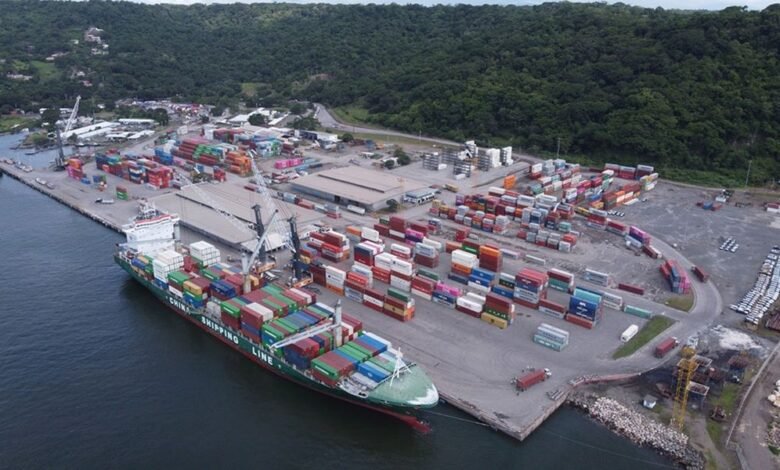
Costa Rica’s battle over the future of its key Pacific gateway has escalated, after Philippine terminal operator International Container Terminal Services, Inc. (ICTSI) secured a formal review of the 30-year Puerto Caldera concession awarded to a consortium backed by Maersk and Hapag-Lloyd.
The country’s Office of the Comptroller General of the Republic (CGR) has accepted ICTSI’s appeal, opening an official review into alleged irregularities in the tender process that led to the award of the terminal concession to Consorcio Sunset, formed by APM Terminals and Hapag-Lloyd’s Hanseatic Global Terminals. The consortium was selected in March by the Costa Rican Institute of Pacific Ports (INCOP) following a public tender aimed at modernising the country’s main Pacific port.
Puerto Caldera is Costa Rica’s most important Pacific port and a critical link for trade with Asia and the United States. The terminal is currently operating at around 95% capacity, creating persistent congestion and delays. The new concession is intended to deliver major infrastructure upgrades, improve throughput, and strengthen the competitiveness of Costa Rica’s Pacific trade corridor.
Structurally, the port handles a highly import-heavy flow, with around 80% of cargo consisting of inbound goods, including all cereals and bulk fertilisers consumed domestically. It also manages roughly one-third of the country’s agricultural exports.
ICTSI argues it was unfairly excluded from the bidding process before the final award was made. According to the company, INCOP initially confirmed that ICTSI met the required debt-to-equity ratio conditions, before later reversing its position and disqualifying the operator. This move, ICTSI claims, effectively left the Maersk–Hapag-backed consortium as the only remaining bidder.
“We welcome the CGR’s decision as a first step toward correcting a process plagued by irregularities and lack of transparency,” said Bart Wiersum, ICTSI’s director of business development for the Americas.
The company further alleges that the evaluation committee changed the methodology used to calculate debt-to-equity ratios without technical justification, shifting its result from a compliant 1.33 to a non-compliant 2.16, despite no changes in the underlying financial data.
ICTSI has also raised questions over the transparency of the winning consortium’s documentation, referencing claims by former congressman Eli Feinzaig that more than 60% of the financial submissions were illegible.
Beyond financial issues, the appeal also targets the technical validity of the consortium’s port design. Independent engineering assessments cited in the filing point to potential shortcomings in berth configuration and simultaneous vessel operations, suggesting the design may not fully meet international safety standards required under the tender. ICTSI also argues that local weather and wave conditions could reduce actual berth availability below the levels projected in the bid.
Competition concerns have also been raised regarding the structure of the winning consortium. ICTSI claims that APM Terminals and Hanseatic Global Terminals could have participated independently, and argues that INCOP failed to notify Costa Rica’s competition authority, COPROCOM, of potential antitrust implications linked to the joint bid.
The CGR has now given INCOP and Consorcio Sunset five business days to respond to the allegations. A ruling is expected within 40 business days, with the possibility of a 15-business-day extension.
The timeline adds pressure given that the current Puerto Caldera concession expires in August 2026, leaving limited room for delays in a project seen as essential to Costa Rica’s long-term trade infrastructure.
The dispute also reflects a broader competitive dynamic between ICTSI and Maersk-linked terminal operators in global port concessions. In a similar case last year in Durban, ICTSI successfully defended its role as terminal operator after a court dismissed a challenge backed by Maersk interests, which had questioned procurement and evaluation procedures—issues now resurfacing in Costa Rica’s review process.