


• Latest
  • Trending
When algorithms start reading the crew: emotion AI reaches shipping

When algorithms start reading the crew: emotion AI reaches shipping

May 14, 2026
J.B. Hunt expects truckload rates to rise 20% over two years as capacity tightens

J.B. Hunt expects truckload rates to rise 20% over two years as capacity tightens

May 14, 2026
Cargo theft is evolving — and the biggest threat may now be sitting behind the wheel

Cargo theft is evolving — and the biggest threat may now be sitting behind the wheel

May 14, 2026
ADVERTISEMENT
New Jersey revises independent contractor rule, easing some trucking industry concerns but keeping strict ABC test framework

New Jersey revises independent contractor rule, easing some trucking industry concerns but keeping strict ABC test framework

May 14, 2026
Lower revenue, higher costs push Hapag-Lloyd into loss

Lower revenue, higher costs push Hapag-Lloyd into loss

May 14, 2026
Hexicon acquires remaining stake in Swedish floating wind project

Hexicon acquires remaining stake in Swedish floating wind project

May 14, 2026
Turkey identifies four offshore wind zones for upcoming tenders

Turkey identifies four offshore wind zones for upcoming tenders

May 14, 2026
Middle East conflict derails jackup market recovery

Middle East conflict derails jackup market recovery

May 14, 2026
DOF sells cable-layer to South Korean buyer

DOF sells cable-layer to South Korean buyer

May 14, 2026
Teekay Tankers snaps up Korean resale suezmaxes

Teekay Tankers snaps up Korean resale suezmaxes

May 14, 2026
Stuart Macdonald: The mountain guide who wants to row the Atlantic

Stuart Macdonald: The mountain guide who wants to row the Atlantic

May 14, 2026
ICTSI pushes review of Costa Rica port deal won by Maersk–Hapag-Lloyd consortium

ICTSI pushes review of Costa Rica port deal won by Maersk–Hapag-Lloyd consortium

May 14, 2026
Liquid Wind collapses into bankruptcy, shaking Europe’s e-methanol ambitions

Liquid Wind collapses into bankruptcy, shaking Europe’s e-methanol ambitions

May 14, 2026
  • Home
  • About Us
  • Press Room
  • Podcasts
  • Media Kit
  • Contact Us
  • Careers
Thursday, May 14, 2026
  • Login
  • Register
The Logistic News
  • Logistic
  • Air
  • Maritime
  • Land
  • World
  • Business
  • Tech
  • Events
  • Advertise
No Result
View All Result
  • Logistic
  • Air
  • Maritime
  • Land
  • World
  • Business
  • Tech
  • Events
  • Advertise
No Result
View All Result
The Logistic News
No Result
View All Result
Home Logistic

When algorithms start reading the crew: emotion AI reaches shipping

As “emotion recognition” tools move from theory to practice, the maritime industry faces a new debate over privacy, safety and human judgement at sea

The Logistic News by The Logistic News
May 14, 2026
in Logistic, Maritime, Tech, World
Reading Time: 3 mins read
0
When algorithms start reading the crew: emotion AI reaches shipping
ADVERTISEMENT

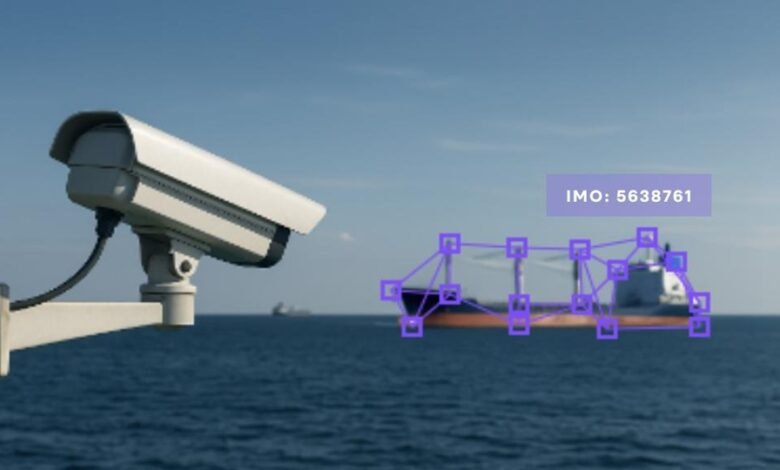
A recent essay in The Atlantic warned that so-called “emotion AI” is increasingly appearing in workplaces, with systems claiming to interpret human feelings through facial expressions, voice patterns and even keyboard behaviour. The question now being raised is whether this same technology could eventually find its way into shipping. 

Over the past decade, maritime operations have become heavily digitised. Ships are tracked via AIS, engines are monitored through sensors, and port equipment is increasingly managed through cameras and connected systems. The next step being explored by some researchers and technology providers is more sensitive: applying similar tools to people themselves. 

That would mean monitoring crew members’ mood, stress levels or “attitude” in real time using cameras, wearables or voice analysis, all in the name of safety and operational performance. In effect, the digital dashboards would extend beyond machinery and cargo into the emotional state of seafarers. 

ADVERTISEMENT

In maritime research, early versions of this idea already exist. One project has tested an “emotion recognition” system for ships combining facial analysis, speech signals and body sensors to detect when a crew member may be stressed or overloaded, potentially triggering alerts to the bridge or shore teams. Another study suggests that analysing tone of voice and speech patterns could help identify mental health issues earlier than traditional questionnaires. 

Given well-documented concerns around fatigue, stress and suicide at sea, it is not difficult to understand why such systems are attracting attention. 

But there is a major complication. Research on workplace emotion-tracking consistently shows that many employees feel uncomfortable or misunderstood when algorithms attempt to interpret how they feel. There are concerns that incorrect readings could influence scheduling, pay decisions or even job security, while some workers report adapting their behaviour to appear “acceptable” to the system rather than acting naturally. 

In shipping and terminal environments, that raises a particularly serious operational risk. Safe operations depend on people being able to speak openly about fatigue, uncertainty or near-miss situations. If crew members believe they are being continuously assessed on mood or attitude, there is a risk they may prioritise appearing composed over reporting genuine concerns. 

That could create a situation where management dashboards look stable and reassuring, while the reality on board is more complex and potentially less safe. 

Regulators are already beginning to respond. The new EU AI rules prohibit systems that attempt to infer emotions in the workplace, except in narrow medical or safety-related contexts, citing risks to privacy and fundamental rights. For shipowners and terminal operators connected to European jurisdictions, emotion-tracking technology is therefore no longer just an ethical question, but a regulatory one. 

The key challenge for the industry is where to draw the line. There may be limited cases where AI can help identify clear signs of fatigue or distress in tightly controlled safety scenarios, particularly if crew members are involved in system design and strong safeguards are in place. However, using inferred emotions to evaluate performance, influence contracts or manage behaviour is widely seen as a boundary that should not be crossed. 

The practical question for companies is becoming increasingly direct. As suggested in the discussion, every new digital or safety system proposal could now include a simple checkpoint: does this tool attempt to measure or score how people feel? If the answer is yes, the decision may need to move beyond IT departments and onto board-level scrutiny. 

Shipping has already learned that more data does not automatically lead to better decisions, even when it comes to cargo or equipment. Extending that logic to human emotions may not improve safety either. 

Research into workplace monitoring also highlights a quieter concern: employees often feel they have little real choice but to accept intrusive systems if they want to keep their jobs, even when they see them as a serious invasion of privacy. That underlying pressure to comply, without broader public debate, is what makes the rise of emotion AI in operational environments such as shipping particularly sensitive. 

Previous Post

Liquid Wind collapses into bankruptcy, shaking Europe’s e-methanol ambitions

Next Post

ICTSI pushes review of Costa Rica port deal won by Maersk–Hapag-Lloyd consortium

Next Post
ICTSI pushes review of Costa Rica port deal won by Maersk–Hapag-Lloyd consortium

ICTSI pushes review of Costa Rica port deal won by Maersk–Hapag-Lloyd consortium

Leave a Reply Cancel reply

Your email address will not be published. Required fields are marked *

A D V E R T I S E M E N T

Popular News

  • Drone Delivery Takes Flight: Amazon Partners with UPS for Trial Program

    Drone Delivery Takes Flight: Amazon Partners with UPS for Trial Program

    0 shares
    Share 0 Tweet 0
  • Rail Cargo Group Strengthens European Network with Captrain Netherlands Acquisition

    0 shares
    Share 0 Tweet 0
  • Automotive Inbound Logistics Market: Navigating Future Challenges

    0 shares
    Share 0 Tweet 0
  • Global Inflation Cools to Target After Three Years, Central Banks Face Policy Dilemma

    0 shares
    Share 0 Tweet 0
  • Dubai Mercantile Exchange Rebrands as Gulf Mercantile Exchange Following Saudi Tadawul Group Acquisition

    0 shares
    Share 0 Tweet 0

Recent News

J.B. Hunt expects truckload rates to rise 20% over two years as capacity tightens

J.B. Hunt expects truckload rates to rise 20% over two years as capacity tightens

May 14, 2026
Cargo theft is evolving — and the biggest threat may now be sitting behind the wheel

Cargo theft is evolving — and the biggest threat may now be sitting behind the wheel

May 14, 2026
New Jersey revises independent contractor rule, easing some trucking industry concerns but keeping strict ABC test framework

New Jersey revises independent contractor rule, easing some trucking industry concerns but keeping strict ABC test framework

May 14, 2026

Discover a new era of logistics reporting with The Logistic News, your go-to platform for breaking news, insightful features, and exclusive interviews shaping the global logistics and freight landscape. Trust us to deliver accurate, timely, and relevant information that empowers professionals and enthusiasts alike in navigating the intricacies of this vital sector.

Navigation

  • Home
  • About Us
  • Press Room
  • Podcasts
  • Media Kit
  • Contact Us
  • Careers
  • Privacy Policy
  • Terms of Use

© 2024 - thelogisticnews.com

Welcome Back!

Login to your account below

Forgotten Password? Sign Up

Create New Account!

Fill the forms below to register

All fields are required. Log In

Retrieve your password

Please enter your username or email address to reset your password.

Log In

SIgn Up Newsletter

This will close in 20 seconds

Manage Cookie Consent
We use technologies like cookies to store and/or access device information. We do this to improve browsing experience and to show (non-) personalized ads. Consenting to these technologies will allow us to process data such as browsing behavior or unique IDs on this site. Not consenting or withdrawing consent, may adversely affect certain features and functions.
Functional Always active
The technical storage or access is strictly necessary for the legitimate purpose of enabling the use of a specific service explicitly requested by the subscriber or user, or for the sole purpose of carrying out the transmission of a communication over an electronic communications network.
Preferences
The technical storage or access is necessary for the legitimate purpose of storing preferences that are not requested by the subscriber or user.
Statistics
The technical storage or access that is used exclusively for statistical purposes. The technical storage or access that is used exclusively for anonymous statistical purposes. Without a subpoena, voluntary compliance on the part of your Internet Service Provider, or additional records from a third party, information stored or retrieved for this purpose alone cannot usually be used to identify you.
Marketing
The technical storage or access is required to create user profiles to send advertising, or to track the user on a website or across several websites for similar marketing purposes.
Manage options Manage services Manage {vendor_count} vendors Read more about these purposes
View preferences
{title} {title} {title}
No Result
View All Result
  • Logistic
  • Air
  • Maritime
  • Land
  • World
  • Business
  • Tech
  • Events
  • Advertise

© 2024 - thelogisticnews.com