



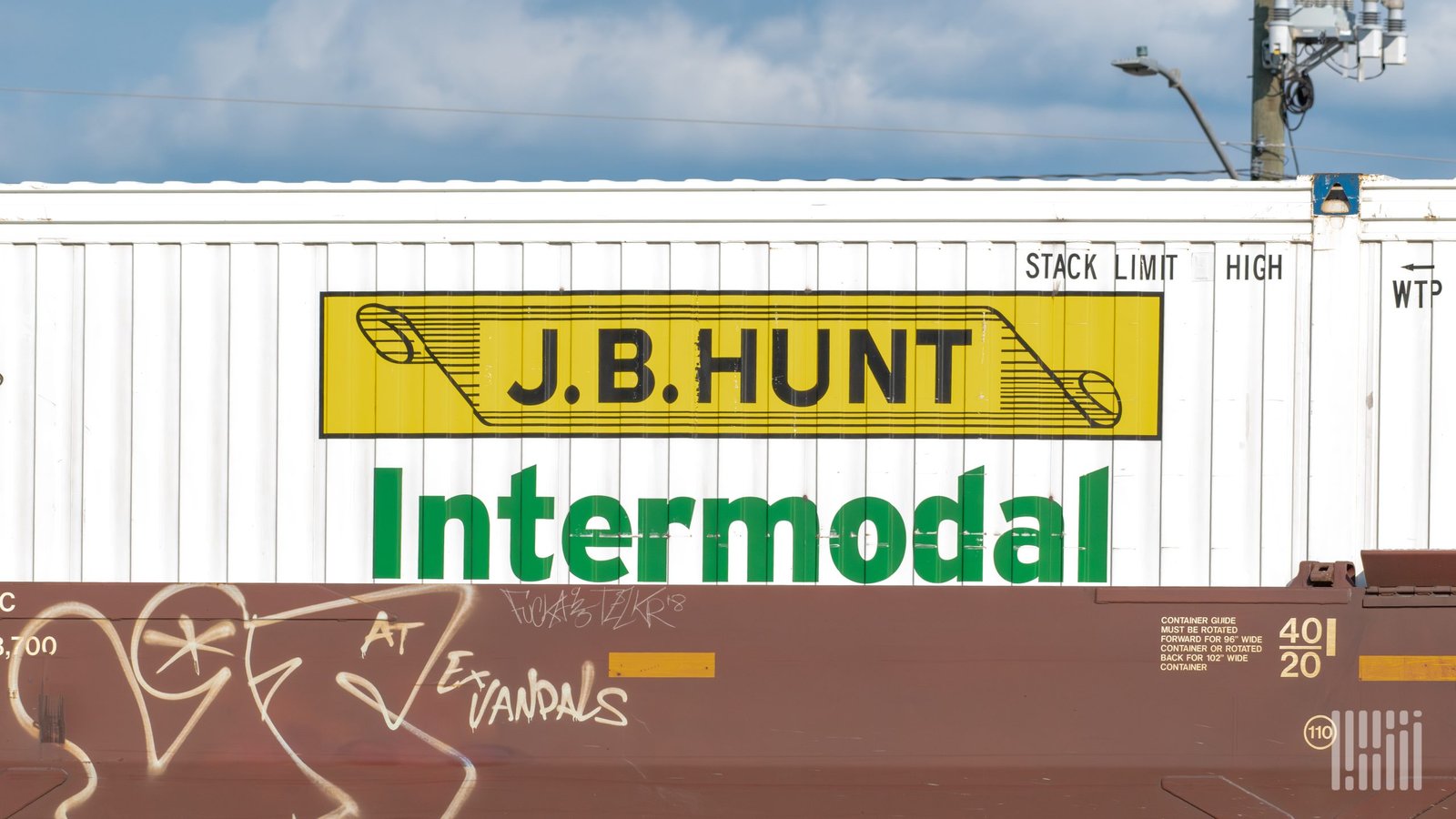
J.B. Hunt Transport Services delivered stronger-than-expected second-quarter results as more shippers turned to its intermodal and dedicated transportation services amid ongoing changes in the U.S. freight market.
The Arkansas-based transportation and logistics company said demand has accelerated as shippers look for more secure and dependable capacity following the departure of non-compliant truck drivers and a recent U.S. Supreme Court ruling that expanded liability risks for freight brokers.
The shift has been particularly beneficial for the company’s intermodal business, which combines rail and trucking services. During the second quarter, J.B. Hunt handled a record number of intermodal shipments, with volumes increasing 10% compared with the same period last year. That performance exceeded the overall 8% growth recorded by U.S. Class I railroads, while North American container traffic rose 5%.
Darren Field, president of the company’s intermodal division, said customer interest in moving freight from highways to rail has reached levels not seen in more than a decade.
At the same time, J.B. Hunt’s pipeline for dedicated truckload services reached an all-time high, reflecting continued demand from customers seeking long-term transportation solutions.
The company’s financial results also showed strong operational improvement. Revenue climbed 19% to $3.5 billion, well above analysts’ expectations of $3.26 billion. Operating income jumped 32% to $259 million. Earnings came in at $1.91 a share, 18 cents above market expectations. Lower tax and interest expenses also contributed 8 cents per share to quarterly earnings.
J.B. Hunt said it has removed approximately $135 million in structural costs over the past year through artificial intelligence and other automation initiatives, helping improve profitability.
The intermodal segment generated $1.75 billion in revenue during the quarter, up 22% from a year earlier. Growth was supported by higher shipment volumes and an 11% increase in revenue per load. Transcontinental shipments rose 5%, while Eastern U.S. Volumes rose 16%, reflecting higher customer demand in short-haul markets.
Revenue per load increased due to higher fuel surcharges, but on a fuel-excluded basis yields were still up 1% year-over-year as management noted underlying pricing gains were partially masked by shorter average trip distances in the East.
Going forward, plenty of opportunities exist for the company to convert more freight from trucks to rail, especially in the eastern U.S. Traditionally, shippers have demanded transportation cost savings of 10%-15% before switching to intermodal, and the SONAR market data shows intermodal is about 30% less expensive than truckload today, laying the groundwork for further growth.
J.B. Hunt also said its intermodal operations were more efficient. Operating income per load increased 43%, while container utilization exceeded 90% for the first time in several quarters. The company reiterated its long-term goal of achieving operating margins between 10% and 12%, although it warned that rising wages for drayage drivers could increase costs in the coming months.
The dedicated transportation segment also posted solid results. Revenue increased 9% to $921 million, driven mainly by higher fuel surcharges. Excluding fuel, revenue per truck per week still rose 2%. During the quarter, the company added services for 250 trucks and maintained its full-year target of adding between 1,000 and 1,200 trucks to its dedicated fleet.
Meanwhile, J.B. Hunt’s brokerage division returned to profitability for the first time in 14 quarters. Revenue jumped 49% as shipment volumes increased 19% and revenue per load rose 26%. Management said more small carriers have begun using its brokerage platform following the Supreme Court’s broker liability ruling, while contractual freight rates continue to rise at double-digit levels.
Investors reacted positively to the results, with J.B. Hunt shares gaining 7.5% in pre-market trading on Thursday.