



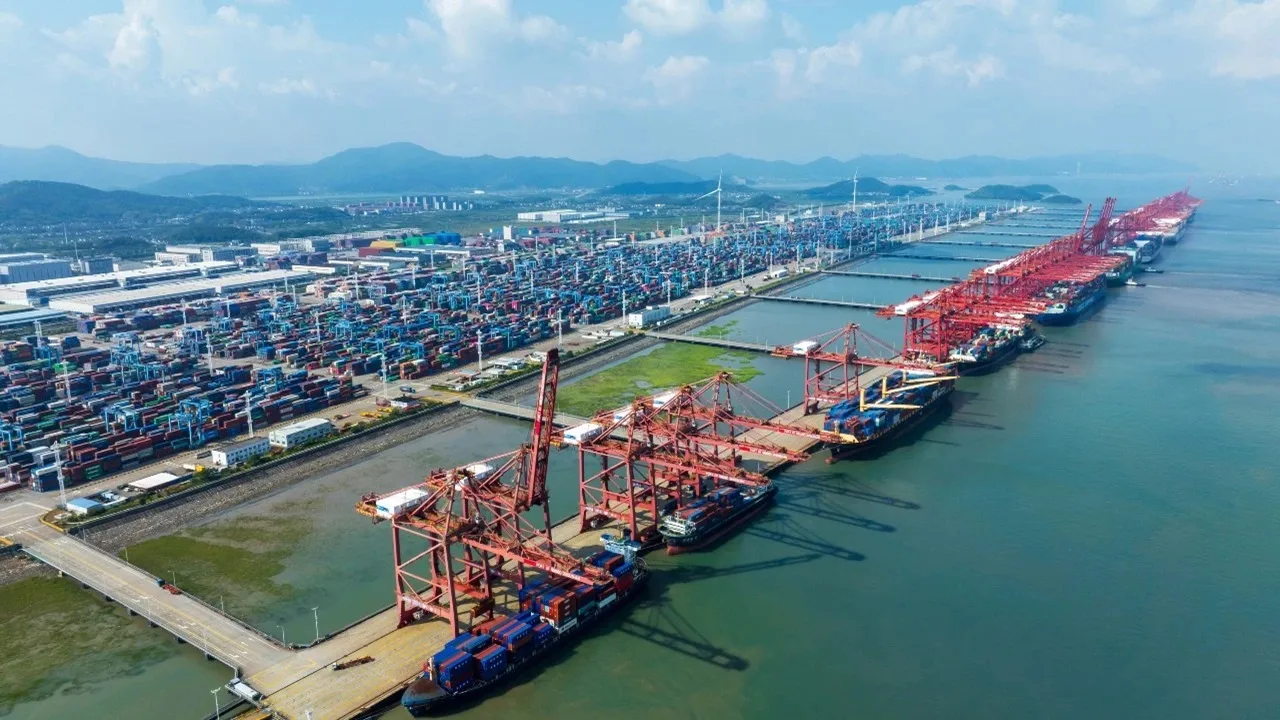
NINGBO-ZHOUSHAN, CHINA — Ningbo-Zhoushan has surpassed Singapore to become the world’s second-largest container port by throughput in the first half of 2026, according to data from shipping analyst Alphaliner.
The Chinese port processed 22.90 million TEU in the first half of the year, an 8.8% year-on-year increase.
Meanwhile, Singapore handled 22.74 million TEU, with throughput up 4.7% year-on-year.
For the first time, Ningbo-Zhoushan beats Singapore for a six-month period, with a slim margin, reshaping the top end of the global container port rankings.
Alphaliner said Ningbo-Zhoushan has continued to expand and diversify its business.
The expansion of the port’s Jintang hub, with the second phase finished in July, has been a major development. With this expansion all five operational container berths were fully integrated.
Jintang alone saw 17 international routes added during the period, with container volumes increasing 23.4%.
2nd place battle to go on
Ningbo-Zhoushan’s strong first-half performance notwithstanding, Alphaliner expects the race for second place to be close.
However, the analyst feels that the growth of the Ningbo-Zhoushan’s might also be slowing down as the year progresses, giving Singapore another shot to challenge for the position.
The two ports are thus expected to continue to compete closely for the number two spot in global container throughput.
The rankings also consider the broader impacts of disruptions on key maritime routes. Dubai, which was once in the top 10 of the world’s container ports, has been pushed out of the Top 30, apparently because of the disruption around the Strait of Hormuz and its impact on its container volumes.
The shift underscores the volatility of shipping routes and port capacity and geopolitical disruptions in quickly changing the competitive landscape among the world’s leading container hubs.