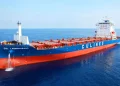




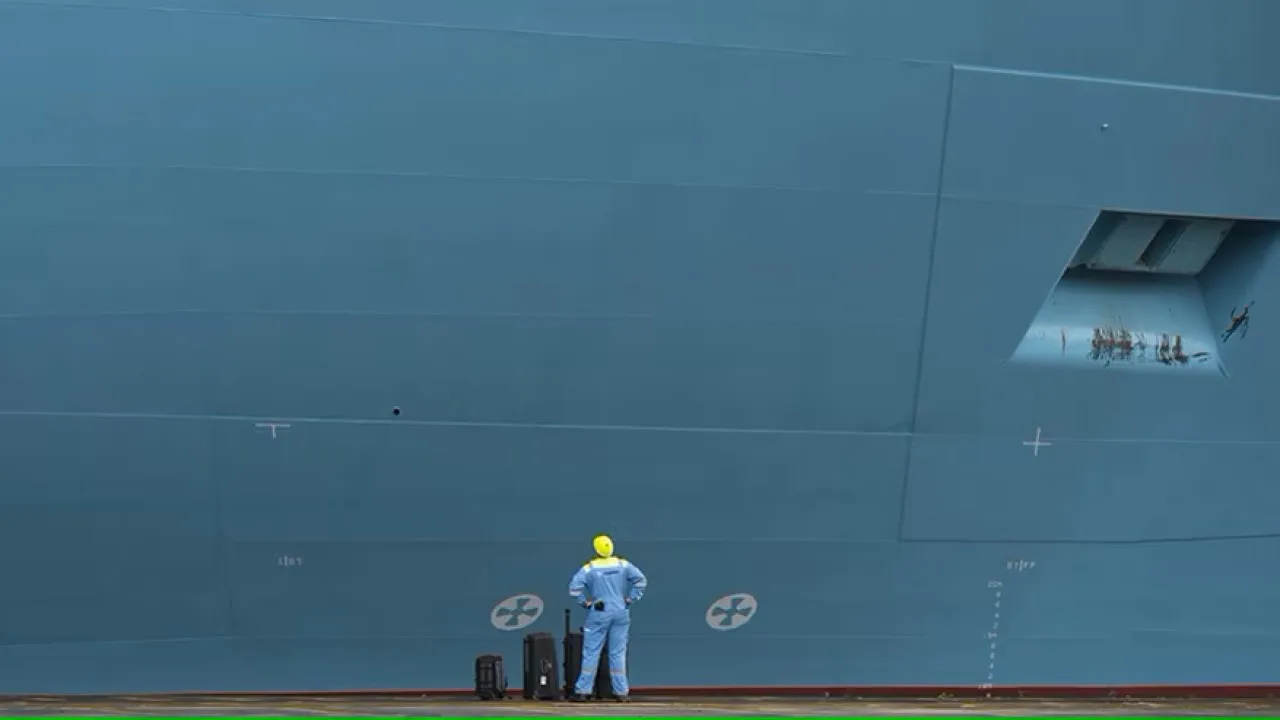
Container ships have steadily increased in size with each successive generation. The latest major step came with the 24,000 TEU class, a vessel size that has remained at the top end of the market for roughly a decade.
Maersk, however, temporarily stepped back from ordering new tonnage as the industry waited for greater clarity over the International Maritime Organization’s Net Zero Framework (NZF). With the future fuel mix still uncertain and fossil fuels gradually being phased out, the Danish carrier adopted a cautious approach to fleet renewal.
That uncertainty remains relevant as the IMO prepares to meet in December for its rescheduled Extraordinary Session to address the NZF. Yet the industry debate has already evolved. Attention is increasingly shifting toward efficiency, particularly as carriers face growing pressure to reduce both fuel consumption and emissions.
Larger vessels generally offer greater efficiency, while a series of technological advances could allow the next generation of ships to deliver substantial reductions in fuel consumption and, consequently, emissions.
If the NZF is abandoned in December, the shipping industry is expected to face a patchwork of regional regulations instead. In that scenario, taking steps to reduce emissions regardless of the regulatory outcome could prove to be a prudent strategy.
Analyst Alphaliner believes Maersk has a significant fleet-renewal requirement ahead. The company’s Emma-class vessels, built between 2006 and 2008, will need to be replaced, potentially triggering a new wave of orders for the Danish carrier.
The development of the Gemini Cooperation’s hub-and-spoke network could provide an additional reason to consider vessels beyond today’s conventional ULCV size. The network, introduced last year, is particularly suited to large, cargo-intensive east-west trades, creating an opportunity for a new generation of plus-size Ultra Large Container Vessels, or ULCV+ ships.
According to Alphaliner, a vessel with capacity of around 27,500 TEU could be economically viable. On very long-haul east-west mainlines, the analyst argues that rising fuel prices and the introduction of carbon-emissions taxes could increasingly strengthen the competitive advantage of larger ships over time.
Alphaliner’s calculations point to an LNG-powered, dual-fuel vessel approximately 414 metres long and 63.3 metres wide that could carry more than 27,000 TEU.
Reaching that capacity would, however, require specific design choices and adjustments to cargo storage. The vessel would need a relatively full and bulky hull, optimized for operating speeds of 18 knots or less. It would also require lashing bridges high enough to accommodate 13 tiers of high-cube containers on deck, as well as an additional bay on the forecastle above the mooring station.
Fuel tank design would also play an important role. Modernized tanks and optimized positioning could limit the loss of cargo capacity traditionally associated with additional fuel requirements.
The economics become particularly interesting when fuel consumption is compared with existing vessels. Alphaliner estimates that a ULCV+ would consume only marginally more fuel than a 20,500 TEU vessel built in 2017.
That means much of the additional capacity could effectively be obtained without a proportional increase in fuel costs. As Alphaliner puts it, at least half of the additional 7,000 TEU could potentially be carried at “zero fuel cost”, at least on a comparative basis.
The Gemini Cooperation’s network architecture could further strengthen the case for such ships. Its services are designed around large, east-west, cargo-intensive trades with relatively few mainline port calls. Feeder vessels then connect those major hubs with secondary ports.
This operating model could make extremely large vessels more practical by concentrating more cargo on fewer mainline rotations while relying on feeders to extend network coverage.
Maersk also faces a straightforward fleet-planning challenge. Its older tonnage needs replacement, while newbuilding capacity at shipyards is already largely booked through 2029. Any order placed now would therefore not be expected to enter service before 2030 at the earliest.
One potential candidate would be Gemini’s NE1/AE2 service. It is currently operated with 20,050 TEU vessels and calls at Ningbo, Shanghai, Tanjung Pelepas, Tanger Med, Wilhelmshaven, Bremerhaven, Rotterdam, Salalah and Singapore before returning to Ningbo.
The terminals serving these ports are expected to be upgraded over the next four to five years. In principle, those improvements should allow them to accommodate ULCV+ vessels.
For Alphaliner, Maersk may have the most to gain from moving into an entirely new size class. The structure of the Gemini network, with comparatively fewer mainline calls and shorter routes, could make 27,500 TEU-class vessels operationally feasible while maximizing their efficiency advantage.
The question, therefore, is no longer simply how large container ships can become. For Maersk, the bigger issue may be whether the combination of fleet renewal, Gemini’s network design, rising fuel costs and future carbon regulation creates the right conditions to make a 27,500 TEU ship commercially attractive.
After years of losing ground in the container ship size race, the Danish carrier could have an opportunity to regain the advantage with its next generation of vessels.