




The transpacific air cargo market is undergoing a significant transformation. While e-commerce parcels once dominated much of the space aboard freighters crossing the Pacific, a growing share of that capacity is now being used to transport high-value technology equipment destined for artificial intelligence infrastructure.
Servers, processors, networking equipment and advanced semiconductors are increasingly taking priority as technology companies accelerate investment in data centres across North America. These shipments may occupy less space than traditional consumer goods, but their strategic and commercial value is considerably higher.
Recent figures from the International Air Transport Association (IATA) underline the scale of the change. In August, Asia–North America recorded the strongest growth among major air cargo trade lanes, with demand increasing by 13.2% year on year. It marked the corridor’s seventh consecutive month of expansion and brought its share of global industry traffic to 23.5%.
Worldwide air cargo demand grew by 4.4% over the same period, while available capacity remained virtually unchanged. The contrast illustrates the pressure facing airlines, freight forwarders and shippers as they attempt to accommodate rapidly changing demand with limited additional lift.
Supply-chain resilience, network flexibility and the speed of technological change are becoming increasingly important across the industry. These challenges are particularly visible on the transpacific corridor, where the AI investment cycle is reshaping traditional freight patterns.
The $180 million machine behind the AI revolution
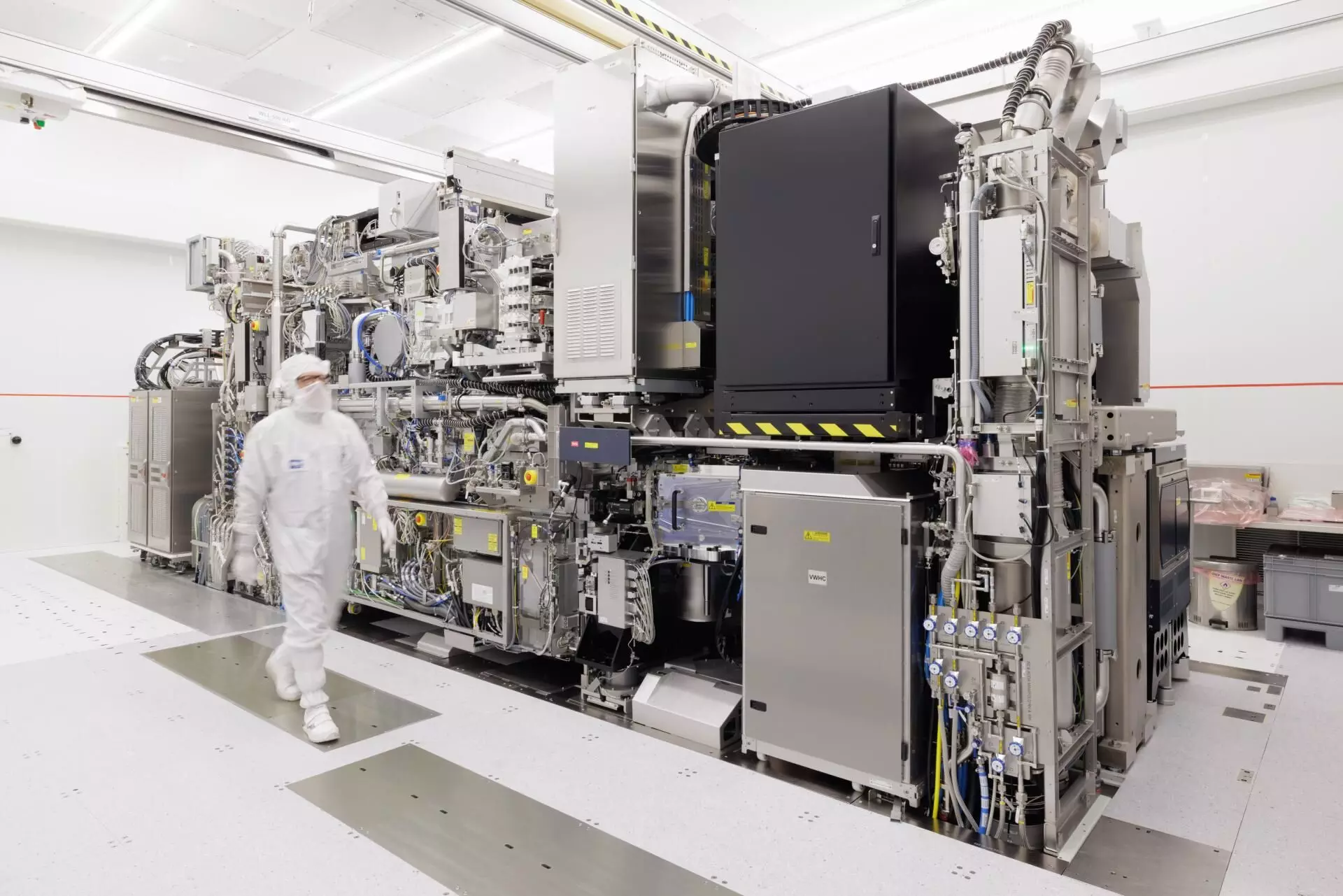
One example of the extraordinary value moving through these supply chains is ASML’s TWINSCAN NXE:3800E extreme ultraviolet lithography system. Priced at approximately $180 million, the machine is designed for high-volume manufacturing of 2-nanometre logic chips and advanced DRAM memory used in AI applications.
The equipment is dismantled at ASML’s facilities in Veldhoven, the Netherlands, carefully crated and transported aboard several freighter aircraft before reaching semiconductor manufacturing sites in Taiwan, South Korea and the United States.
Such movements demonstrate the specialised nature of modern air cargo. Transporting advanced manufacturing equipment requires carefully coordinated handling, appropriate packaging and precise logistics planning. The financial stakes are considerable, and any disruption can affect production schedules across the semiconductor industry.
AI shipments are changing the transpacific corridor
Although artificial intelligence is gaining attention, AI-related products account for less than 10% of global air cargo volumes, Xeneta said. But their influence is outsized because shipments are concentrated on transpacific routes, which helps make Asia–North America the industry’s best-performing major corridor.
“The dichotomy is between a softening e-commerce demand and a rapid growth in AI-related freight,” says Niall van de Wouw, chief airfreight officer at Xeneta. There is further evidence of this momentum in the upstream semiconductor market, with global semiconductor sales rising 106% year on year in April, the sharpest rise on record, according to Xeneta.
WorldACD’s weekly statistics are reflecting how this demand is translating into increased shipment volumes and prices. The week from 21 to 27 September saw a 14% year-on-year increase in air cargo tonnage from Asia Pacific to the United States. Average rates were up 38 percent.”
Several Southeast Asian origins also had significant gains. During the same period, Vietnam, Malaysia, Taiwan and Singapore posted weekly volumes rising between 6% and 12%, partly driven by extra traffic from AI infrastructure.
The geographic pattern of shipments is also changing. WorldACD data mid-September showed US-bound cargo volumes from Singapore up 26% year-on-year and from Indonesia 33%.
The strongest AI-related flows are now between Southeast and Northeast Asia and the Americas, James Evans of Cathay Cargo told STAT Times. He also noted an acceleration in the China+1 manufacturing strategy over the past year, as companies seek to diversify their production away from mainland China.
Dimerco’s report for October is a similar tale, stating there is limited airfreight capacity from most Asian origins supplying the US market. Singapore is dealing with backlogs, while rates from Taiwan are rising on the back of strong semiconductor and AI-related exports.
The pressure is especially acute in Taiwan, a major hub for advanced chip making. Dimerco expects capacity to remain tight on routes connecting Taiwan to both the US East and West Coasts, with prices continuing to rise as demand is driven by AI servers, semiconductors and high performance computing equipment.
The case in mainland China is different. Dimerco says capacity to US is improving and is generally enough to meet demand so rates are stable. South China’s e-commerce market is also softening as retailers take a cautious approach to stocking ahead of Black Friday, although electronics and semiconductors still support volumes.
Air freight rates from Southeast Asia to North America are up about 40% from a year ago, according to Freightos data released earlier this month, with data-center-related shipments driving the increase.
Capacity is shifting as e-commerce patterns change
The rise of AI cargo is only one part of the story. Changes in how airlines allocate freighters have also contributed to the transpacific market’s increasingly constrained conditions.
In January, Aevean’s data showed that freighter capacity between Asia and North America had fallen by 9% year on year. At the same time, capacity on Asia–Europe routes increased by 31%, reflecting the attractiveness of Europe’s e-commerce market to cargo operators.
That balance began to change as European policy developments affected low-value parcel flows. As the European Union tightened its approach to such shipments, some of the demand that had supported Asia–Europe freight operations weakened.
DHL has reported that China–Europe freighter capacity has declined by approximately 30% since June, contributing to higher load factors on Asia–US services, which have approached 90%.
Aevean calculated that daily freighter capacity moving from Asia Pacific, the Middle East and South Asia into Europe fell by 14% in July compared with June. The decline represented roughly 18 fewer widebody freighter flights per day.
WorldACD’s August analysis pointed to the same underlying adjustment, suggesting that aircraft previously deployed to carry e-commerce shipments to Europe were being redirected towards the transpacific corridor.
The consequences are visible at major North American gateways. According to Dimerco’s October report, the peak shipping season is lasting longer than usual, with demand from AI, semiconductor and retail cargo tightening available air freight space.
Los Angeles and San Francisco remain important entry points for transpacific shipments, while Chicago O’Hare faces a heightened risk of backlogs.
Yet the broader supply picture offers little immediate relief. IATA recorded a 0.1% decline in global air cargo capacity in August, while Xeneta estimated that capacity growth in September reached just 2%.
Aircraft deliveries also present a geographical mismatch. Aevean’s projections indicate that approximately half of the new widebody capacity expected in 2026 is destined for Middle Eastern operators. This represents around 1.7 million tonnes of capacity, compared with approximately 0.6 million tonnes for North America, even as Middle Eastern networks continue to recover from conflict-related disruption.
Conflict and fuel costs add pressure to an already constrained market

The geopolitical situation in the Middle East remains a major factor shaping air cargo economics in 2026.
According to Xeneta, the escalation that began on 28 February removed an estimated 12% of global air cargo capacity almost overnight. The disruption limited first-half capacity growth to approximately 1%, while demand increased by 4%.
Rotate’s live market data showed global capacity falling by 18% week on week within 24 hours of the first flight suspensions. Meanwhile, combined spot and contract rates increased by 17% year on year during the first half.
These estimates differ because industry providers use different methodologies to measure capacity. Nevertheless, the overall direction is consistent: geopolitical disruption has reduced available supply and contributed to higher freight costs.
Fuel prices have added another layer of pressure. IATA reported that jet fuel was 79.2% more expensive in August than a year earlier. Xeneta also noted that Brent crude exceeded $100 per barrel in early September.
Recovery remains incomplete. IATA continues to report disruption along Gulf-linked corridors, while WorldACD estimated in mid-September that capacity in the Gulf region remained 16% below its pre-conflict level. Attacks affecting Saudi airports have caused further operational interruptions this month.
The consequences extend beyond aviation. Following the initial shock in the first half of the year, air charter operations resumed within days, whereas ocean shipping services were only beginning to resume movements through the Strait of Hormuz. This reinforced air freight’s role as an alternative when maritime routes become unreliable.
Dimerco’s October outlook anticipates a further shift of cargo from ocean to air across transpacific and intra-Asia routes during the fourth quarter. The company cites port congestion it considers worse than during the pandemic, alongside ocean freight rates that have returned to levels close to those seen during the crisis.
Xeneta’s September data had not yet confirmed a comparable shift, highlighting uncertainty over the timing and scale of any modal conversion.
Kathy Liu, vice president of global sales and marketing at Dimerco Express Group, cautions that the current quiet period may not last. For shippers, the central concern is whether additional volumes will arrive on a corridor already operating at load factors approaching 90%.
For Asia–North America services, the impact is indirect but significant. Every widebody freighter diverted to another route or made uneconomical by fuel costs reduces the capacity available for transpacific shipments. Further disruption in the Gulf can also increase the premium attached to scarce main-deck space.
In this environment, resilience has become more than a supply-chain objective. It is increasingly a direct component of freight pricing.
Tariff uncertainty is reshaping freight routes
Government policy is another major market influence, but operators have proved adept at dealing with frequent regulatory changes.
Reflecting on disruption over the past year, Rotate chief executive Ryan Keyrouse said the industry had anticipated a lot of upheaval but that cargo flows had largely shifted rather than disappeared, allowing growth to continue.
That adjustment process is ongoing in 2026. In February, the US Supreme Court overturned tariffs levied under the International Emergency Economic Powers Act, or IEEPA. But subsequent developments have left the trade policy outlook cloudy.
Since then US courts have upheld the president’s right to end the de minimis exemption on low-value imports. Congress is also poised to repeal the exemption, with the repeal set to take effect next July. Those changes could be structural shifts, not temporary slowdowns, for the e-commerce shipments that once filled large portions of transpacific freighters.
There are two major policy developments currently shaping the U.S.-China freight outlook.
Dimerco’s October report says the US-China trade truce has been extended to 10 January 2027. The company expects some cargo held back by uncertainty to move before a framework to reduce tariffs on approximately $30 billion worth of goods remains under negotiation.
The report also notes a pending Section 301 investigation by the US Trade Representative into industrial overcapacity in 16 economies. They are China, Taiwan, South Korea, Singapore, Malaysia, Thailand and Vietnam. Semiconductors and electronics are among the identified sectors.
More advanced chips have more limitations. Washington imposed a 25% tariff in January on a small group of advanced semiconductors but exempted chips destined for US data centers. Some of the chips going to China also have to go through the U.S. for third-party testing.
For air freight operators, these requirements create more complicated routing and compliance arrangements between Taiwan, the US and China. They also illustrate how AI-related freight is at the nexus of industrial policy, technology competition and international logistics.
The uncertainty is driving changes in commercial contracts. The average global spot rate was $3.10 per kilogram in September, up 27% year on year, according to Xeneta.
Shippers are increasingly looking at floating pricing mechanisms linked to the all-in rates airlines charge freight forwarders, rather than relying solely on traditional fuel surcharges. Hence, fixed annual contracts are being replaced with more flexible pricing arrangements to respond more quickly to changes in the market.
Logistics providers compete on more than cargo space
When capacity is scarce, the ability to secure an aircraft position is only one part of the service shippers require.
DHL Global Forwarding has argued that the expansion of AI infrastructure increases the importance of managing the entire logistics chain. Air and ocean transport must be coordinated with warehousing, customs clearance, specialised cargo handling and support for equipment deployment.
This integrated approach is particularly relevant for high-value technology shipments, where delays or handling problems can have consequences far beyond the transport bill.
For logistics providers, the competitive advantage increasingly lies in coordinating multiple services, providing visibility throughout the journey and ensuring that cargo reaches its destination according to tightly managed schedules.
The return journey presents a different picture
Much of the discussion around the transpacific market focuses on shipments travelling from Asia to North America. The return direction is less straightforward, with volumes and capacity showing a more mixed pattern.
WorldACD recorded a 10% year-on-year increase in September tonnage originating in North America, broadly matching the growth recorded in Asia Pacific. However, North America–Asia Pacific tonnage fell by 6% week on week in mid-August.
IATA also found that North American carriers achieved the strongest regional demand growth in August, at 6.6%, even as they reduced capacity by 2.5%.
Dimerco’s October forecast indicates that outbound air freight space from Los Angeles, San Francisco and New York to Asia is tight, with rates rising. Chicago is experiencing backlogs.
Capacity trends elsewhere in the Americas also demonstrate that North American freight movements are not limited to east–west trade. Aevean’s January figures showed North America–South America capacity increasing by 16%, underlining the importance of north–south routes within the regional cargo network.
What remains uncertain is how much of North America’s export growth is carried on the same aircraft that deliver AI hardware from Asia. The available data also does not yet establish precisely how the imbalance between outbound and return shipments affects yields on the return leg.
Three questions facing the air cargo sector
Xeneta forecasts global air cargo demand to increase about 4% in 2026, higher than expected at the beginning of the year, but the company still expects a relatively muted peak season.
This apparent contradiction summarizes the market’s core dilemma: global demand growth remains modest, but the pipeline feeding the expansion of AI infrastructure is under severe capacity strain.
As we head into year-end peak, three questions are becoming increasingly important.
Firstly, is the demand for AI going to be structural?
Investment in data centers and computing infrastructure is driven by corporate capital expenditure, not short-term consumer sentiment. That puts more and more of the transpacific corridor on a diet of technology investment, speed and staying power.
Second, where will the extra freighter capacity come from?
Freighter aircraft continue to be the main source of additional air cargo capacity but output of aircraft manufacturing and availability of passenger aircraft suitable for conversion are limited. There’s going to be a lag to produce supply.
Third, do shippers have the flexibility and visibility they need?
Airlines have more pricing power as capacity tightens. Shippers and freight forwarders need to determine how much flexibility to build into their contracts, how to handle unexpected disruptions, and how to secure enough space without incurring unsustainable costs.
Sustainability is also still on the longer-term agenda for the industry. According to TIACA’s 2026 Sustainability Insights Report, 95% of respondents said their chief executive supported sustainability, demonstrating that environmental priorities continue to be embedded in corporate strategies despite short-term market volatility.
This fall, planes crossing the Pacific are bringing far more than electronics. They are helping to show how fast air cargo can pivot when technology, trade policy, fuel prices and geopolitical disruption reshape global supply chains.
Keeping that edge will depend on the industry’s ability to expand capacity, manage uncertainty and provide the reliability high-value AI shipments require.