




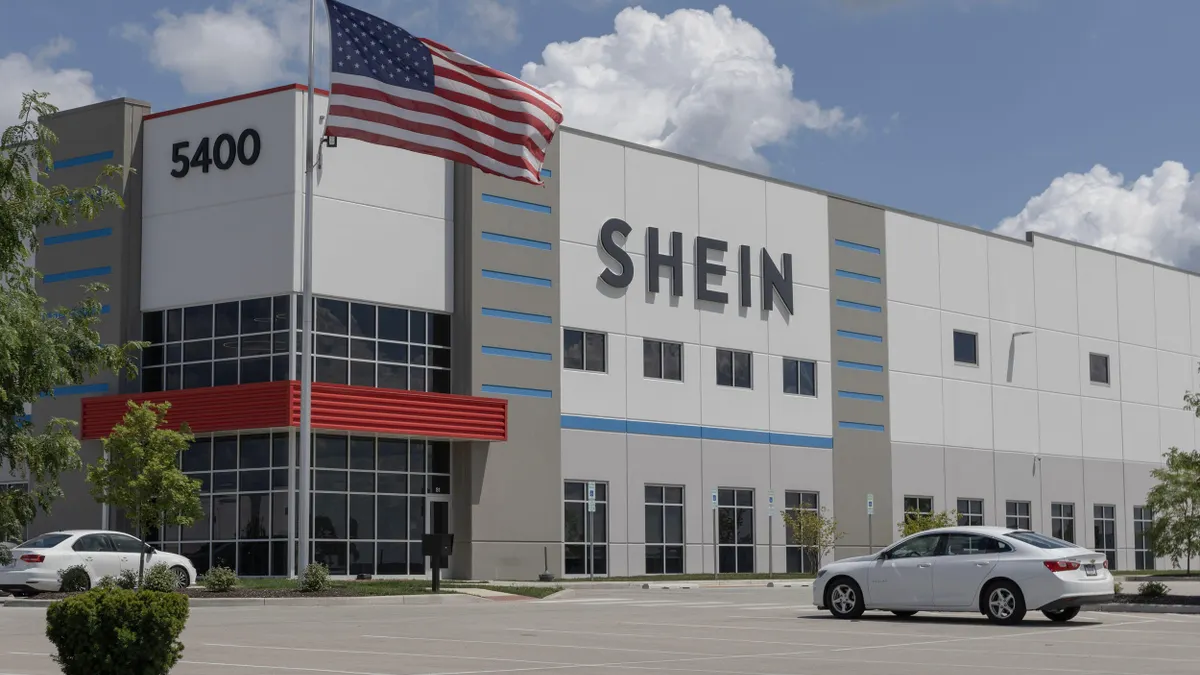
Shein has officially opened a new 737,000-square-foot automated distribution warehouse in Lebanon, Indiana, with operations scheduled to begin this month, marking another step in the fast-fashion retailer’s expansion of its U.S. fulfillment network.
The facility was unveiled on Sept. 10, according to a company press release, and incorporates a range of technology and automation aimed at making fulfillment operations more efficient.
At the heart of the site is a goods-to-person fulfillment system that brings products directly to employee workstations rather than requiring workers to manually retrieve items throughout the warehouse. According to a Shein spokesperson who spoke to Supply Chain Dive by email, the system is intended to reduce manual tasks, improve efficiency and enhance worker safety while strengthening the company’s overall fulfillment capabilities.
Central Indiana has become an important part of Shein’s U.S. logistics strategy. The new Lebanon facility is located approximately 1.5 miles from the retailer’s existing Indiana operations, according to the company.
Shein first established its distribution presence in Indiana in 2022, when it began operating in Whitestown. With the addition of the Lebanon warehouse, the company now has more than 2.5 million square feet of operational space across its Whitestown and Lebanon facilities.
Indiana is not Shein’s only U.S. fulfillment base. The company’s network also includes distribution facilities in California, as well as third-party logistics and fulfillment partners, the spokesperson said.
Shein’s expansion comes as other major players in the fast-fashion and e-commerce sector are also adjusting their fulfillment strategies. Rival Temu has been pursuing greater use of local fulfillment in an effort to reduce the impact of regulatory changes on its low-cost, cross-border shipping model.
Earlier this month, Temu owner PDD Holdings said it was changing its supply chain and fulfillment processes to address European Union customs duties affecting lower-value goods. The company previously adopted a similar approach after the United States eliminated the de minimis exemption last year.
The shift toward more localized and automated fulfillment highlights how e-commerce companies are increasingly relying on warehouse infrastructure and technology to adapt to changing trade rules while keeping delivery operations efficient and scalable.