



The growing number of persistent conflict zones is changing the responsibilities of ship managers, with the safety and welfare of seafarers increasingly becoming a central concern, according to Columbia Group Deputy Chief Executive Demetris Chrysostomou.
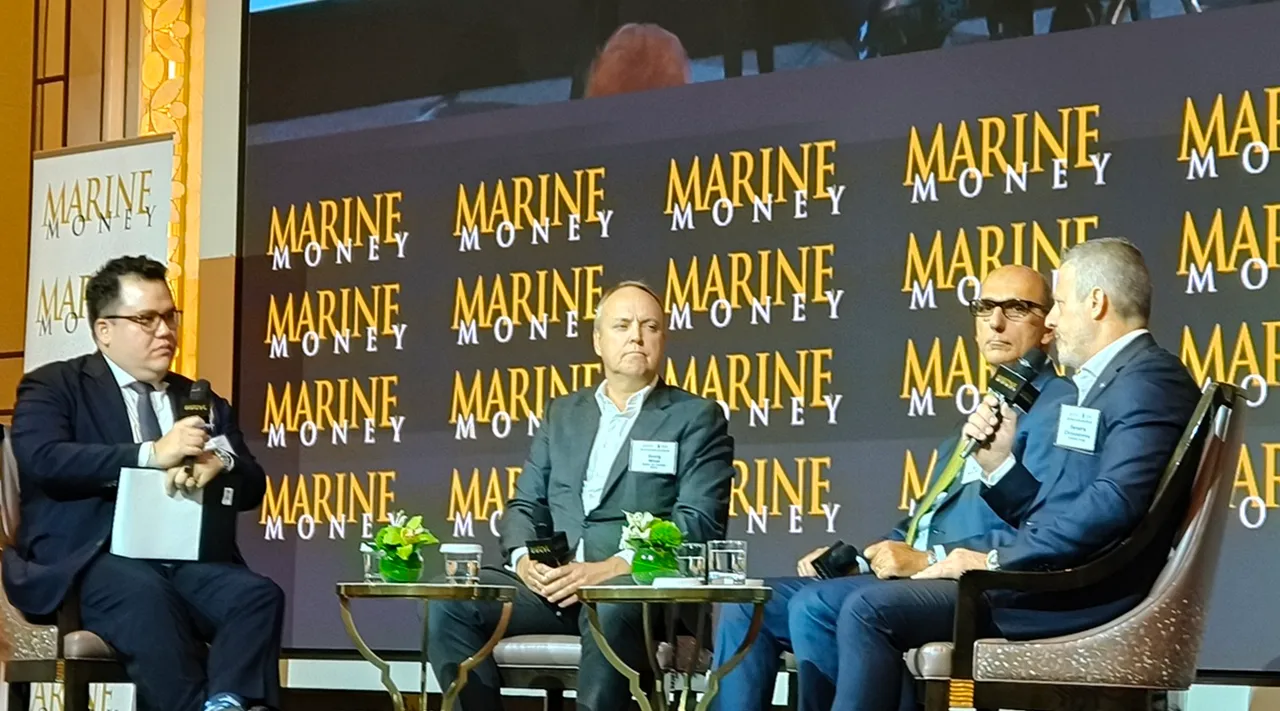
Speaking during a panel at Marine Money Asia in Singapore, Chrysostomou identified three regions currently creating major challenges for the shipping industry: the Strait of Hormuz, the Red Sea and the Black Sea. Rather than viewing the risks in these areas as temporary disruptions, the industry is increasingly having to deal with them as a more permanent feature of maritime operations.
That shift is also changing the role of ship managers. Traditionally focused on ensuring safe and efficient vessel operations while managing budgets, their responsibilities are now extending to managing the uncertainty faced by shipowners operating in or around these conflict zones.
“Now our role as a ship manager is to manage the uncertainty that is faced by shipowners, including in any of these main three areas,” Chrysostomou said.
However, the final decision on whether a vessel should trade in or transit a high-risk area does not rest solely with the ship manager. Such decisions are generally made by shipowners and the wider group of stakeholders involved in the vessel’s operation.
A decision on a screen, consequences at sea
Chrysostomou stressed that boardroom decisions need to take into account the human consequences behind every vessel movement.
“The decisions to trade in these high-risk areas, or transit these high-risk areas, are usually made in the boardroom by various stakeholders, including the ship managers. When we sit in a boardroom we see a dot on a computer screen, but I think we need to take a step back and remember that the dot represents 20 – 25 seafarers, and behind those seafarers are 20 – 25 families,” he said.
Those crews and their families depend on the stakeholders involved in the decision-making process to properly assess the risks, he added.
The difference is that the people making those decisions are not necessarily the ones who will experience their consequences directly.
“Also to put that in perspective the stakeholders are in a position that don’t live the consequences, those 20 -25 seafarers live the actual consequences.”
For Columbia, this human dimension should be the starting point for managing vessels and navigating the increasingly complex operational environment.
“Everything we do starts for us with crew, and that should be the cornerstone of all the decisions that we make and complexities that we manage,” Chrysostomou said.
No forced assignments for Columbia seafarers
When vessels and their crews do have to operate in high-risk areas, Chrysostomou said it is essential that seafarers know that senior management is monitoring developments around the clock and remains available to change decisions whenever circumstances require it.
He was also clear that Columbia seafarers would not be forced to sail into a high-risk area.
“There are a lot of seafarers not willing to work on these trades,” he said, pointing out that the risks involved are not theoretical. Hundreds of ships have been attacked in conflict-affected waters and seafarers have lost their lives.
A seafarer who does not want to continue working in a high-risk area can sign off. According to Chrysostomou, Columbia would then reassign that person to another vessel.
“We really need to look after our people.”
At the same time, not every seafarer views high-risk assignments in the same way. Chrysostomou noted that some crew members across the wider industry regard such assignments as an opportunity to earn more money by accepting work aboard vessels operating in these areas.
The differing attitudes among seafarers underline the need for decisions to consider both operational requirements and the individual circumstances of the people who ultimately face the risks at sea.