



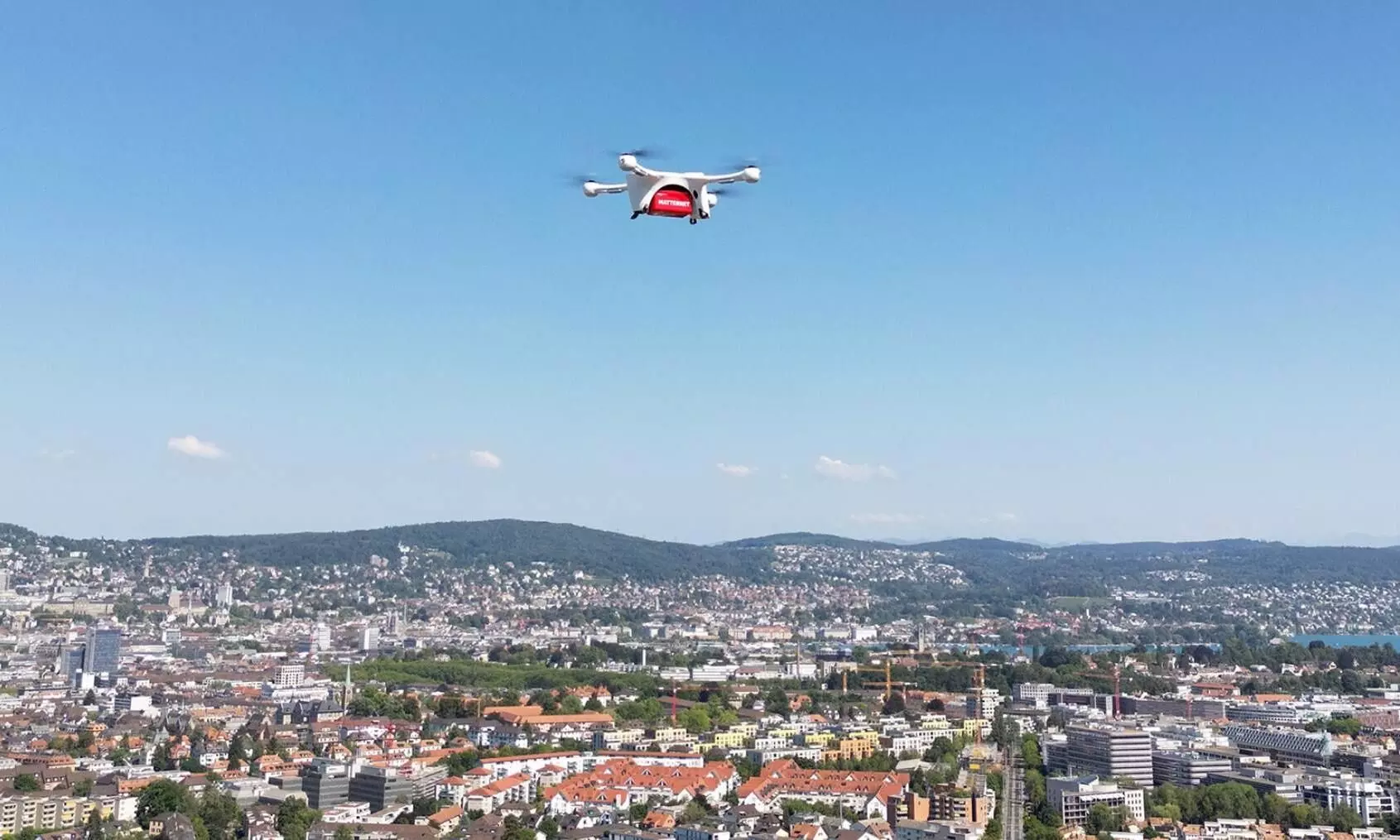
Matternet, Inc., the autonomous aerial logistics technology company, has officially begun trading its common stock on the OTCQB Venture Market under the ticker symbol MTTN, becoming the first publicly traded pure-play drone delivery company.
The move gives Matternet a new position in the public capital markets at a time when the company is preparing to introduce its next-generation drone delivery platform and expand commercial operations across the retail, healthcare, food and industrial logistics sectors.
Matternet is also the only drone delivery platform to hold both a standard Type Certification and Production Certification from the U.S. Federal Aviation Administration (FAA).
The OTCQB listing is expected to increase the company’s visibility among investors and provide broader access to the capital markets. The debut follows an oversubscribed private placement and a series of recent corporate milestones aimed at strengthening Matternet’s commercial footprint.
Among those developments is the launch of drone delivery operations for the UK’s National Health Service. Matternet has also formed a strategic partnership with SoftBank Robotics America to scale drone delivery networks and continued expanding its network of FAA Part 135 operating partners, including UPS Flight Forward, Ameriflight and Beeline UAS.
The company has further strengthened its leadership team with the recent appointment of Sanjay Shah and Sanjay Kotte to its Board of Directors. Both bring executive experience from major companies including Starbucks, Tesla, Amazon and DoorDash.
For founder and Chief Executive Officer Andreas Raptopoulos, the public-market debut comes at a pivotal moment for the drone delivery industry.
“As we enter the era of physical AI, we believe 2026 is an inflection point for drone delivery in the United States,” Raptopoulos said.
He added that Matternet expects drone delivery to become an increasingly integrated part of everyday transportation infrastructure over the coming years, allowing public-market investors to participate as the company develops what it sees as an essential new layer of transportation infrastructure.
Raptopoulos also pointed to the operational advantages of autonomous aerial delivery over conventional ground transportation, particularly for small and time-sensitive shipments.
“Drone delivery creates a fundamentally better way to move small, time-sensitive goods,” he said.
Rather than deploying a two-ton vehicle through congested roads to deliver a meal or a small retail package, he argued, a compact electric autonomous aircraft can transport the item directly through the air within minutes.
According to Raptopoulos, the potential applications extend well beyond individual consumer deliveries. Over the next few years, Matternet expects drone delivery to reach virtually every industry that relies on, or could benefit from, rapid logistics, including food, retail, healthcare and high-value B2B applications.
Matternet’s technology has already supported more than 60,000 commercial flights across dense urban and suburban environments in the United States and Europe. The company’s operational history dates back to 2014, when its technology was first used for humanitarian missions.
With its OTCQB debut now complete, Matternet is entering its next phase with a focus on commercial scale, broader market access and the development of autonomous aerial logistics as part of the wider transportation infrastructure.