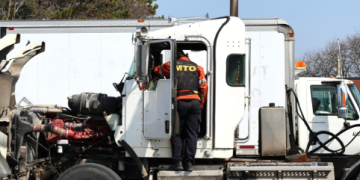




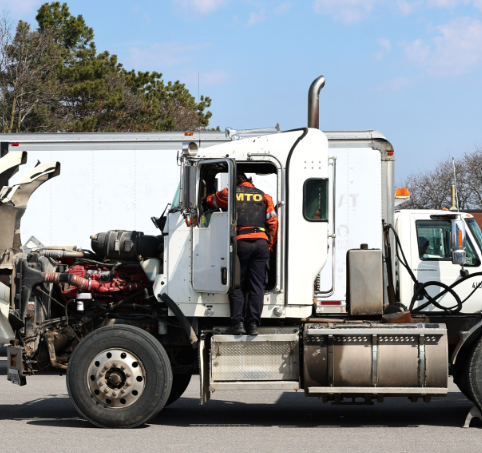
Commercial vehicle enforcement operations across the United States are exposing persistent safety and compliance problems in the trucking industry. Recent crackdowns have uncovered hundreds of violations involving mechanical defects, unsafe driving practices, improper lane use and failures to meet regulatory requirements. Authorities have also removed drivers and vehicles from service when inspectors identified serious safety concerns.
The latest operations, conducted or reported in October across Arizona, California, North Dakota and Kentucky, highlight the range of risks facing commercial trucking operators, from poorly maintained equipment to drivers who are not legally qualified to operate heavy vehicles.
Arizona operation removes 110 drivers and vehicles from the road
One of the most extensive recent enforcement efforts took place along Interstate 40 near Flagstaff, Arizona, between October 6 and 8. State troopers and transportation officials carried out 263 inspections and 195 weight checks during the three-day operation.
According to the Arizona Department of Public Safety, the crackdown resulted in 110 unsafe vehicles and drivers being removed from the state’s roadways. The initiative was conducted under Arrive Alive Arizona, a commercial vehicle enforcement program aimed at improving highway safety.
Inspectors also issued 80 Commercial Vehicle Safety Alliance (CVSA) decals to trucks that satisfied the applicable inspection requirements.
The Flagstaff operation was part of a broader series of commercial vehicle safety initiatives across several states, as authorities continued to address equipment failures, driving violations and noncompliance with federal and state regulations.
North Dakota inspection campaign identifies 494 violations
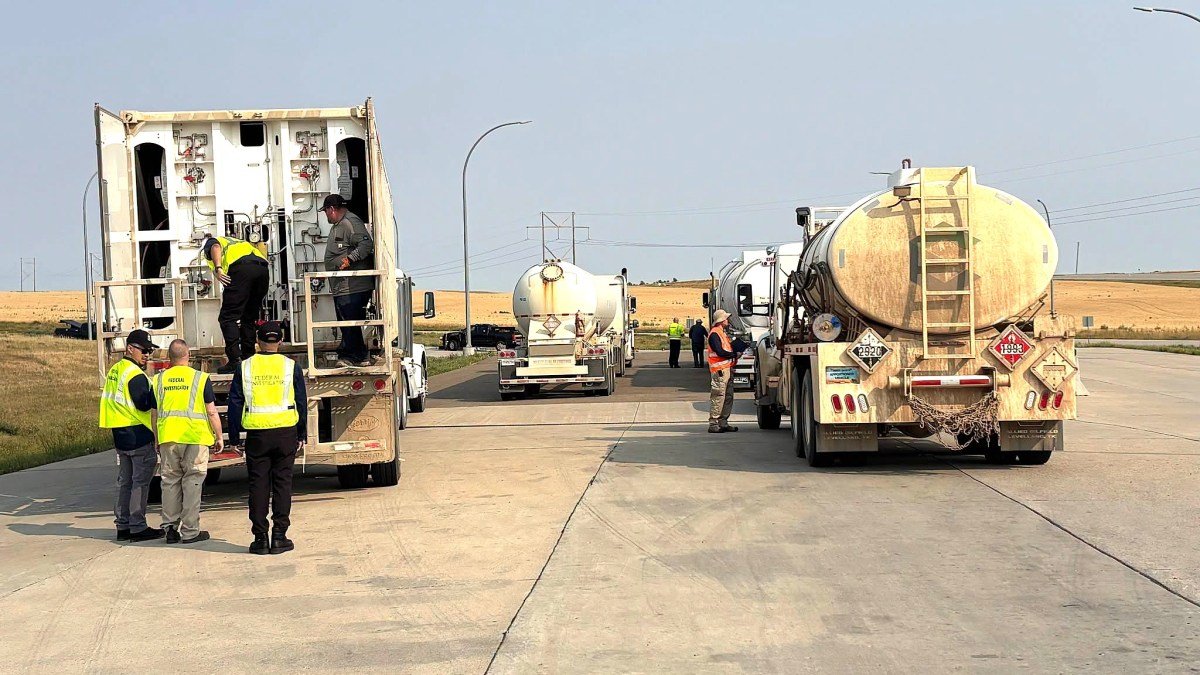
Federal, state and local authorities identified 494 violations during a commercial vehicle safety operation in Williston, North Dakota, according to the Federal Motor Carrier Safety Administration (FMCSA), which reported the results on October 8.
Inspectors completed 109 commercial vehicle inspections, including 20 checks involving hazardous materials. The operation resulted in 122 out-of-service (OOS) violations and 47 enforcement actions, comprising 27 citations and 20 warnings.
The FMCSA did not disclose the number of individual drivers or vehicles placed out of service. The 122 OOS violations therefore represent identified violations, not 122 separate trucks or drivers removed from operation.
Enforcement results across five locations
The figures below distinguish between recorded violations, citations and out-of-service findings. Where authorities reported the number of drivers and vehicles removed from service, those figures are presented separately from violation totals.
| Location | Inspections | Violations / Citations | Out-of-Service Findings |
|---|---|---|---|
| Flagstaff, Arizona | 263 | Not reported | 110 drivers and vehicles combined |
| Williston, North Dakota | 109 | 494 violations | 122 OOS violations |
| Newhall, California | Not reported | 279 citations | 28 vehicles, 13 drivers |
| Garden Grove, California | 90 | 90 violations, 55 citations | 9 vehicles |
| Eastern Kentucky (September) | 1,030 | 612 violations | 79 vehicles |
Arizona troopers uncover major brake defects on Interstate 10
A separate enforcement incident in Arizona on October 8 exposed serious mechanical problems on a commercial truck traveling along Interstate 10 near Bapchule.
A state trooper stopped the vehicle after receiving reports that it was speeding, nearly colliding with other vehicles and failing to maintain its lane.
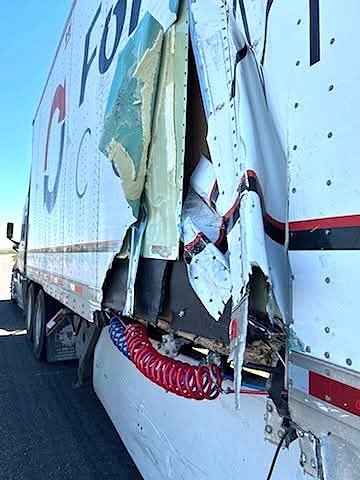
The subsequent inspection revealed extensive damage to the trailer, including seven broken crossmembers, approximately five feet of damaged lower rail, severed electrical wiring and improperly connected air lines.
Authorities determined that all the trailer’s brakes were inoperative because an air line had been severed. The driver was also unable to produce a required logbook. Both the driver and the semitrailer were placed out of service.
Another case in the Phoenix area, on September 29, revealed violations involving both driver conduct and legal qualifications. A trooper initially stopped a commercial vehicle after noticing a missing mud flap and a driver who was not wearing a seat belt.
During the inspection, authorities found that the driver’s logbook incorrectly recorded him as being in sleeper-berth status while he was operating the truck. Investigators also determined that he did not hold a valid commercial driver’s license (CDL) and was prohibited from operating a commercial vehicle after failing a previous drug test.
The driver was cited and placed out of service.
Arizona authorities also targeted trucks violating lane restrictions in a construction zone on Interstate 10 in Pinal County on October 8. Troopers took enforcement action against five commercial vehicles that had traveled in the left lane, despite a requirement for trucks to remain in the right lane between Phoenix and Tucson.
According to the Department of Public Safety, the vehicles had used the restricted lane for distances ranging from 1.5 miles to more than four miles, disrupting traffic flow through the active construction area.
California operations take 41 drivers and vehicles out of service
The California Highway Patrol (CHP) carried out a commercial vehicle safety operation in the Newhall area on Oct. 13 that led to 279 citations for violations, including mechanical defects, improper lane use, speeding and unauthorized stops on freeways.
The operation resulted in the removal of 28 commercial vehicles and 13 drivers from service.
On the same date, police in Garden Grove conducted a separate commercial vehicle enforcement checkpoint. 90 inspections were completed by officers, 90 violations were recorded and 55 citations were issued. The Garden Grove Police Department said eight vehicles were towed and nine were taken out of service.
CHP officers have completed a coordinated enforcement operation in Merced County on October 8 following complaints of trucks speeding, improper lane use and unsafe lane changes.
The operation included the CHP’s Merced Area office, the Chowchilla River Commercial Vehicle Enforcement Facility and the agency’s Central Division Mobile Road Enforcement team. The authorities did not provide inspection totals or citation figures for this initiative.
Enforcement action was also taken in a separate incident in Santa Barbara County. On Oct. 2, CHP officers cited a commercial truck driver after seeing a tractor-trailer going 71 mph northbound on U.S. Highway 101 near Bailard Avenue.
Kentucky reports 612 violations in September inspections
Kentucky State Police announced another major round of enforcement across the state’s eastern region. Commercial Vehicle Enforcement East Region performed 1,030 commercial motor vehicle inspections in its 25-county jurisdiction during the month of September.
In results released Oct. 17, inspectors said they found 612 violations and placed 79 vehicles out of service. The agency also conducted 119 hazardous material inspections in the month.
Kentucky State Police said any car taken out of service has to have the safety defects identified fixed before it can be put back on the road.
The results from Arizona, California, North Dakota and Kentucky together underscore the variety of compliance issues confronting commercial trucking operators. Mechanical failures, driver disqualifications, incorrect driving records and traffic violations continue to be important enforcement priorities.
Why it matters: The findings highlight the operational and safety risks to trucking companies when vehicle maintenance, driver qualification checks and regulatory compliance are not up to standard. Serious defects can result in immediate stoppage of service and violations related to driving conduct and licensing can lead to additional enforcement actions against operators and interruptions in freight movements.