



A South Korean container ship has completed the country’s first commercial round-trip voyage to Europe through the Arctic, marking a significant step in efforts to assess a shorter maritime corridor between Northeast Asia and European markets. The trial demonstrated the route’s potential to reduce transit times compared with the traditional Suez Canal passage, although its commercial viability remains uncertain amid operational, financial and geopolitical challenges.
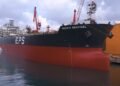
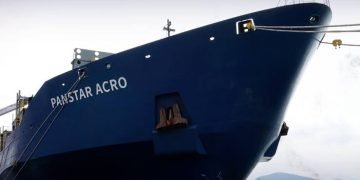
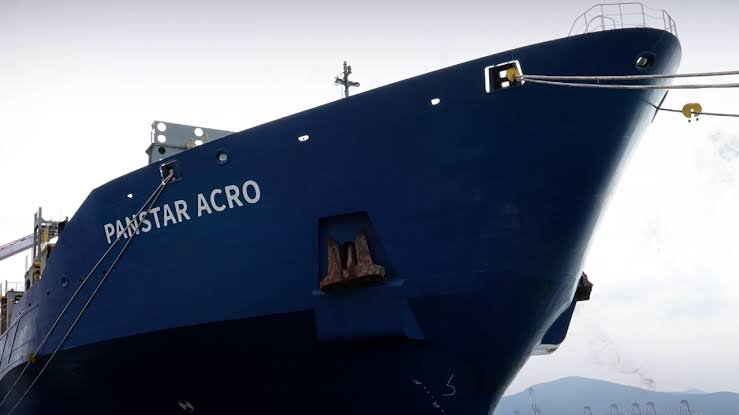
The PanStar Acro returned to Busan on October 11 after a 50-day journey that began on August 22. Sailing along Russia’s Arctic coastline, the vessel reached Felixstowe in the United Kingdom before calling at Rotterdam in the Netherlands and Gdansk in Poland. It then returned to South Korea through the northern passage, according to Reuters.
Backed by the South Korean government, the voyage carried commercial export cargo. Authorities plan to analyze the operational data collected during the trip to determine whether the Northern Sea Route could support regular shipping services, with a target of launching commercial operations by 2030.
Shorter transit times are an advantage in strategy.
The voyage gave a first indication of the time savings that the Arctic corridor could deliver. It took the PanStar Acro about 20 days to reach Felixstowe, according to South Korea’s Ministry of Oceans and Fisheries, The Korea Herald reported.
President Lee Jae Myung said the journey saved 10 days over the one-way sailing time on the conventional route through the Suez Canal.
The Northern Sea Route along the northern coast of Russia provides a shorter sea connection between Northeast Asia and Europe. For South Korea, the potential value is more than just faster deliveries. To the government, the corridor presents an opportunity to diversify the country’s import and export logistics networks and reinforce Busan’s position as an international maritime hub.
The Ministry of Oceans and Fisheries said it will review the results of the experimental voyage before planning more voyages and commercial activities. The broader strategy also involves potential openings for shipping companies, shipbuilders, ports and logistics providers in line with South Korea’s long-term ambitions for Arctic development.
But the trial was carried out below the planned cargo capacity of the vessel. The vessel had 737 loaded twenty-foot equivalent units (TEUs) onboard versus a planned cargo volume of 1,300 TEUs.
Previous trials indicate growing interest in Arctic shipping
South Korea’s move is one of a series of efforts to test the commercial viability of Arctic shipping.
The container ship Istanbul Bridge conducted a trial run of the China-Europe Arctic Express in September and October 2025. The vessel departed Ningbo-Zhoushan on 23 September and arrived at Felixstowe after about 20 days.
The interest in northern shipping corridors is not new: In 2018 Maersk (OTC:AMKBY) also tested a container ship in the Arctic.
But these precedents do not necessarily mean a more competitive service with shorter sailing distances. But analysts say several factors could eat into any potential savings, including the reliability of the schedule, the cost of slowing down or diverting to avoid ice, additional insurance premiums and greater fuel consumption.
Costs will be crucial in deciding whether the route can offer a sustainable commercial advantage over existing maritime corridors.”
Seasonal access and ice conditions remain major challenges.
The Northern Sea Route is typically more accessible during the summer season, when seasonal melting of sea ice occurs due to warmer temperatures. But the conditions are still unpredictable and some ships will still need icebreaker assistance to get through difficult passages.
This seasonality is a big challenge for shipping operators who are used to working to a regular schedule all year round. The Arctic route can potentially offer shorter transit times in good conditions, but the uncertainty around ice and navigation could complicate service planning and threaten delivery commitments.
South Korean authorities will have to consider, in the next phase, not only how quickly vessels can make the journey, but also how reliably the route can be operated under commercial conditions.
“Geopolitical risks with Russia make the route difficult
The Arctic corridor also presents diplomatic and strategic challenges, as it runs along the Russian coast.
South Korea had consulted with Moscow in advance of the voyage, including the possibility of assistance if the vessel had run into trouble with ice. Wider cooperation associated with the route could cause frictions with Western allies seeking to isolate Russia over its war in Ukraine, Reuters reported.
These conditions add a geopolitic element to decisions about whether to start up a regular commercial service. Shipping operators and governments would have to balance the possible logistical advantages against the diplomatic implications of using a route that requires Russian cooperation.
Commercial ambition goes hand in hand with environmental issues
Environmental groups have also warned against more Arctic shipping, saying increased ship traffic could damage fragile ecosystems and lead to more ice loss.
The South Korean trial is a test case for a larger dilemma in the region. With warmer temperatures opening areas of the Arctic to commercial navigation, shipping companies and governments are exploring how to shorten trade routes. At the same time, increased maritime activity could add to the pressure on an already fragile environment.
For now, the PanStar Acro’s voyage provides operational data, not conclusive evidence that the Northern Sea Route can support regular commercial services. South Korea’s planned study, and future trials, will help determine if shorter transit times can overcome the financial, seasonal, geopolitical and environmental barriers to Arctic shipping.