



The Global Centre for Maritime Decarbonisation (GCMD) has selected two vessels operated by Eastern Pacific Shipping (EPS) for the first projects financed through its Fund for Energy Efficiency Technologies (FEET). The funding will support wind propulsion systems designed to reduce fuel consumption and advance the decarbonisation of commercial shipping.
Launched in November 2025 by GCMD and AIM Horizon Investments, FEET secured $35 million in investor backing to finance the retrofitting of energy-efficiency technologies on merchant vessels. Its financing model links shipowners’ repayments to the fuel savings generated by the technologies installed.
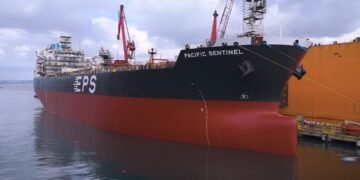
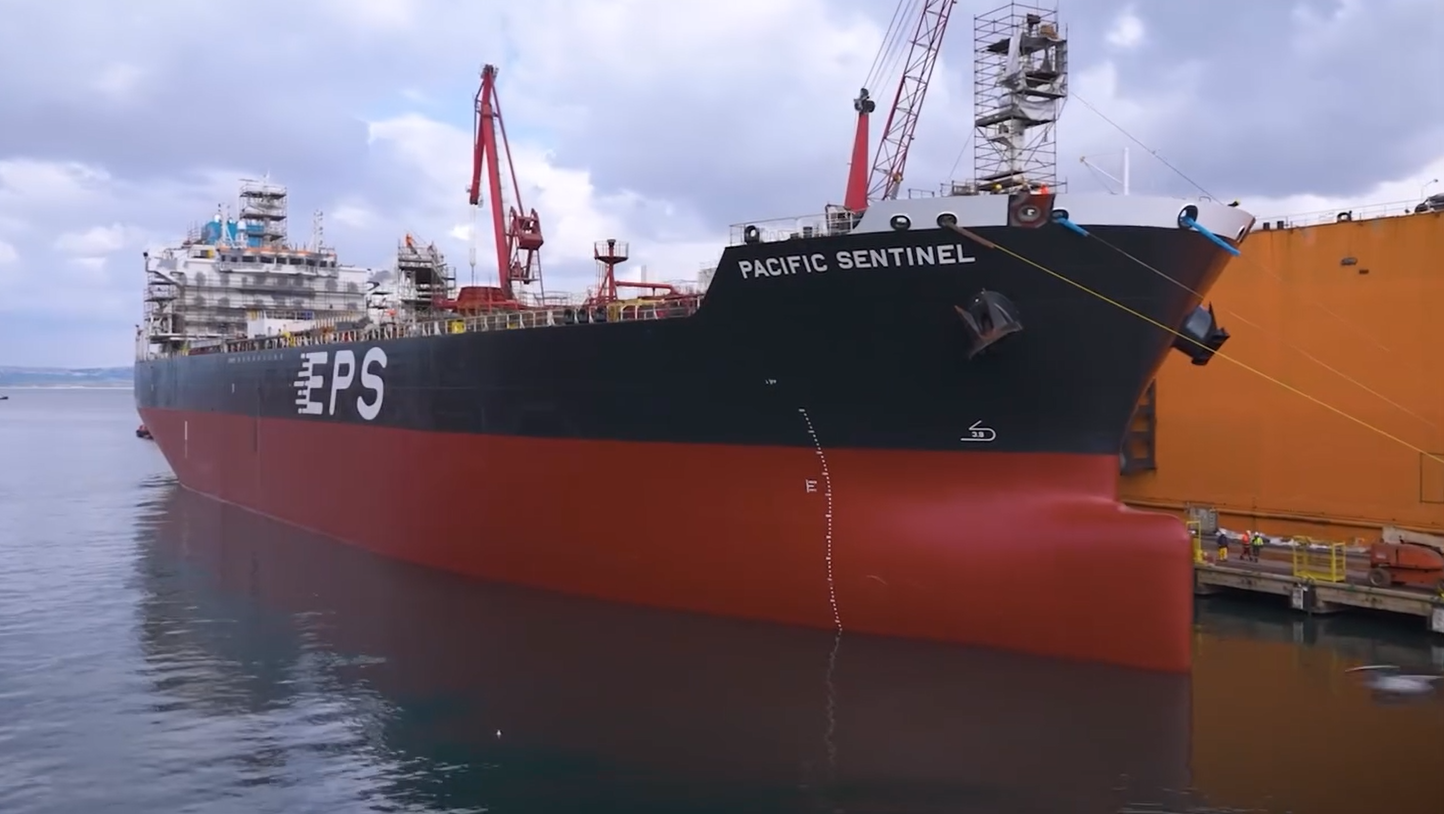
The fund’s inaugural projects involve Pacific Sentinel, built in 2019, and Pacific Sunstone, built in 2026. Both vessels are part of the EPS fleet and are the first ships operated by the company to be equipped with wind propulsion systems.
Pacific Sentinel received three 22-metre eSAIL suction sails manufactured by bound4blue in early 2025. The same technology provider was subsequently contracted to install three eSAILs on Pacific Sunstone, which was still under construction when the agreement was signed in late 2025.
measurement of fuel savings in actual operating conditions
Before the first projects received funding, GCMD and EPS collaborated to tackle a major obstacle for wind assisted propulsion: the accurate quantification of fuel savings offered by the technology, regardless of other factors impacting vessel performance.
Within the collaboration, Pacific Sentinel was used as a test vessel to develop a methodology to isolate the contribution of wind propulsion to overall performance.
Between May and September 2025, the vessel worked on the spot market in the Americas and GCMD collected 276 million data points over four months. The dataset contained 203 valid transitions between periods of wind propulsion system being on and off, which formed the basis for assessing the impact on fuel consumption.
FEET will use the methodology developed on board Pacific Sentinel to assess the fuel savings offered by the wind propulsion systems it finances. The approach was reviewed by an independent third party. Shipowners will pay according to audited operational data and independently verified calculations of fuel saved.
A model of performance-based financing
At the heart of FEET’s financing model is the measurement of fuel savings. Rather than a traditional repayment schedule, the fund links payments by shipowners to the cost savings delivered by the funded technology.
FEET provides up to 100% upfront financing via a blended finance structure under its pay as you save mechanism. The model is meant to assist shipowners in implementing energy-efficiency technologies and to align repayment obligations with proven operational benefits.
For the fund, the initial projects with EPS are an opportunity to test the approach and develop a framework that could enable broader adoption in commercial fleets.
If you want to scale that, it’s not enough to show that an energy-efficiency technology works,” said Professor Lynn Loo, CEO of GCMD. It also depends on the amount of fuel they save in real-world operating conditions.
“Now that we have a methodology to quantify those savings,” she said, “the first FEET projects with EPS will test the practical use of pay-as-you-save financing, linking payments to verified fuel savings. The goal is to convert operational evidence into investor confidence, and accelerate the adoption of energy-efficiency technologies across shipping fleets.
FEET ready to spur investment activity
“Establishing the fund was not an easy feat,” said Marcel de Bruijckere, CEO of AIM Horizon Investments, which also pointed to collaboration with GCMD and the backing of its anchor investor, the Development Bank of Japan, and debt providers ING and DBS Bank.
He also highlighted lessons learned through engagement with EPS’s finance and technical teams, saying these insights will help guide future investments and support the fund’s expansion.
The projects show how technology, operational data and financing can be leveraged to accelerate maritime decarbonization for EPS.
Cyril Ducau, CEO of Eastern Pacific Shipping, said: “Pacific Sentinel has demonstrated the promise of wind-assisted propulsion in real-world operating conditions. The first financing arrangement backed by FEET was a welcome way to help shipowners invest in proven solutions, he said.
The initiative combines deployment of wind propulsion technology with a performance-based financing model, whereby verified fuel savings will connect the operational performance of decarbonization measures with their financial return.