



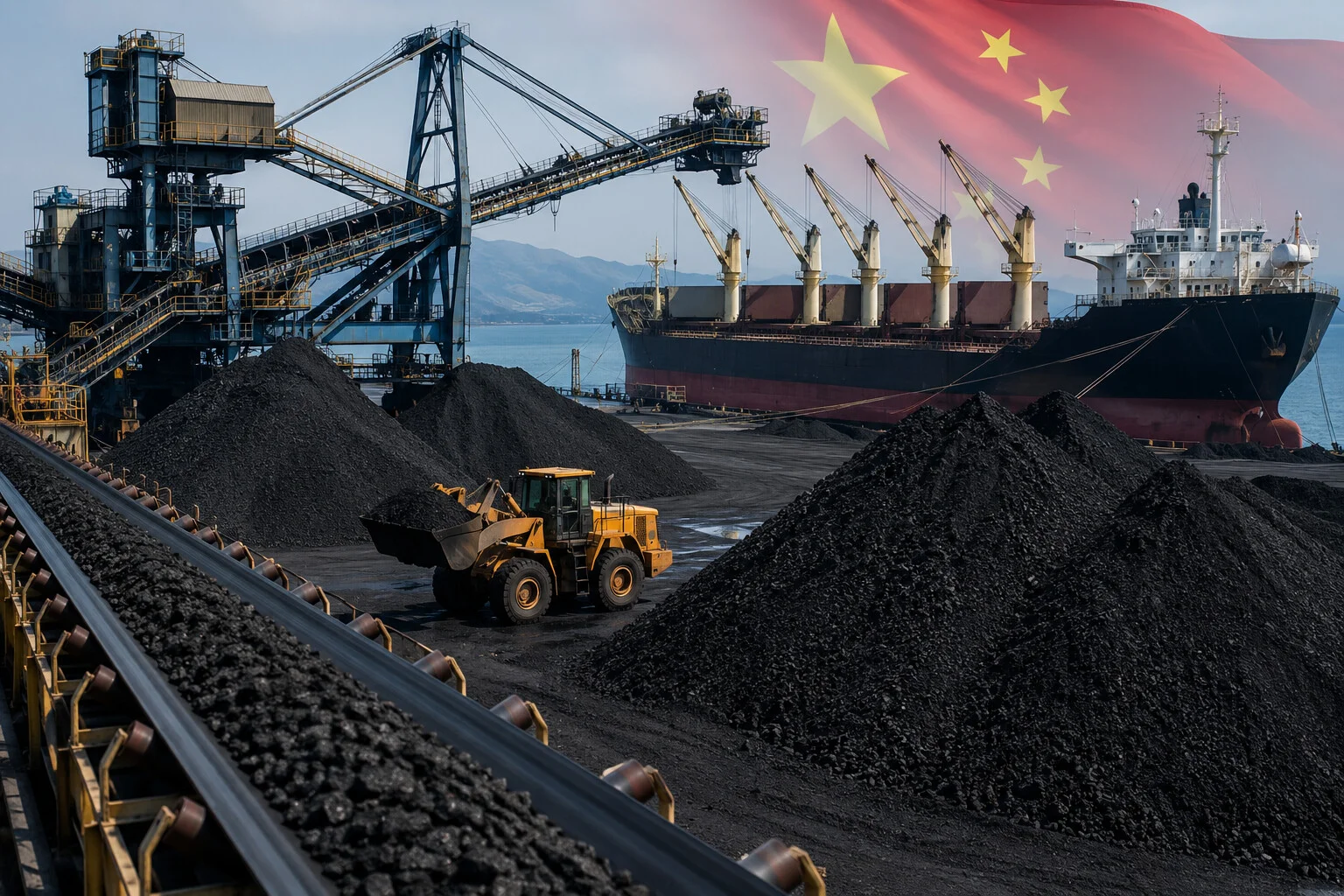
The global seaborne coal trade is again expanding in 2026 as disruptions to liquefied natural gas (LNG) deliveries from the Arabian Gulf push Asian energy markets to rely more heavily on coal.
Shipbroker research Global seaborne coal volumes grew 3% year-on-year in the January to September period, reversing the 4% contraction in 2025, Ifchor Galbraiths said. The rebound comes amidst major shifts in regional buying habits and longstanding sea trade routes.
Metallurgical coal has been especially strong in this rebound. Global seaborne trade in this segment grew 10% y-o-y in the first nine months of 2026, according to the company’s latest Coal Markets Companion Report. Australia’s exports did even better, with shipments to China almost doubling and total exports up 13 per cent.
But thermal coal was a different story. Overall import volumes were little changed, with weaker buying from China and India offset by stronger demand from the rest of Asia. China’s imports fell 7 percent, India’s 10 percent. Meanwhile, imports in other Asian markets rose about 10 percent with South Korea, Pakistan, Bangladesh, Japan and Vietnam among the countries behind the rise.
Laura Gomez, from Ifchor Galbraiths’ Research & Advisory team, said the change was significant. The seaborne coal trade was recovering despite reduced imports from China and India, she said. Demand is becoming increasingly diversified to other Asian economies, partly as a response to disruptions to LNG supply, while changing procurement patterns are reshaping well-established trade flows. Headline figures for coal consumption did not tell the whole story on developments in maritime trade, she said.
LNG supply constraints could still underpin coal demand
If LNG flows through the Strait of Hormuz are disrupted, the shift to coal could be prolonged. Asian buyers have limited options to secure supplies, with only a handful of LNG cargoes reported to have departed the Gulf in recent weeks.
It is difficult to ascertain the exact number of ships that sail through the strait. Those few LNG carriers that have crossed the dangerous route have been said to be sailing in dark mode, making it difficult to track their movements. But only a small proportion of the pre-war traffic is willing to take the risk on a route which used to account for about a fifth of the world’s LNG supply.
Gulf LNG exporters also have fewer options to keep supplies flowing. LNG shipments also cannot easily be redirected through pipelines or replaced by ship-to-ship transfers, as is the case with some other energy supply chains, making maritime access through the region all the more important.
Winter preparations could revive coal buying
Looking ahead, coal buying is expected to pick up as Asian utilities prepare for the peak winter demand, Ifchor Galbraiths said.
“Coal demand has increased in 2026 but a lot of the extra activity was in the second quarter,” said head of dry research at the shipbroker, Vincent Lemaître. Asian utilities bought ahead of the summer peak, but the third quarter was fairly quiet.
But with no sign that the Hormuz crisis is easing and coal prices forward rising, the company expects another procurement round ahead of winter.
Demand outside Northeast Asia will also increase, as will buying patterns. Tenders and term contracts have traditionally been used by buyers in the region and similar arrangements may become more common in Southeast Asia. Australian and US producers are seeking to lock in forward sales and could be offering more long-term supply contracts to regional customers.
The developments could prop up seaborne coal trade through 2027 even as conditions in the Strait of Hormuz begin to improve, Lemaître said.
The outlook is thus for further reshaping of Asian energy supply chains, with coal cargoes potentially benefiting from LNG supply constraints and new buying and moves in regional buyers’ purchases of fuel.