




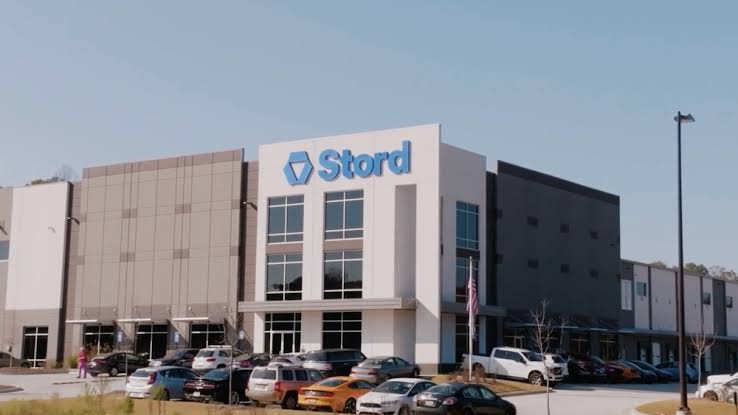
Fast-growing e-commerce logistics provider Stord has completed its largest acquisition since its creation 11 years ago, taking over AMS Fulfillment, a rival specializing in order processing for more than 150 beauty, wellness and direct-to-consumer brands.
Although the companies have not disclosed the precise financial terms, Stord confirmed in a press release on Wednesday that the transaction was valued at nine figures.
The deal significantly expands Stord’s operational footprint. It brings 10 warehouses into its network, representing nearly 1.3 million square feet of space dedicated to storage, packing and shipping. The facilities are located across Los Angeles, Salt Lake City and Philadelphia. Following the acquisition, Stord’s global network comprises more than 100 locations operated directly by the company or through partners.
The integration is expected to give AMS customers access to Stord’s broader operational capacity and technology, with potential benefits for inventory management, delivery speed and service reliability.
Scaling up to challenge major e-commerce platforms
Stord has positioned itself as a challenger to Amazon in the e-commerce fulfillment market. According to the company, it processes more than $15 billion in annual gross merchandise value for over 1,000 online retailers, many of which are small and medium-sized businesses. Its customer base is also expanding to include larger brands with high-frequency order volumes.
The company says its revenue has increased tenfold over the past four years and is approaching $1 billion.
Its business model offers retailers an integrated range of logistics services, including inventory management across multiple locations, order fulfillment and carrier selection for final-mile delivery. Stord also claims its network can support timely deliveries to a quarter of U.S. households.
The acquisition comes amid an expansion drive backed by substantial financial resources. Stord secured $650 million in equity and credit capacity this year to fund the development of its infrastructure and technology. Earlier this month, the Atlanta-based company closed a $400 million credit facility and appointed new chief financial and chief revenue officers. In May, it raised $250 million in venture capital at a valuation of $3 billion.
The funds are being directed toward expanding the fulfillment network and accelerating investments in robotics and artificial intelligence.
AMS brings specialized services and established customers
AMS Fulfillment provides order management, warehouse and inventory management, reverse logistics and other value-added omnichannel fulfillment services. Its customers are primarily consumer goods companies operating in cosmetics, apparel, footwear and accessories.
The company also offers specialized services designed to enhance the customer experience, including product kitting, display preparation and personalized fulfillment.
“AMS brings some of the most discerning brands in the industry onto our platform, and we enter peak season with more scale, intelligence, and momentum than at any point in our history,” said Sean Henry, Stord’s co-founder and chief executive officer.
Henry has previously described Stord’s strategy as providing independent brands with the physical infrastructure and digital capabilities needed to compete with Amazon Prime on convenience and cost. The approach relies on a shared platform that would be difficult for any single retailer to develop independently.
Driven by AI and Automation Expansion
The acquisition also has the added benefit of enhancing Stord’s technology capabilities, not just its warehouse capacity. AMS already has automated bin-sorting systems in place at its California and Delaware facilities. The facilities add to investments by Stord’s development hub, and give the company more automated capacity to implement robotics and AI solutions.
Stord believes that its physical infrastructure, coupled with its vertically integrated technology and growing operational data, will provide it with a competitive advantage. The company intends to train its AI models with live fulfillment data from its network of nearly 100 facilities.
Its goal is to speed up the deployment of technology outside traditional implementation cycles and to enhance the efficiency, speed and operating costs of the network.
A wider acquisition strategy
The AMS transaction is Stord’s 11th acquisition and the latest in a string of deals to grow its fulfillment capabilities and geographic footprint.
The company acquired Pitney Bowes’ e-commerce fulfillment operation in 2024. It bought Ware2Go from UPS in 2025, and Penny Black, a software-as-a-service startup for hyper-personalized inserts in post-purchase shipments. CEVA Logistics sold Shipwire to it in January.
This year, Stord also bought a former Quiet Logistics warehouse to expand its presence in the Dallas market.
The significance of this acquisition
The deal highlights a broader trend in e-commerce logistics: Big fulfillment operators are expanding to better compete with Amazon and Walmart, which both offer bundled fulfillment and logistics services to third-party sellers.
For Stord, that means warehouse capacity, existing relationships with consumer brands, and existing automation systems. The purchase also supports its strategy to combine physical infrastructure, logistics operations and technology on a single platform.
As the competition for delivery speed heats up, independent fulfillment providers with more scale may be able to provide retailers with an alternative to the integrated logistics ecosystems of the largest online marketplaces, while competing on operating efficiency and customer experience.