



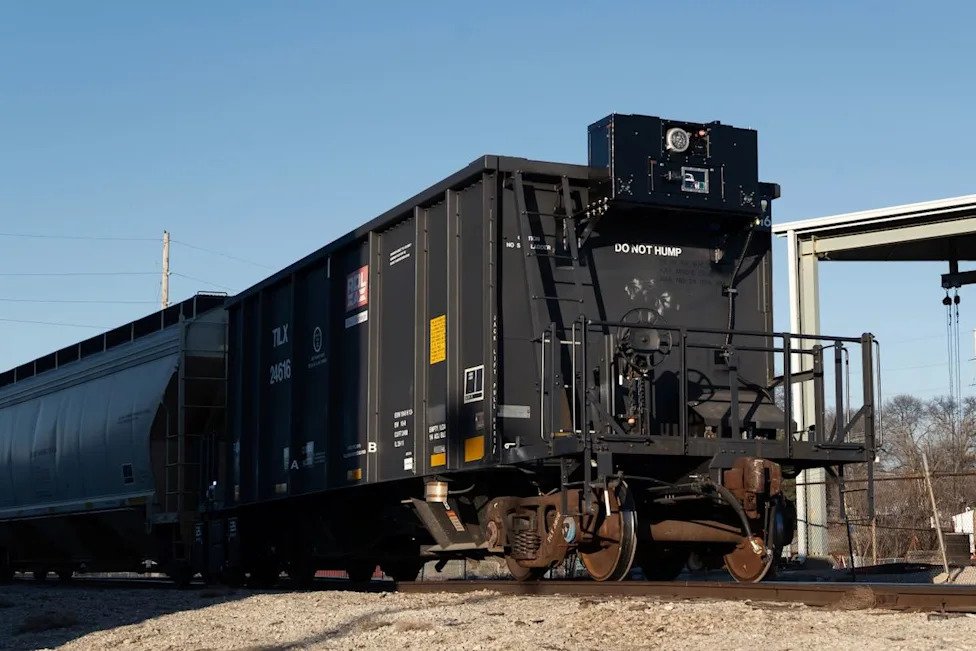
Intramotev is preparing to introduce autonomous freight railcars on Missouri’s Columbia Terminal Railroad (COLT), following the award of a $16.2 million federal grant to the City of Columbia. The project will involve the deployment of two TugVolt units and improvements to the railway’s infrastructure, with the aim of demonstrating how autonomous technology can strengthen freight operations on short-line networks.
The funding was awarded through the Consolidated Rail Infrastructure and Safety Improvements (CRISI) programme, administered by the Federal Railroad Administration (FRA). According to the project announcement, the agency selected Columbia to receive support for the initiative, with Intramotev acting as the technology partner.
The deployment will cover COLT’s 21.4-mile railway between Centralia and Columbia. The project will progress in stages under an FRA-approved testing programme, beginning with remote switching operations at the Columbia terminal before advancing towards autonomous freight services across the entire mainline, including public level crossings.
Alongside the technology deployment, the federal grant will finance track improvements and other infrastructure upgrades intended to support the railway’s modernisation.
Autonomous technology aimed at strengthening short-line rail services
Tim Luchini, chief executive of Intramotev, highlighted the role of short-line railroads in connecting smaller American cities and rural communities to the wider freight network. He said autonomous railcars could enable these operators to serve more customers more frequently and at a lower cost.
According to Luchini, the Columbia project will provide an opportunity to demonstrate these potential benefits under real operating conditions on an active mainline.
COLT is a municipally owned short-line railroad operated by Columbia City Utilities. Intramotev will manufacture both TugVolt railcars at its facility in St. Louis, Missouri.
Erin Keys, the City of Columbia’s utilities director, emphasised the railway’s importance to the local economy. COLT has connected Columbia to the national rail network for nearly 40 years, supporting businesses that collectively sustain hundreds of local jobs.
Keys said the federal investment would allow the city to modernise its railroad, improve service for customers and establish Columbia as a centre for rail innovation.
A potential model for more than 600 US short-line railroads
Beyond its immediate operational objectives, the initiative is intended to establish a safety record that could help guide the wider adoption of autonomous freight railcars across the United States.
According to the announcement, the Federal Railroad Administration and the country’s more than 600 short-line railroads could use the project’s results as a reference when evaluating the deployment of similar technology on their networks.
However, the announcement did not provide a specific start date for the railcar deployment or establish a timetable for the transition from remote switching at the terminal to autonomous operations across the full line.
Intramotev expands its partnerships and technology assessments
The federal grant follows other developments for Intramotev during the year. In April, the company announced an agreement with Austria’s ÖBB Rail Cargo Group, extending its engagement with the European freight rail sector.
In June, US Army Reserve soldiers also received training on TugVolt technology as part of a planned technology assessment.
The Columbia project now represents another step in the company’s efforts to advance autonomous rail freight operations, while providing an opportunity to assess the technology’s performance, safety and practical application within an established railway network.