



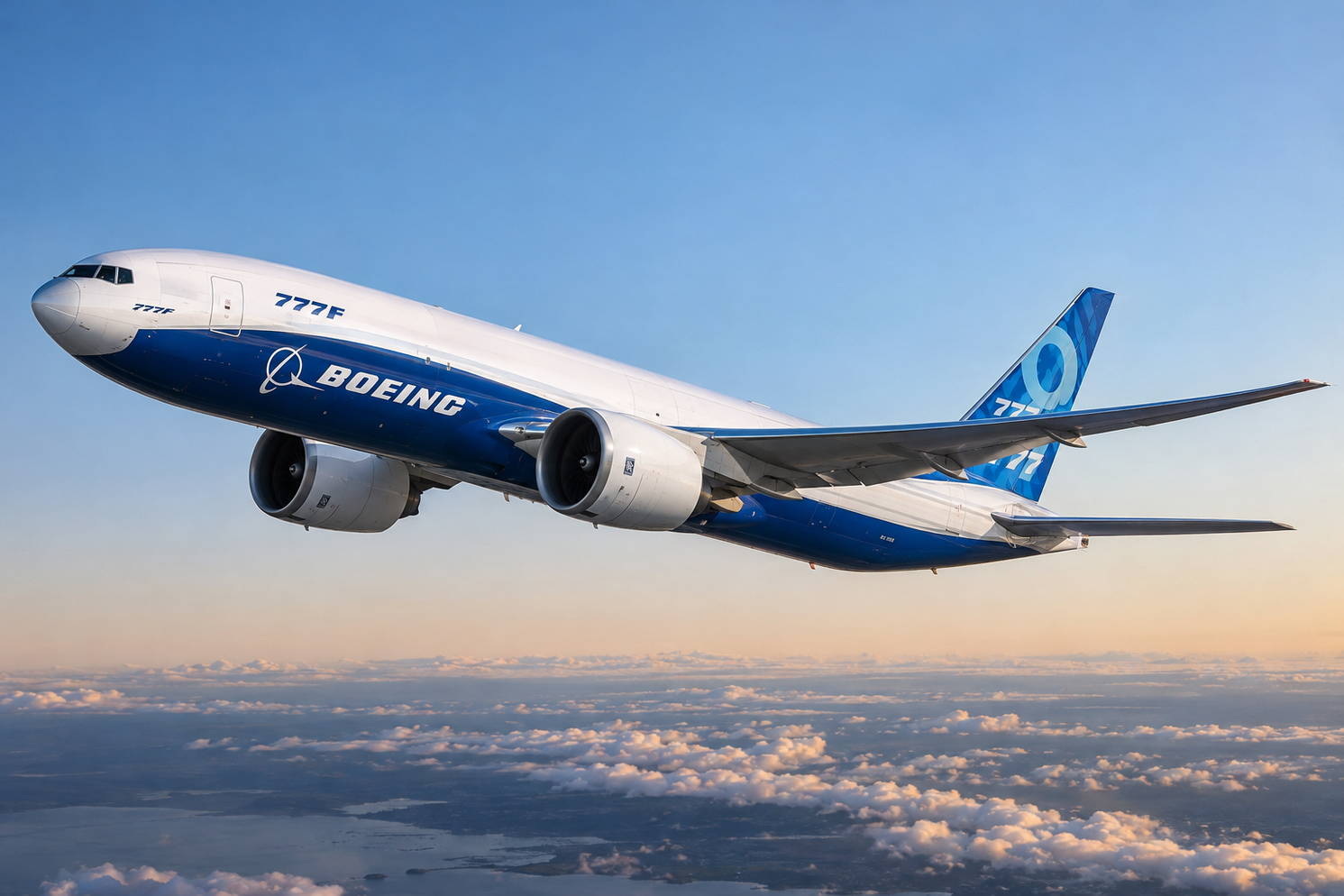
777F is the world’s largest air freighter
The Boeing 777 Freighter (777F) is the world’s best-selling cargo aircraft, outselling the entire Boeing 747 freighter fleet. The change represents a major milestone in the evolution of long-haul air freight, with the 777F emerging as the foundational aircraft for international cargo transport.
The Boeing 747, dubbed the Queen of the Skies, was the aircraft that defined the global freight industry for decades. The family of aircraft has been supporting international trade since the first delivery of the 747-200 Freighter in 1972, moving high-value goods quickly and reliably over long distances.
Every new version has improved in performance culminating in the 747-8 Freighter. Recent deliveries have pushed the number of 777F aircraft in service above the total fleet of all types of 747 freighters. The 777F is therefore for all practical purposes the world’s leading widebody freighter, a legacy started by its predecessor.
More than 330 aircraft in support of global supply chains
The Boeing 777F has more than 330 aircraft in service and carries more air cargo each year than any other freighter type. Due to its wide application on long-haul routes, the aircraft represents some 40% of the world’s freighter capacity.
Boeing estimates the 777F fleet carried about $4 trillion in global trade last year. These figures show how important the aircraft is to global commerce and the supply chains that link markets across continents.
Since its first delivery in 2009, the 777F has carried an exceptionally varied range of shipments. Its cargo has ranged from mobile phones and pandas to fresh produce, life-saving medicines, helicopters and aircraft engines. The aircraft has been used for humanitarian aid and disaster relief operations, in addition to commercial cargo, where reliable transportation and quick delivery can be crucial.
“From a manufacturing standpoint, when the airplane is flying and working as it should, that’s the mindset of the team,” said Ben Fredrickson, a lead at Boeing’s 777/777X Fuselage Assembly Center.
“As we build the fuselage sections for each 777 Freighter before final assembly, we get a sneak peek at it. Having worked on hundreds of 777s and seen them in action in service, I am not surprised the 777F plays such a lead role in air cargo. “I’m proud to help build the fleet that’s essential to global logistics.”
Boeing prepares for the next level with the 777-8 Freighter
Deliveries of the 777F are underway, and Boeing is continuing to progress the engineering and manufacturing development of the 777-8 Freighter (777-8F), its next-generation widebody cargo aircraft. It would be the eighth member of the 777 family, and is designed to build on the capabilities and operational performance set by the current generation.
The 777-8F is a member of the Boeing 777X family, and will have a new carbon-fibre composite wing and engines that are designed specifically for the 777X program. Boeing says the aircraft will be able to carry 118 tons of cargo while using 30% less fuel than previous generation aircraft. And it’s also designed to give you more range than any competitor aircraft at any payload.
The maker intends to retain common features with the current 777F, helping operators maintain operational efficiency, high aircraft utilization and reliability. The continuity is expected to ease the transition to the new model, while also drawing on the operational experience built up by cargo airlines operating the existing 777F.
Strong demand from large cargo operators
The 777-8 Freighter program has secured 89 firm orders from leading cargo operators and airlines worldwide. The customers are ANA, Cargolux, China Airlines, China Southern Cargo, Ethiopian Airlines, Lufthansa, MSC Air Cargo, Korean Air Cargo, Qatar Airways and Silk Way West Airlines.
Order book reflects continued interest from established international operators in Boeing’s next-generation freighter. The development of the 777-8F is a sign of Boeing’s desire to maintain that position with increased payload capability, better fuel efficiency and longer range as the 777F cements its place at the top of the world cargo fleet.
So the move from 747 to 777F is more than just a change of aircraft that leads the world in freighter operations. It also points to the next phase of widebody air cargo where efficiency, range and payload capacity will continue to be critical to supporting international trade and global logistics.