



Tesla Gets Fremont Facility Ready to Make Robots at Large Scale
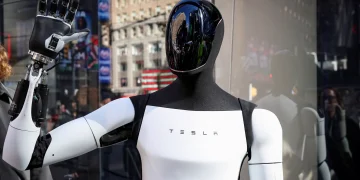
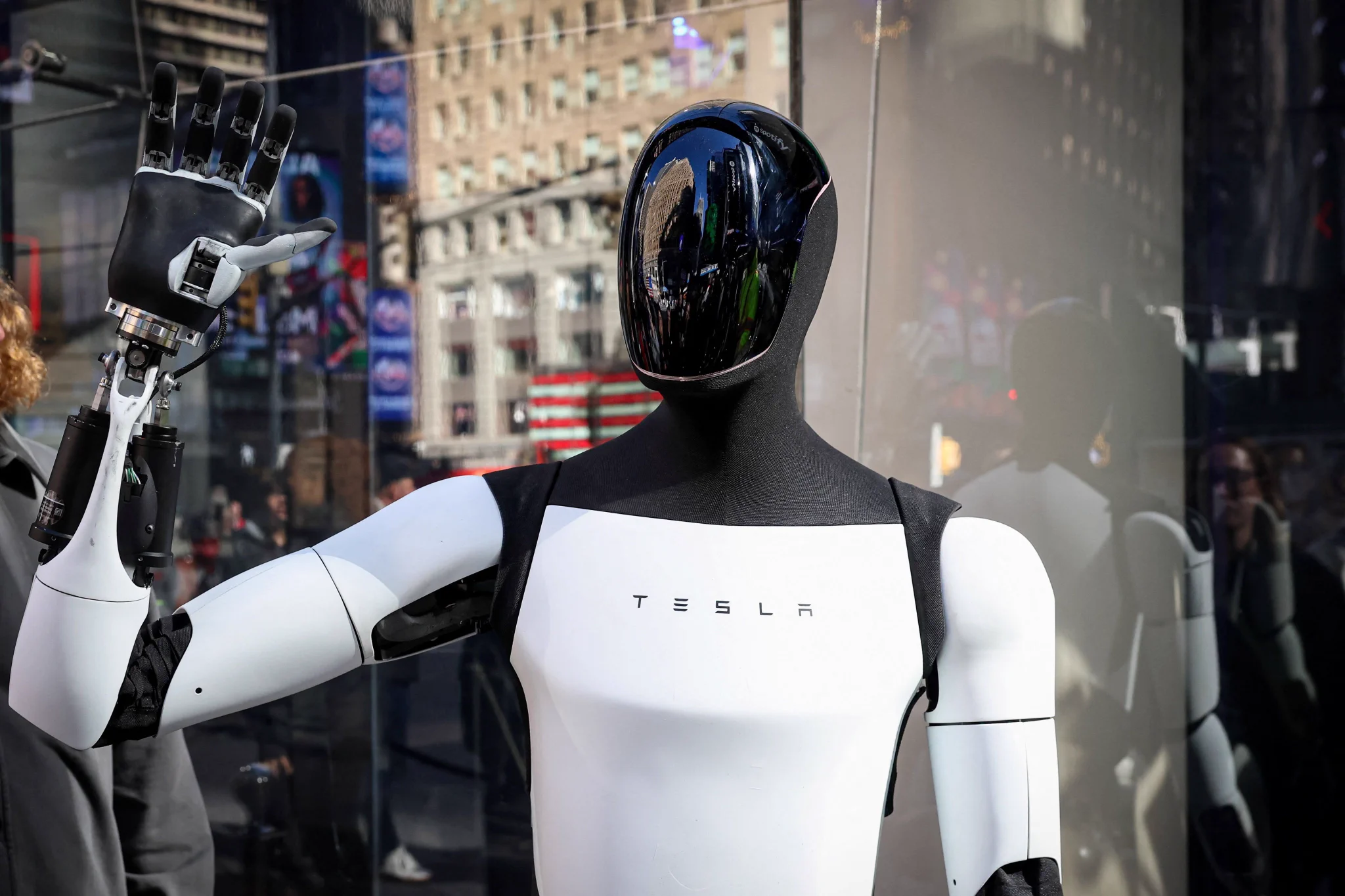
Tesla is now in the early production phase of its Optimus humanoid robot, CEO and co-founder Elon Musk said during the company’s third-quarter 2026 earnings call last week. The electric vehicle maker is aiming for first customer deliveries next year, an important step in its drive to diversify away from car making and establish a foothold in industrial robotics.
Tesla’s Fremont facility has already put in place the bulk of a dedicated production line for producing as many as one million humanoid robots per year. But Musk cautioned that it would take time to achieve that level of production, saying the ramp-up could take a year or maybe longer as the company works through various manufacturing configurations.
Optimus’ first customers are expected to use the robots in industrial settings, especially for work in hazardous conditions or repetitive work. Eventually, Tesla wants to make the technology available to households as manufacturing capacity grows.
Car makers ramp up humanoid robotics ambitions
With Tesla raising its production output, other big car manufacturers are speeding up their own work in humanoid robots. Toyota, Hyundai and others are testing robots in their factories, a sign of a wider ambition to transition from traditional vehicle makers to mobility and robotics companies.
Toyota plans to deploy 400,000 robots as part of an annual investment plan worth $6.4 billion aimed at automating its assembly lines, according to a Financial Times report published Monday.
The Japanese company is also developing the technology necessary to teach its own humanoid systems. Its research division has developed a base model for the ELEY, which stands for Embodied Learning robot for Enhancing Yield. The system is meant to learn tasks by watching factory workers, and could potentially enable robots to learn new skills by watching real-world demonstrations.
Hyundai is trying to do the same with its robotics arm, Boston Dynamics. Last month, Boston Dynamics opened a robotics center in Savanna, Georgia, to test and train its Atlas humanoid robots for use in Hyundai’s auto manufacturing plants. The company also said it plans to look at applications in other industrial sectors next year.
Training of autonomous robots is a major obstacle
Even with these investments and manufacturing gains, making robots that can operate reliably in the real world is a big challenge. Companies need to train their systems to do a variety of tasks independently, and that requires a lot of data.
During the earnings call Musk admitted Tesla has a particular problem with Optimus. The company has data from its large fleet of vehicles for its self-driving technology, but it doesn’t yet have a similar source of operational data for its humanoid robots.
To get the information it needs, Tesla intends to build robots and let them learn through repeated practice, including a process Musk called self-play.
To underpin this approach, the company plans to establish an Optimus Academy with between 10,000 and 20,000 robots. The machines would do all kinds of different tasks, producing data that Tesla could use to improve their movements, performance and decision-making skills.
Musk likened this learning process to that of a young child. “Robots start with simple moves and learn to do more complex stuff as they get more experience,” he explained. And he said learning to wipe themselves is a big step in that progression.
AI5 chips to boost Optimus computing power
Another critical part of Tesla’s development strategy is computing capacity. The company will use its Terafab facility in Texas to build its next-generation AI5 artificial intelligence processors to support Optimus manufacturing.
The chips are developed in-house and are expected to offer much more computing power than the hardware used in the robot’s current version. Musk said in April the AI5 chip would be integrated into Optimus, supporting the next phase of its technical progress.
Tesla also plans to share more progress with the public. “In the next few weeks we’re going to release a marketing video showing Optimus doing tasks that are not preprogrammed,” Musk said.
The CEO expressed strong confidence that the robot would be competitive upon its launch. “I’d be surprised if another manufacturer has a robot that can compete with Optimus when Tesla starts delivering them to customers, which I think will be toward the end of next year,” he said.
Rise of Humanoid Robots in Global Automation Market
While sales of human-like machines still make up a small part of the global robotics market, demand is growing as manufacturers look to tackle labor shortages and boost the efficiency of production.
Manufacturing Dive reports that customers purchased almost 7,000 humanoid robots last year, according to the International Federation of Robotics. This figure shows the increasing commercial interest in machines that behave like humans in some respects, and perform duties in human-oriented environments.
The overall robotics market is still much larger. During the same period, companies deployed around 603,000 robots in their operations, including traditional industrial robotic arms, quadruped machines and autonomous warehouse robots.
Thus, Tesla’s Optimus project is part of a wider industrial trend in which manufacturers are looking at increasingly autonomous systems to help with production, perform dangerous tasks and cut down on the amount of manual labor in repetitive processes.
The company’s next challenge is to transition from early manufacturing to dependable mass production, while making sure its robots can learn and execute tasks safely outside of controlled testing environments. If Tesla meets those delivery goals, Optimus could become a key part of its expansion into industrial automation, with household applications a longer-term goal.