Maritime Nov 12, 2026
Abandoned Vessel Alan Leaves 10 Indian Seafarers Facing Severe Humanitarian Conditions in Türkiye
Stranded since 2023, the vessel's 10 Indian crew members have reportedly gone eight months without wages, with shortages of food, drinking water, fuel and electricity worsening their living conditions. International maritime organisations and Turkish authorities are being urged to intervene.
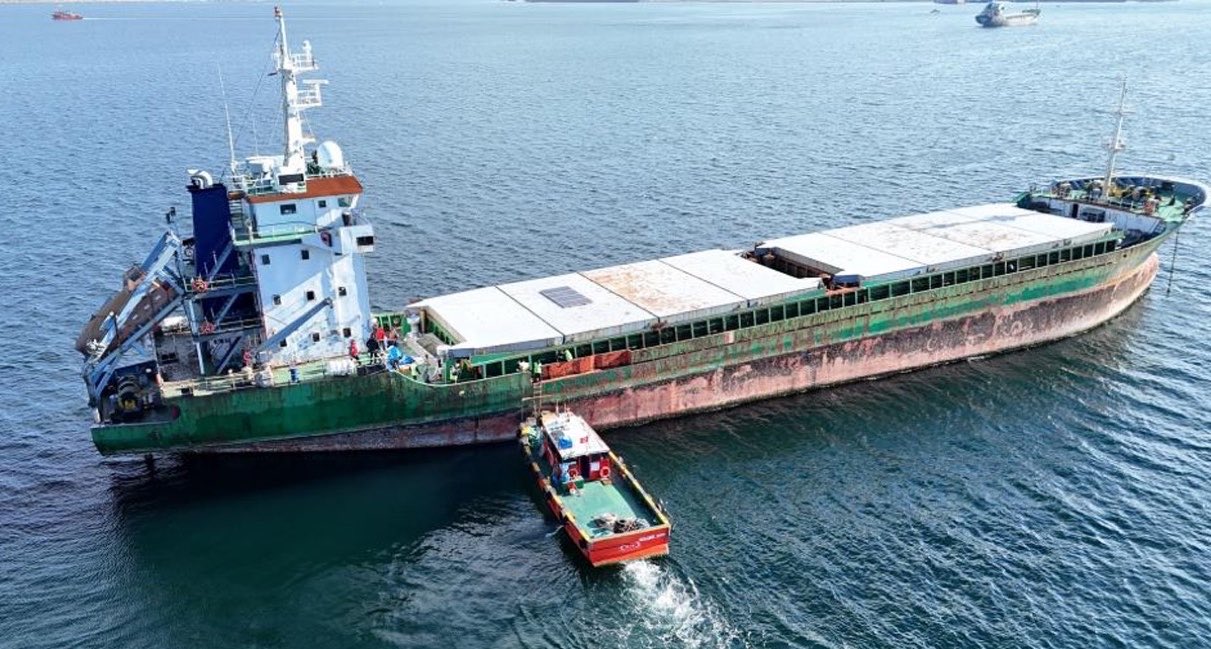
A serious humanitarian situation has developed on the Alan, a vessel that has been abandoned in Türkiye since 2023. The vessel, previously known as Pink and Sea Inca, currently has 10 Indian seafarers onboard. They say they have not been paid for about eight months and are finding it difficult to obtain basic supplies, including food and drinking water.
The crew members have appealed to the relevant authorities for help, saying they have not been able to contact the shipowner or the recruitment agency responsible for their employment. The seafarers said that in addition to unpaid wages they want to return to India but are stuck on the vessel with no clear solution.
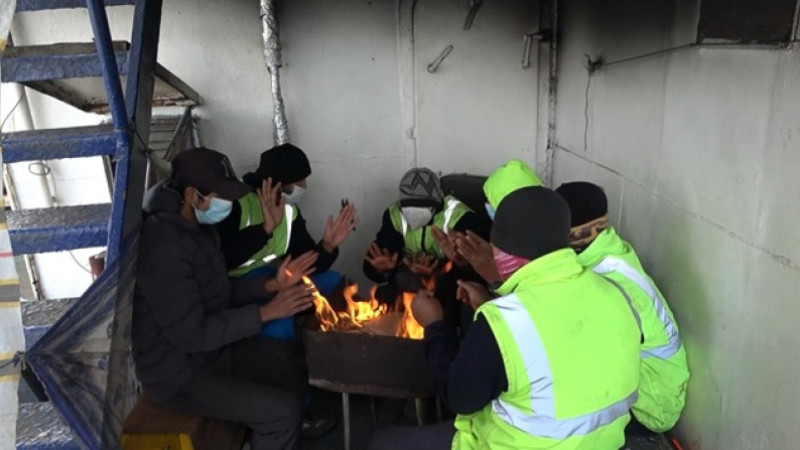
The fuel shortage has become worse. The ship's generators are out of commission and the crew has no heat or electricity. At one point the crew ran out of drinking water and some were said to have been forced to collect seawater, boil it and drink it. Later some of the seafarers had health problems.
The International Transport Workers’ Federation (ITF) said it had notified the relevant international organizations, particularly the International Labor Organization (ILO), of the abandonment of the vessel and of the crew.
Meanwhile, the Directorate General of Maritime Affairs of Türkiye and Tuzla Regional Port Authority are working to address the situation, protect the seafarers’ rights and find a solution for the abandoned vessel. The Turkish Red Crescent also provided food and drinking water to the people on board.
Eight months without salaries and a life more and more difficult
The ship’s third engineer, Amar Shakti Nag, spoke of the problems confronting the 10 crew members and confirmed they had gone for nearly eight months without getting paid.
"Some of the crew came to the vessel in February and I came aboard on February 27," Nag said. Since then none of them had received any payment into their bank accounts despite repeated assurances from the shipowner and recruitment agency .
Food and drinking water have also become less plentiful. The supplies initially sent to the crew, Nag says, were intended to last about 10 days. They were, however, issued on the supposition that they would have to last the crew about 30 days.
Their drinking water ran out and things got particularly desperate. "There was no drinking water available, so about three to four months later the crew had to boil seawater and drink it," Nag said.
He said two or three crew members had experienced health issues during this time. The situation became so serious that emergency response teams boarded the vessel and provided medical assistance after the condition of one seafarer deteriorated.
Another major problem has been the shortage of fuel. The generators had run out of fuel and had stopped working, leaving the vessel without electricity for about eight months, Nag said. Previously the crew had managed to operate them for short bursts of an hour or two but eventually the fuel they had remaining ran out.
The crew has had to share what little food is left because there are 10 people living aboard in cold weather.
Nag said the ITF had been working to assist for about three weeks, but attempts to contact the ship owner and the agency had failed. Emails were also sent to the companies involved and Turkish authorities, but the crew’s situation was still unresolved.
He specifically called for intervention:
“We want support from the Turkish government and the ITF. We want to go back to our country. We have not had our wages. We have worked for 8 months and have not been paid. “We have also a very difficult situation to go back to our countries without getting our wages. Please help us to go home.”
ITF describes the abandonment as incompatible with human dignity
ITF lawyer Arif Sinan Ünlü confirmed that the vessel had been abandoned in Türkiye since 2023 and had operated under three different names: Pink, Sea Inca and, currently, Alan.
He explained that Turkish maritime authorities and civil society organisations have been trying to assist crews stranded aboard abandoned vessels. However, once a ship loses its commercial value, those responsible for it frequently cease to take responsibility for its condition and the people remaining on board.
Ünlü pointed out that these vessels generally operate under foreign flags and carry foreign crews. Türkiye's position along major maritime transit routes means that some of them end up remaining in its waters for extended periods.
According to him, Alan has been in port for approximately three years. He also said that, based on his personal knowledge, more than 10 other vessels had been completely abandoned in similar circumstances.
In some cases, legal channels have proved insufficient even to establish contact with the parties responsible for the ships.
The lawyer highlighted that abandoned vessels can leave between 10 and 15 seafarers without food, drinking water, healthcare or heating. Despite being able to see the shore, these workers often have no practical means of reaching it.
Ünlü described the situation as a form of abandonment incompatible with human dignity and called for international mechanisms to be activated.
He also criticised the lack of response from the flag states of the vessels, explaining that even official emails sent to them frequently go unanswered.
Flag state, shipowner and insurer accused of failing to respond
Ünlü said the ITF had formally notified the International Labour Organization about the abandonment of the vessel and its crew under the Maritime Labour Convention (MLC).
Notifications were also sent to the vessel's Protection and Indemnity (P&I) insurer, its flag state, the shipowner, the operator and the recruitment agencies in India that had supplied the crew.
The objective was to ensure that the responsible parties fulfilled their obligations, settled outstanding wages and arranged the seafarers' repatriation.
However, despite flying the flag of Cameroon, the vessel has not received the necessary support from its flag state, according to the ITF lawyer.
He also said that the P&I insurer had failed to assist the crew despite the existence of an insurance policy. Attempts to contact the shipowner had similarly produced no response.
Although representatives of the vessel had previously promised to resolve the problems, the process was repeatedly delayed.
During this period, the crew received no regular deliveries of food, drinking water or humanitarian assistance from the responsible parties. They have therefore depended for months on supplies delivered by the ITF and other organisations providing support.
The Turkish Red Crescent has now also delivered food and water to the vessel.
Ünlü acknowledged the significant involvement of the Directorate General of Maritime Affairs and the Tuzla Regional Port Authority in efforts to remove abandoned vessels from their locations and safeguard the rights of their crews.
He stressed that the 10 Indian seafarers aboard Alan had effectively been left without the means to meet their most basic needs.
With no fuel available for cooking or heating, some crew members have reportedly resorted to preparing food over wood fires or cooking fish when they can find it. The limited electricity generated through solar energy is only sufficient to charge their mobile phones.
Poor hygiene and decaying cargo pose additional health risks
The humanitarian emergency does not stop with the absence of food, water, electricity. The condition of the vessel’s accommodation spaces has also become a matter of serious concern.
The living quarters were in very poor condition and hygiene standards were not good enough, raising the risk of illness among the crew, Unlu said.
The presence of flies on board the vessel is due to the deterioration of part of the cargo of corn still on board. This has resulted in the crew members wearing masks to protect themselves from the conditions.
The bad sanitary conditions and the cargo’s condition make life aboard a ship, where access to essential provisions and medical aid is already very difficult, even harder.
Abandoned vessel raises concerns on maritime safety as well
Alan is a danger to the crew and to sea traffic in Turkish territorial waters.
"An uncontrolled vessel could drift in stormy weather and collide with another ship and pose a risk for other vessels in the area," Ünlü said.
The Regional Port Authority of Tuzla is aware of the possible danger and is constantly working on the solution of the situation.
But the fact that there are 10 crew members aboard does not mean the vessel is necessarily safe to control. The ITF lawyer said they don’t have the resources or enough control over the ship to respond effectively in an emergency.
If dangerous conditions developed they would be unable to weigh anchor, move the vessel offshore or take it to a place of safety.
Ünlü therefore underlined the critical need for intervention, both to improve the living conditions of the crew and to protect maritime navigation.
ITF reiterates call for unpaid wages, immediate repatriation
The abandonment of Alan and her crew has been ongoing since 2023, confirmed ITF Inspector Selahattin Polat.
He said that the federation had contacted international organizations and all relevant companies, including the vessel’s P&I insurer, flag state, shipowner, operator and the Indian recruitment agencies involved in supplying the crew.
Polat confirmed that the ITF had notified the ILO under the Maritime Labor Convention and requested the parties responsible to settle the outstanding salaries and arrange the seafarers’ return home, like Ünlü’s account.
He also cited the failure of the Cameroonian flag state to assume its responsibility, although the vessel is registered under its flag.
The vessel was insured, but the P&I insurer had not provided the necessary assistance, Polat said, and the shipowner had not responded to attempts to contact them.
Delays and a lack of food, drinking water and humanitarian aid for the crew arose from repeated promises by the vessel's representatives to find a solution to the situation.
Over several months Polat said the ITF and other supporting organizations had provided provisions and the Turkish Red Crescent had also delivered food and water. He acknowledged the significant contribution of the Directorate General of Maritime Affairs and the Tuzla Regional Port Authority in solving the situation and protecting the rights of seafarers.
Seafarers remain exposed to severe living conditions
Polat reiterated that the 10 Indian crew members were struggling to survive under extremely difficult circumstances.
He confirmed that they had previously been forced to drink seawater after running out of drinking water and that the lack of fuel prevented them from cooking food or heating the vessel.
The crew has occasionally resorted to wood fires to prepare meals or cooked fish when available. Solar energy provides only enough electricity to charge their phones.
Polat also drew attention to the deteriorating accommodation spaces, inadequate hygiene and the presence of flies resulting from the spoiled corn cargo.
Beyond the immediate health concerns, he repeated the warning that the vessel could become a danger to maritime traffic, particularly during storms, when it could drift uncontrollably and collide with another ship.
Although crew members remain aboard, they do not have the equipment or operational capacity required to control the vessel or respond to an emergency by weighing anchor or moving it to a safer location.
The ITF's central demand is that the shipowner and all responsible companies fulfil their legal obligations, pay the outstanding wages owed to the 10 Indian seafarers and arrange their repatriation without further delay.
For the crew of Alan, the priority is clear: recovering their unpaid salaries, returning home and finally being able to live and work in conditions that respect their basic human rights.
END OF REPORT