Tech Nov 24, 2026
AI-powered technology emerges as a competitive advantage in an increasingly constrained air cargo market
With global air cargo demand rising and freight rates climbing, airlines are turning to artificial intelligence to optimise capacity, strengthen pricing strategies, simplify compliance and unlock new revenue opportunities.
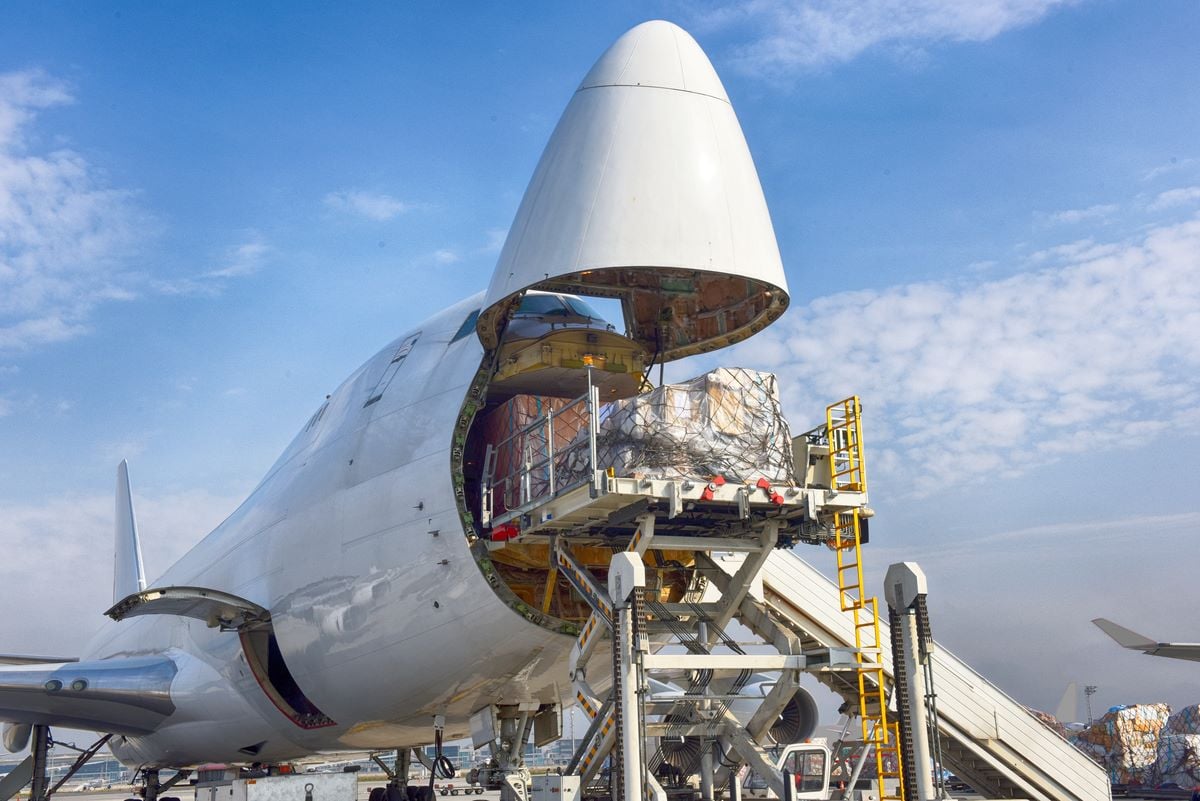
Operational pressure is growing in the air cargo industry worldwide as the peak season approaches. Demand is strong, freight rates are high and airlines are being challenged to move increasing volumes through a network where available capacity does not always meet demand.
Air cargo demand globally was up 6% year over year in October, with average spot rates at $3.11 per kilogram, according to Xeneta. FreightWaves estimates that rates are about 30% higher than the same period last year.
Although these figures would point to a positive market environment, the reality on the ground is much more complicated. Carriers are trying to squeeze in extra shipments, often with capacity unbalanced across routes, putting pressure on airport ramps, warehouses and booking departments.
For airlines, freight forwarders and shippers, the challenge is no longer just to anticipate when market conditions will improve. The challenge is increasingly to tell temporary disruption from structural problems – especially those inherent in running modern, data-intensive businesses on technology platforms designed for a less demanding age.
A new generation of cloud-based platforms incorporating artificial intelligence is beginning to provide an answer. These solutions can transform operational constraints into opportunities for additional revenue by improving visibility, automating decisions and better utilizing existing resources.
More effective use of existing capacity
One of the biggest challenges the industry faces is the geographic imbalance between demand for cargo and available capacity.
The freighter fleet is still growing at a relatively modest pace. The amount of cargo space offered by passenger aircraft is largely a function of passenger traffic, and not of freight demand.
IATA figures highlight these differences. Cargo volumes from Asia to North America were up 15% year over year in August, while traffic between Asia and Europe was down 8%. The most acute demand pressure has been on routes serving Vietnam, Thailand and Taiwan to the United States, while other trade corridors continue to operate with spare capacity.
"Airlines can't be constantly repositioning aircraft to meet every demand change. But they could do a better job of identifying, forecasting and commercializing the space that already exists on their scheduled flights.
In classic capacity planning, fixed assumptions are often made, such as fixed cargo allocations per type of aircraft. Then manual adjustments are made as passenger loads or fuel requirements change.
Artificial intelligence provides a more dynamic approach. Machine learning algorithms can predict the available belly capacity for individual flights days ahead of departure, using historical data on cargo volumes, passenger and baggage loads, aircraft configurations, fuel consumption and seasonal trends.
These forecasts can then be adjusted as passenger bookings and cargo reservations change.
And better visibility is more reliable, which means airlines can release available space sooner and make better commercial decisions. AI-powered overbooking strategies can also help carriers sell closer to their real capacity, whilst decreasing the likelihood of cargo being taken off flights.
And the financial upside is huge: You can make more money from capacity that would otherwise sit unused without buying more aircraft. “It’s one of the lowest cost ways to add more capacity to a constrained market.
Dynamic pricing is a must as freight rates go up
Also higher air freight costs, partly reflecting disruptions in other transport sectors. Some shippers experiencing reliability issues in ocean shipping are immediately turning to air freight solutions, frequently at premium prices and with little advance warning.
This is a chance for the airlines to improve yields.” Many carriers, however, still use e-mail, spreadsheets and manual assessments to manage spot quotations, often without an accurate enough picture of individual flight load factors.
AI-driven dynamic pricing systems can help improve this process by analyzing current market rates, booking speeds and demand trends.
They can suggest minimum acceptable rates for individual flights from about two weeks before departure until the moment the aircraft is airborne. They can also help revenue teams decide to accept, re-negotiate or reject incoming spot requests.
That means decisions that previously took hours to sort out between departments can be made in minutes and rolled out more consistently across stations.
“They can protect revenues on the flights that are going to be full but still be commercially competitive on services that need more passengers.” Shippers, though, get the benefit of faster quotes and predictability .
“Customs compliance is increasingly impacting every parcel
Regulations are getting tougher, adding yet another layer of complexity to international air cargo operations.
Duty exemptions on low value shipments are removed, security procedures are tightened and changes are made to tariff arrangements and wider advance cargo data requirements.
On August 29, 2025, the $800 de minimis threshold was suspended for all countries of the United States. The EU’s exemption on paying customs duties up to €150 has expired as of July 1, 2026.
This means that low value parcels which were previously duty free now need to have accurate shipment level information associated with them.
This creates particular problems for the old cargo management systems which were mostly designed for master air waybills and consolidated freight and not for millions of individual e-commerce orders, each with its own customs documentation.
Modern platforms based on single shipment tracking can collect the necessary information at the booking stage and carry it through acceptance, security screening, customs clearance and final delivery.
Artificial intelligence could help these efforts by identifying incomplete product descriptions, goods that may have been misclassified and anomalous shipper behavior before shipments arrive at screening facilities.
The compliance information is embedded in the shipment record itself, not in manual checking and subsequent document reconciliation.
“Rising fuel costs and margin pressures are testing operational efficiency
The rise and volatility of fuel prices continues to weigh heavily on airline profitability. IATA said U.S. commercial aviation fuel prices grew at a compound annual growth rate (CAGR) of 127.46% between February and September 2026.
In this environment, increasing the efficiency of loading cargo is a key opportunity to protect margins.
Airlines can use AI-powered load optimization to determine how Unit Load Devices (ULDs) should be built in three dimensions, using the real dimensions and weight of individual shipments, to better utilize the available aircraft space.
Algorithms can find more efficient ways to load trucks than a last minute manual guess, allowing carriers to fit more revenue producing freight on each load.
Better planning also reduces the chance of offloads, which can create rebooking costs, operational disruption and customer unhappiness.
The other benefit is integrated management dashboards combining AI-generated forecasts for capacity, revenue and operating costs. This enables airline teams to identify potentially unprofitable flights before they depart, rather than discovering the financial impact after the monthly accounts are completed.
Digital platforms solve airport operations congestion
Major cargo hubs are still grappling with a combination of runway congestion, limited warehousing space, understaffed ground handling teams and growing documentation backlogs.
"You can't actually build out airports or add runways overnight with technology. But it can help to smooth out administrative and operational friction through the cargo process.
Airlines’ open API cloud-based cargo management platforms enable freight forwarders to book and track shipments through one integration rather than multiple airline portals.
Electronic air waybills and real-time shipment updates cut down on telephone exchanges and repetitive data entry, so ground handling teams can concentrate on physical operations.
AI-powered document recognition also handles paperwork that is still in hard copy and automated alerts flag potential disruptions such as missed connections, security holds or changes in available capacity.
“Another important factor is how fast you can deploy. By contrast, traditional legacy systems often take 18-24 months to replace, whereas modern cloud-based solutions are typically implemented in weeks.
The shorter implementation time means that airlines can begin to reap the rewards of digital improvements without having to wait a couple of years for a full technology overhaul.
E-commerce parcels open a new revenue stream for passenger airlines
One of the most promising opportunities lies in a segment that traditional cargo management systems were not originally designed to handle: small-parcel e-commerce.
Consumer expectations for next-day and two-day deliveries are increasing, while ground transportation networks continue to face challenges when providing rapid coast-to-coast services.
Passenger airlines already operate thousands of domestic flights every day, many of which have available cargo space in their aircraft bellies. Connecting this existing capacity with e-commerce retailers and logistics providers could turn ordinary passenger flights into additional parcel transportation routes without requiring new aircraft.
The demand is already visible in international trade flows. According to IATA, air cargo volumes between Asia and Latin America, supported by e-commerce activity, increased by 23% year over year in August.
Capturing this business requires technology specifically designed for parcel operations.
Essential capabilities include online booking, individual parcel tracking from initial reservation to final delivery, API integrations with online retailers and last-mile delivery partners, as well as AI tools capable of forecasting which flights will have sufficient capacity for parcels on the following day.
Airlines equipped with these systems could launch dedicated parcel services within weeks, generate revenue from otherwise unused aircraft space and compete for a share of the delivery market traditionally dominated by ground transportation providers.
AI is becoming an operational requirement for the next phase of air cargo growth
The pressures affecting air cargo operations are making traditional ways of managing freight increasingly expensive and difficult to sustain.
Customers are increasingly looking for carriers that can accurately identify available capacity, apply intelligent pricing, manage regulatory obligations automatically and move shipments through the network with fewer operational obstacles.
Artificial intelligence is therefore moving beyond the experimental stage in air cargo. Combined with cloud-native platforms, it is increasingly becoming an operational foundation for managing capacity, revenue, compliance and shipment flows.
The airlines best positioned to emerge stronger from the current market cycle will not necessarily be those operating the largest freighter fleets. Competitive advantage may instead belong to carriers capable of turning every passenger departure into a cargo opportunity, supported by technology designed around the realities of today's logistics market.
About SmartKargo
SmartKargo is an AI-powered, cloud-based technology platform designed to help airlines develop their cargo operations through integrated cargo management, e-commerce and artificial intelligence solutions.
Its cargo ERP system manages the entire shipment lifecycle, from booking and acceptance to handling, tracking and last-mile delivery.
The company's e-commerce solutions enable airlines to launch parcel services within weeks and establish direct connections with online retailers. Its AI applications support capacity and demand forecasting, pricing decisions and load optimisation, helping airlines identify revenue opportunities that traditional systems may overlook.
SmartKargo works with airlines across North America, Latin America, India and other markets. Headquartered in Cambridge, Massachusetts, the company also has offices in India, the Philippines, Brazil, the United Arab Emirates, the United Kingdom and Canada.
END OF REPORT