



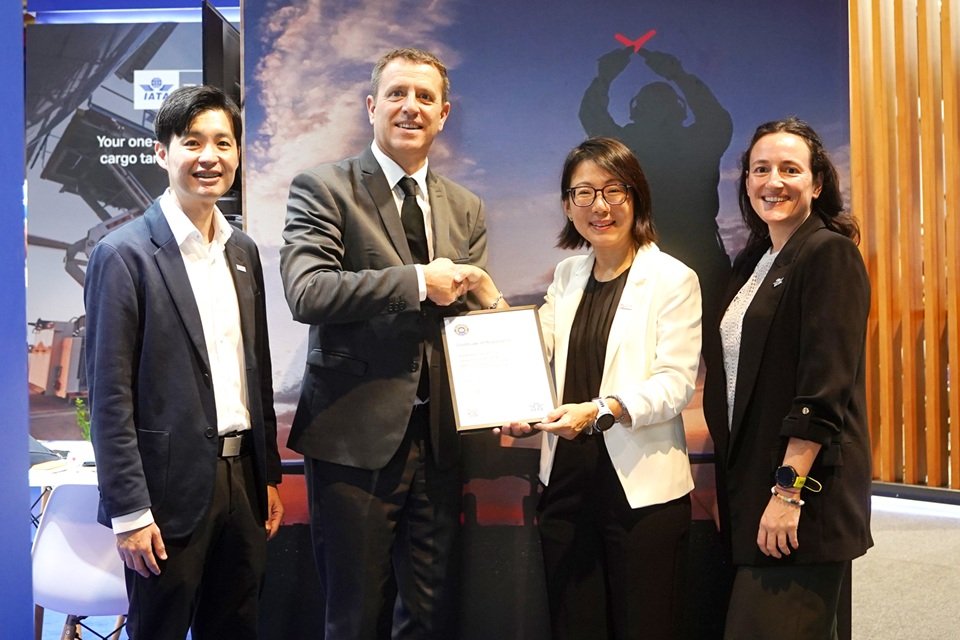
Asia Airfreight Terminal has achieved IATA’s ISP Environmental Assessment, or IEnvA, certification, marking a significant step in strengthening the sustainability credentials of the Hong Kong-based cargo handler.
The certification independently evaluates how sustainability is integrated across an organisation’s governance, operational controls and management systems, with a strong focus on structured oversight and continuous improvement.
For AAT, which is part of SATS, the recognition is intended to confirm the maturity of its environmental management framework and its alignment with internationally recognised standards.
Mike Chew, chief executive of AAT, said the scale and 24-hour nature of the company’s operations meant it had the ability to create meaningful change by embedding sustainability into daily activities across the business.
He said the certification reflected measurable progress in key areas including decarbonisation, infrastructure and governance, while also underlining the company’s commitment to responsible leadership and operational excellence.
According to AAT, sustainability is managed through a multi-tiered governance framework involving the board, senior leadership, a cross-functional sustainability committee and company-wide execution teams. The structure is designed to oversee environmental compliance, track performance targets and manage risk, while ensuring accountability at every level of the organisation.
The company said its strategy is being supported by a range of terminal-wide initiatives, including energy-efficient infrastructure upgrades, fleet electrification, the deployment of Autonomous Electric Tractors and the use of Hydrotreated Vegetable Oil (HVO).
Taken together, these efforts have reduced emissions by 33% compared with a 2018 baseline, AAT said, helping move the company closer to its goal of reaching net zero carbon emissions by 2050.
Marie Owens Thomsen, senior vice president sustainability and chief economist at IATA, congratulated AAT on achieving the certification, saying the handler had shown how sustainability can be advanced in a practical and measurable way while continuing to support resilient and efficient air cargo operations.