Maritime Nov 26, 2026
Asia–U.S. West Coast Container Spot Rates Drop Below $8,000 as LA–Long Beach Strike Threat Is Averted
A tentative labor agreement at Los Angeles and Long Beach ports, combined with softer demand, eases trans-Pacific freight prices. However, tariff uncertainty, blank sailings and the approaching Lunar New Year could trigger another increase.
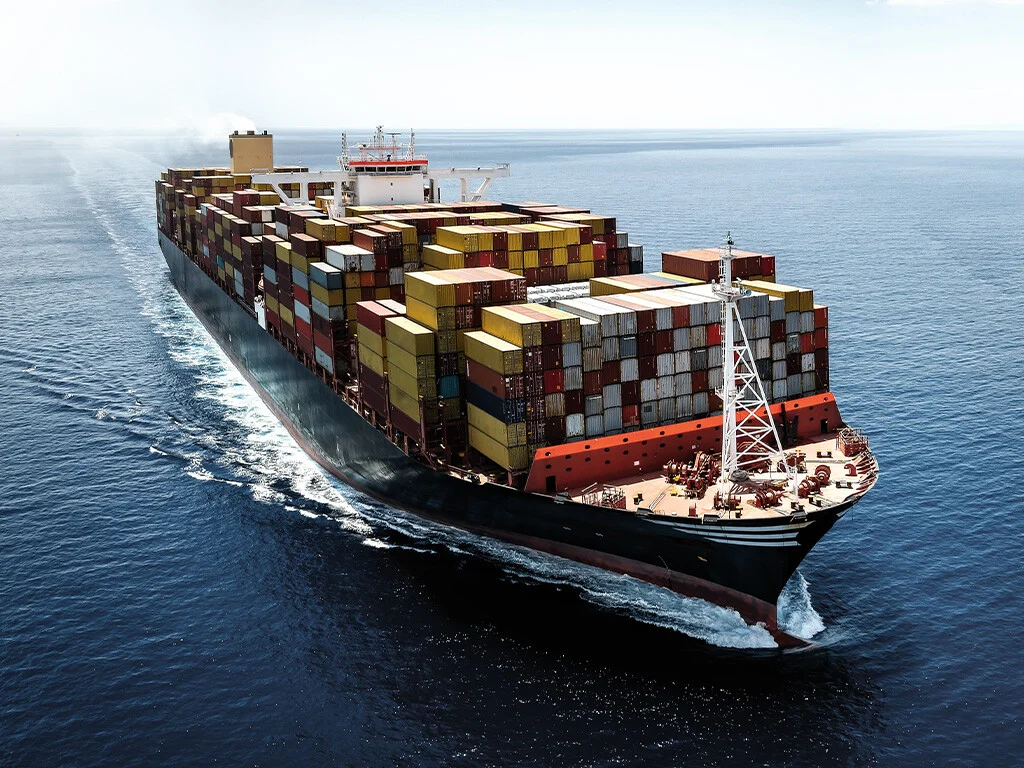
Container freight rates on routes from Asia to the United States are showing signs of easing after several months of elevated pricing. According to data from Freightos, a contributor to SONAR and listed on NASDAQ under the ticker CRGO, spot rates from Asia to the U.S. West Coast declined by 6% over the past week, reaching $7,985 per forty-foot equivalent unit (FEU). Meanwhile, rates on Asia–U.S. East Coast routes remained unchanged at $9,854 per FEU.
The downward movement comes as labor tensions at two of the country's busiest ports have temporarily subsided, while demand across the trans-Pacific market begins to cool.
Tentative labor agreement prevents disruption at Los Angeles and Long Beach
A potential port disruption was avoided on November 22 after port employers and the International Longshore and Warehouse Union (ILWU) Local 26 watchmen reached a last-minute tentative agreement.
The deal removes the immediate threat of a strike at the ports of Los Angeles and Long Beach. However, it still requires formal ratification by union members. In the meantime, workers will continue operating under their expired contract until the voting process is completed.
The agreement provides some reassurance to shipping operators and cargo owners, particularly at a time when trans-Pacific freight costs remain significantly above historical levels.
West Coast prices at lowest level since August
The latest daily market figures show that freight rates on U.S. West Coast routes have fallen further to average around $7,500 per FEU so far this week. This is the lowest level they have been at since late August.
East Coast rates have also fallen, closing in on $9,000 per FEU, returning to levels last seen in July.
Even with this latest correction, container shipping rates are still nearly three times higher than they were in the same period a year earlier, a reflection of the extent to which cost pressures remain in the trans-Pacific market.
Capacity constraints and tariff uncertainty extended the peak season
A number of market developments led to stronger-than-expected trans-Pacific cargo volumes and an unusually long peak shipping season.
Companies rushed shipments ahead of expectations for more U.S. tariffs, and weather-related port congestion and a decline in shipping capacity also supported higher freight prices.
But with demand slowly softening, carriers are increasingly resorting to blank sailings, canceling scheduled sailings to match capacity to lower cargo volumes.
Another important seasonal period is also approaching in the market. With pre-Lunar New Year shipping demand set to return in the coming weeks, freight prices could climb substantially as booking activity picks up again.
Trump-Xi talks offer little relief as trade jitters resurface
In their latest summit, Chinese President Xi Jinping and U.S. President Donald Trump pledged to keep trade relations between the two countries more stable.
Since then, China has taken other steps to ease tensions, including suspending some restrictions on exports of key materials to the United States until January.
Both governments, however, are still preparing their positions ahead of the expiration of the trade truce on Jan. 10.
Meanwhile, the Trump administration is looking at slapping an additional 20% tariff on Chinese goods, and higher import duties on products from the European Union, Japan, South Korea, Taiwan and nine other major trading partners.
The proposals come before the expected findings of an investigation into overcapacity that may be released as soon as next week.
Proposed U.S. tariffs raise the prospect of further trade retaliation
Several of the countries targeted by Washington have rejected the accusations underlying the proposed measures.
According to Freightos, the additional tariffs would most likely bring duties back to the levels previously established under the International Emergency Economic Powers Act (IEEPA), following agreements reached between the United States and its trading partners last year.
However, it remains uncertain whether the affected countries will interpret the move as a renewed escalation and respond with retaliatory measures.
Any implementation would also require additional procedural steps. Public consultation and hearings could extend the process by several months.
A recent precedent involving a Section 301 investigation into forced labor illustrates the potential timeline: the Trump administration introduced tariffs eight weeks after the U.S. Trade Representative (USTR) published its findings.
European trade routes show contrasting rate movements
Developments across Asia–Europe shipping routes have been mixed.
Asia–North Europe spot rates edged down by 1% last week to $3,374 per FEU. They have since recovered by approximately $200, reaching around $3,500 as carriers implement general rate increases (GRIs).
These adjustments are supporting prices despite the seasonal slowdown between the post-peak period and the upcoming Lunar New Year shipping rush.
The Mediterranean market has experienced a much sharper increase. Rates from Asia to the Mediterranean climbed by 20% to $5,162 per FEU. Daily prices have gained another $300 this week, although a short-term correction remains possible.
North European congestion could add renewed pressure on freight costs
European routes continue to be especially vulnerable to port congestion.
Some freight forwarders expect congestion already at North European ports to worsen as demand for cargo rises ahead of the Lunar New Year.
Such a development could add to upward pressure on freight rates. It may also encourage carriers to reintroduce rolling contracted cargo volumes, whereby previously booked cargo is delayed or transferred to a later sailing.
Shippers and freight forwarders may encounter additional difficulties in securing dependable loading schedules and controlling transportation costs.
Implications for the shipping industry
The recent fall in spot rates for trans-Pacific shipments provides some much-needed relief for importers after a prolonged period of high shipping costs. But the market is a long way from where it was a year ago, with prices still nearly three times higher.
Weaker demand, blank sailings and temporary labor stability are helping ease immediate pressure on U.S. routes. But this improvement may only be temporary.
Pre-Lunar New Year demand, ongoing congestion in Europe and uncertainty over the January 10 trade truce deadline could quickly turn the tide.
For carriers, freight forwarders and cargo owners the coming weeks will be critical in determining whether the recent rate correction develops into a sustained market adjustment or simply precedes another period of rising container shipping costs.
END OF REPORT