Maritime Nov 5, 2026
Assarmatori Study Warns of Container Transhipment Shifting Beyond EU Borders
An analysis of 86 maritime services identifies potential changes linked to the EU Emissions Trading System (ETS) in 41 cases, highlighting the economic, employment and geopolitical risks of moving container transhipment operations to non-EU ports.
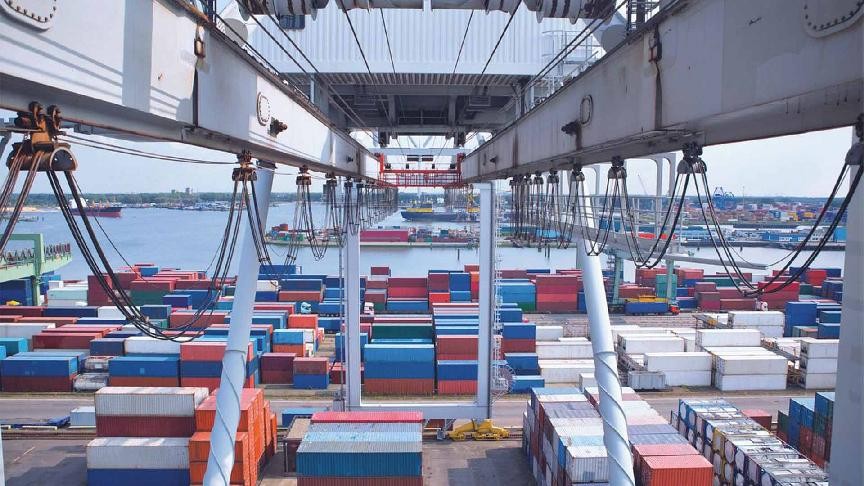
The growing relocation of container transhipment operations to ports outside the European Union risks weakening competition among European maritime hubs, jeopardising thousands of jobs and establishing new strategic dependencies for global supply chains. This is the main warning of a study commissioned by Assarmatori and presented on 4 November 2026 at the European Parliament in Brussels.
The study, conducted by Giovanni Satta, Associate Professor of the Department of Economics of the University of Genoa, analyses 86 maritime services connected with the ports of Gioia Tauro, Marsaxlokk, Sines and Taranto. For 41 of these services, the analysis suggests potential changes related to the European Union’s Emissions Trading System (ETS). Under review are cases of shipping routes that have substituted calls at European hubs with calls at rival ports in non-EU countries.
The study also notes a rise in investments in North African terminals after the introduction of the ETS for maritime transport, raising concerns that the regulatory framework could accelerate the relocation of transhipment operations outside European borders.
Possible losses in the hundreds of millions of euros
Actually, there can be serious economic implications, at least in the short run. T.I.M. 10 Srl’s calculations, drawn up under the supervision of Satta, are based on the assumption that between 7.5% and 15% of the volumes exposed to relocation risks will relocate elsewhere and estimate annual associated revenues between €403 million and €892 million.
The container traffic in question would be between 2.85 million and 6.30 million TEUs. To support this activity, investments in the capacity needed to cope with these volumes would be required between €1.43 billion and €3.60 billion. The operations involved are also linked to between 2,005 and 4,431 jobs .
Such figures indicate the potential scale of the impact on European ports and the wider maritime logistics industry if transhipment services increasingly migrate to competing international hubs.
A very mobile component of maritime trade
The study highlights that transhipment is especially sensitive to the differences in operating costs between competing hubs. Unlike cargo flows to local markets, transhipment volumes can be re-routed relatively easily between alternative ports in the same international shipping network.
Once maritime services and terminal investment have left Europe, it is very difficult, if not impossible, to get them back.
Existing anti-circumvention measures can help stop shipping companies from circumventing the ETS by making intermediate port calls. But they cannot halt the shift of all transhipment operations to non-EU countries. Under this model, cargo for non-European destinations could avoid ETS-covered maritime legs while still connecting to European ports via feeder services.
Therefore, simply tightening existing controls would not eliminate the underlying economic motivation to move operations. In the absence of other measures to attract transhipment activities to remain in European ports, the cost imbalance between EU and non-EU hubs would perpetuate.
Assarmatori concerned about Europe’s strategic dependence
“Recent wars have shown what happens when there are interruptions in strategic transit points not under the direct control of the parties who depend on them,” Alberto Rossi, Secretary General of Assarmatori, said.
He warned that if transhipment activities were to shift to Africa, the continent could become another critical logistical and geo-political choke point, with the potential to create congestion and strategic dependencies in global supply chains.
Rossi also underlined that the European Union has no direct control on the security of hubs outside its borders. Investments in African port concessions are often backed by global private operators and foreign governments, particularly China.
In his opinion, the presence of critical transhipment infrastructure in hubs controlled by geopolitical rivals could lead to forced disruptions and retaliatory measures against Western economies with potentially serious consequences for international trade.
Cesare Crocini, head of Assarmatori’s office in Brussels, expressed the same concern, remarking that the issue is not only about the competitiveness of the port. The logistic security of Italy and Europe, the relocation of maritime traffic and the protection of employment are all at risk.
He also attacked opposition to the introduction of a corrective mechanism for transhipment under the ETS, saying that those who rejected such an adjustment were betraying the spirit of European cooperation.
Assarmatori supports revised ETS compromise
Assarmatori has proposed to the European Parliament and to the Council of the European Union to take action on the situation. The most promising starting point, it believes, is the compromise proposed in the week before the workshop by MEP Peter Liese.
The latest version of the proposal, the association says, better reflects competing maritime services while providing better incentives for long-haul hub operations to stay in Europe.
The proposed mechanism links an incentive to the share of transhipment cargo handled by EU ports with an adjustment according to the travelled distance. It also covers both inbound and outbound voyages.
Another significant change is the lowering of the vessel eligibility threshold from 10,000 TEUs to 5,000 TEUs.
For Assarmatori, these changes could help to correct the competitive imbalance created by the current ETS framework and reduce the risk of European transhipment activities migrating to non-EU hubs.
END OF REPORT