



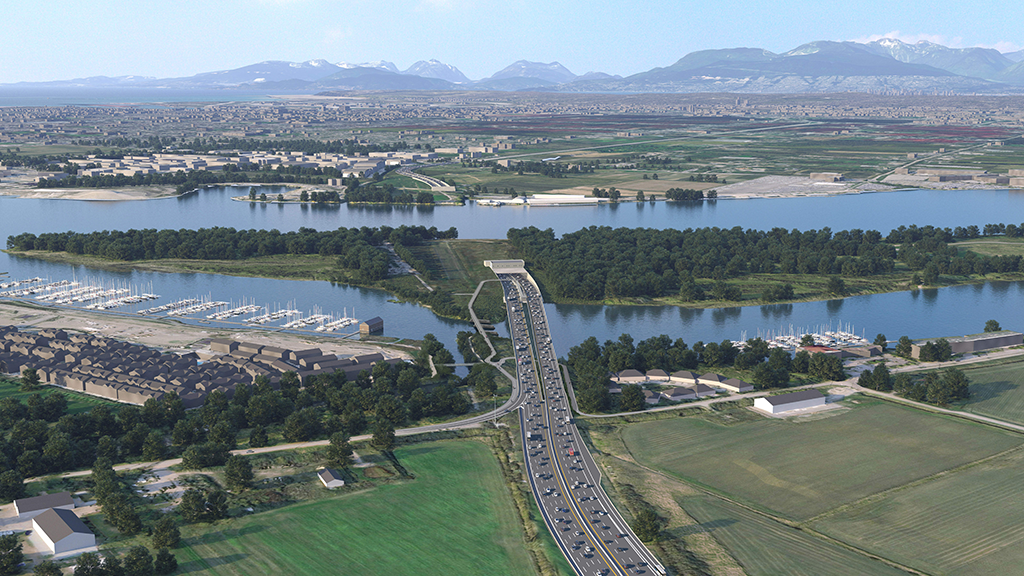
The British Columbia government has officially terminated its agreement with the design-build consortium selected to deliver the replacement for the aging George Massey Tunnel beneath the Fraser River in Metro Vancouver, while reaffirming that the multi-billion-dollar project remains on track.
The Ministry of Transportation confirmed on Monday that it was unable to reach agreement with the Cross Fraser Partnership on final commercial terms for construction of the planned eight-lane tunnel connecting Richmond and Delta. The province had been working with the consortium under a design and early works agreement since September 2024, and said that although “significant progress” had been achieved, it was now exercising a contractual termination option.
Transportation Minister Mike Farnworth stated that the province had obtained “good value from the contractor” and made steady progress on design work, but that the decision was driven by the need to return the project to a competitive procurement process in order to secure the best value for taxpayers.
As part of the revised strategy, British Columbia will retender the remaining scope of work, dividing it into several packages to open opportunities for a wider range of qualified firms. The Ministry said this approach is intended to strengthen competition and increase participation from local contractors, while better reflecting current market conditions.
Farnworth noted that the procurement model was designed with a built-in termination option in case mutually acceptable terms could not be reached. He added that current market conditions are favourable for competition, with strong industry interest in participating in large-scale infrastructure projects.
The Cross Fraser Partnership consortium includes Bouygues Construction Canada, Fomento de Construcciones y Contratas Canada, and Pomerleau BC, according to its LinkedIn profile. Representatives of the consortium did not immediately respond to requests for comment.
The province originally brought the project to market in 2023 as a single progressive design-build procurement, but officials said the revised structure will ensure continued progress while aligning with evolving market dynamics.
Early works on the project, including tree clearing and utility relocations, began in January and will continue while procurement for future construction phases is underway. As a first step in the retendering process, the province will issue requests to identify qualified proponents for key segments of the project.
The B.C. Environmental Assessment Office is expected to complete its review by the end of the year, with major construction planned to begin in 2027. The long-term objective remains the replacement of the existing tunnel with a modern crossing targeted for completion in 2030.