World Nov 9, 2026
Cargo Attacks Intensify in the Strait of Hormuz and Black Sea as Maritime Risks Escalate
A series of attacks on commercial vessels in the first ten days of November has increased insecurity in two major maritime corridors. Tankers and cargo ships have come under fire, seafarers have died and war-risk insurance premiums have rocketed, to as much as 20% of a ship’s hull value in the Black Sea.
In the first ten days of November 2026, a new wave of attacks on commercial shipping has emerged in two of the world's most sensitive maritime areas: the Strait of Hormuz, amid the US-Iran confrontation, and the Black Sea, where the war between Russia and Ukraine continues to threaten merchant traffic. precision strikes and tanker fires, drone attacks on container ships, the incidents have increased concerns about the safety of seafarers, the reliability of shipping routes and the cost of maritime operations.
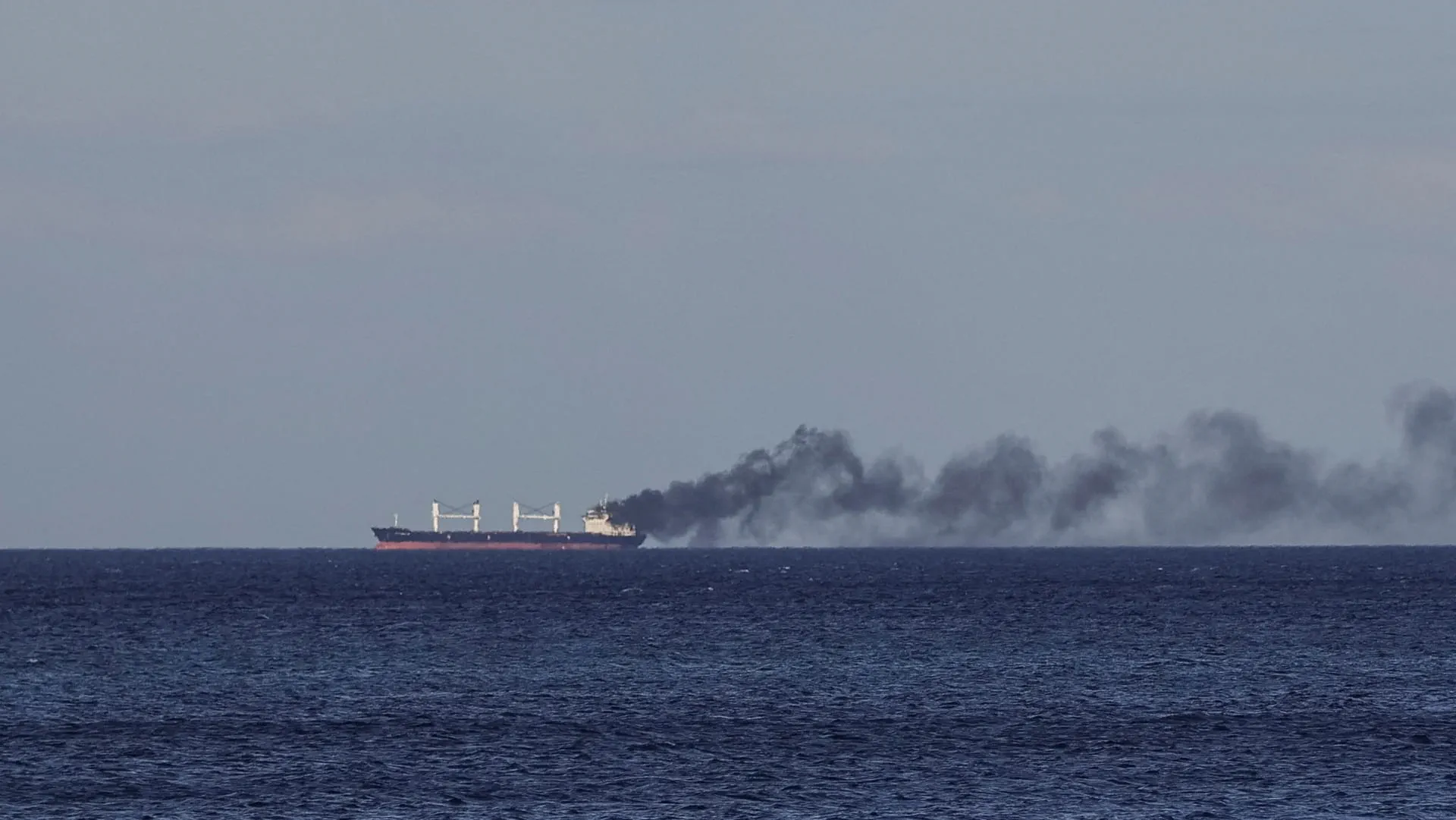
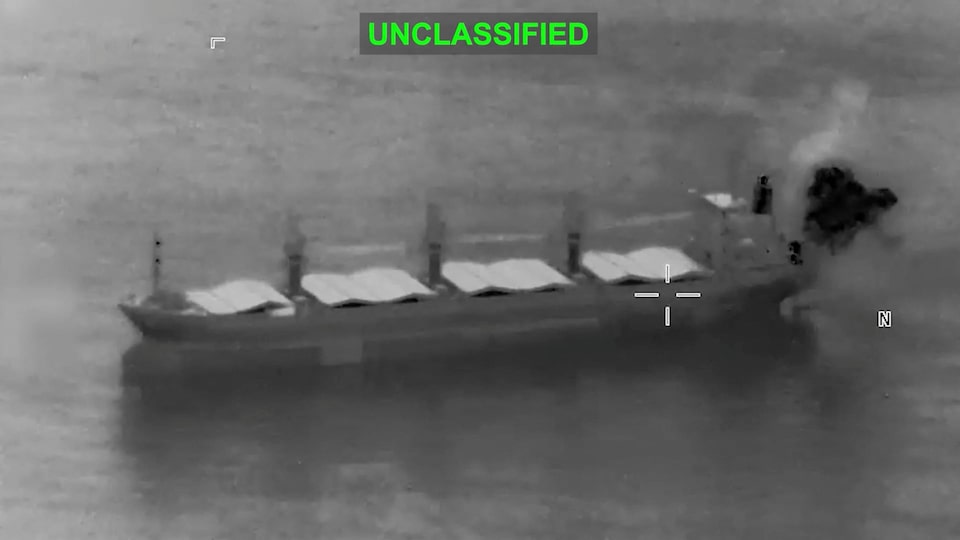
One of the biggest was on November 7 when a US military aircraft attacked the stern of the bulk carrier Huda in the Gulf of Oman with precision-guided munitions. The civilian crew had ignored repeated warnings and had made several attempts to break the blockade imposed on Iranian ports, the US Central Command (Centcom) said. Before the strike, US forces had ordered the crew to clear away from the parts of the vessel that would be hit in the operation. The ship was apparently trying to leave the area after a stop at an Iranian port.
The Huda is a bulk carrier, 159 meters long and of 24,993 tons deadweight tonnage. The ship was built in 1999 and sails under the flag of Saint Kitts and Nevis. It is owned by Embrace Shipping Management of Turkey. Centcom did not say how the crew was doing or the extent of the damage from the strike.
The US command also gave an update on the enforcement of its restrictions on Iranian maritime traffic. Centcom says that since it reimposed the blockade on July 14 covering all vessels entering or leaving Iranian ports, it has forced 147 merchant ships to change course and disabled five others that refused to comply, following the destruction of ten Iranian tankers. The command estimates that sanctions have prevented Iran from exporting more than $25 billion in crude oil, or the equivalent of about €21.5 billion.
Attacks on tankers in vicinity of Strait of Hormuz continue
Simultaneously, Iranian-affiliated attacks have persisted in and around the Strait of Hormuz. On November 6, the master of a tanker transiting the area reported an explosion near the waterline on the port side of the vessel, approximately 16 nautical miles east of Khasab, Oman. But the ship continued its journey without assistance and remained operational after the mishap. All crew members were reported to be safe.
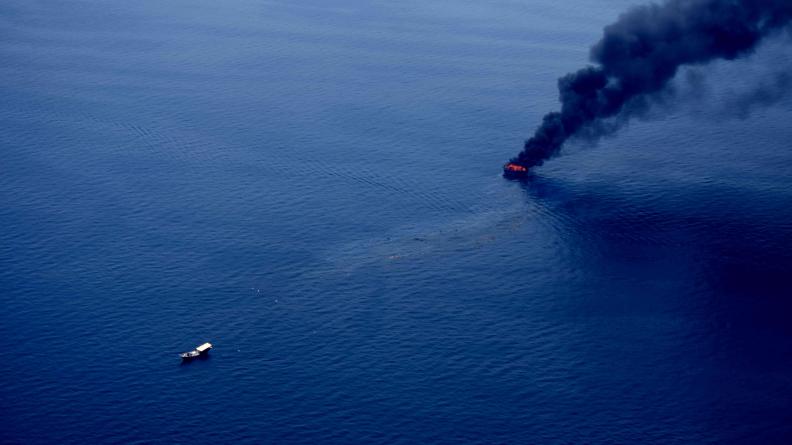
Later that evening, on 7 November, another incident was reported by the United Kingdom Maritime Trade Operations (UKMTO). A tanker caught fire at about 19:20 UTC some eight nautical miles northwest of Khasab and its crew was evacuated. Open-source analysts tentatively identified the vessel as the Navig8 Messi, a product tanker linked to ADNOC that was previously hit by Iranian drones in August.
An hour or so later another tanker leaving the Strait of Hormuz was hit by an unidentified projectile. There were no injuries. Iran's Revolutionary Guard Navy said the tankers had struck mines after entering what it said were unauthorized routes. On November 8, the force also said a third vessel caught fire.
Since early November Iran has attacked eight ships in the Strait of Hormuz and wider Gulf region.
There were two other fatal incidents in the week. An unidentified airborne object struck the Al Jusufi, an Indian-flagged sailing and motor vessel traveling from Al Hamriya, United Arab Emirates, to Porbandar, Gujarat, near Limah, Oman, on 2 November. The remaining 13 crew members were rescued by the Coast Guard of Oman. One Indian seafarer was killed.
15 seafarers died among 23 Indians who have died since the conflict began in February, the Ministry of External Affairs of India said.
A second fatal attack occurred on November 5 at about 23:20 UTC when two projectiles hit the Marshall Islands-flagged tanker, Velos Sapphire, sailing in ballast to Sitra, Bahrain. The incident occurred about 50 miles north of Qatar’s coast. The resultant blaze was fought successfully by the crew and the vessel, run by Greece-based Velos Tankers, was towed to Khalifa Bin Salman Port for a damage assessment.
One of the 22 Filipino seafarers on the tanker died. In response, the Philippines Department of Migrant Workers has called on shipowners to keep their vessels out of the Persian Gulf.
In other Gulf of Oman news, the UAE Coast Guard rescued 22 crew members from a cargo vessel that caught fire.
Oil shipping networks adapt to the conflict
The disruption around Hormuz has also forced the oil transportation sector to reorganise its operations. According to Brs Shipbrokers, 141 tankers are now operating shuttle services between terminals inside the Persian Gulf and locations in the Gulf of Oman or along India's western coast, where cargoes are transferred to other vessels.
Combined with the so-called shadow fleet, these operations have reduced the number of very large crude carriers (VLCCs) available to the conventional market to 639 ships, representing just 68% of the active fleet.
The shuttle cycle has shortened to 14 days, compared with 25 days in August. However, ship-to-ship transfers can still take several weeks, while crude loaded inside the Gulf has been traded at discounts of up to $45 per barrel compared with oil delivered in the Gulf of Oman.
Brs Shipbrokers believes that even a potential peace agreement would not necessarily dismantle these alternative shipping networks. Middle Eastern producers increasingly regard tanker fleets as strategic energy infrastructure rather than simply a means of transporting crude.
War-risk premiums on hulls in the Gulf have eased to between 7% and 9%, with some insurance cover available at 5%. Nevertheless, the scale of the exposure remains considerable. Lloyd's List estimates that more than 110 incidents have occurred, with compensation costs reaching approximately $2.5 billion, or around €2.2 billion.
Qatar seeks a diplomatic breakthrough
Alongside the maritime escalation, Qatar is continuing its diplomatic efforts to secure an agreement between Washington and Tehran. Doha has presented both countries with a proposed two-stage arrangement designed to unfold over 48 hours.
Under the proposal, the United States would lift its blockade and release part of the $8 billion in Iranian assets currently frozen. In return, Iran would allow International Atomic Energy Agency (IAEA) inspectors access to damaged nuclear facilities on the first day. Tehran would then reopen the Strait of Hormuz on the second day.
On November 2, Iranian Foreign Minister Abbas Araghchi confirmed that Tehran had shortened its own proposal to two days following a request from Qatar. However, the Iranian version reportedly postpones the issue of nuclear inspections.
US Vice President JD Vance has also sent a letter to Mohsen Rezaei, head of Iran's Supreme National Security Council. Rezaei confirmed that he had read the message but had not yet provided a response, while describing the change in Washington's tone as positive.
Nevertheless, he reiterated that Iran would maintain its blockade of the Strait until its conditions were met, beginning with the release of frozen Iranian assets.
Russian claims of strikes against merchant ships in the Black Sea
The security situation has deteriorated simultaneously in the Black Sea. On November 8, Russia's Ministry of Defence claimed responsibility for overnight strikes against two container ships, one in the port of Odesa and another in Chornomorsk.
According to Moscow, the vessel in Odesa was transporting weapons and military equipment, while the ship in Chornomorsk was carrying dual-use goods intended for Ukraine. Russia also reported that a third vessel, identified as a bulk carrier, had been struck at sea southwest of Odesa.
The ships have not yet been independently identified, and no confirmed information is available regarding possible casualties.
A separate investigation is also under way in Bulgaria following the discovery of human remains aboard a vessel undergoing repairs in Varna. On November 7, the local prosecutor's office announced that severely damaged human remains had been found during the removal of debris from the ship. DNA testing has been ordered to establish the victims' identities.
Although prosecutors did not identify the vessel, its reported San Marino flag corresponds to that of the Wine Trader, a chemical tanker struck by a drone on October 15, approximately 24 kilometres southeast of Sulina, near the Danube's mouth. Following that attack, seven of the vessel's 12 crew members were reported missing, while five were rescued.
Since the beginning of October, at least nine merchant vessels have been hit by drones off the Romanian and Bulgarian coasts, leaving 34 people dead or missing.
Among the ships affected was the Contship Jet, operated by Greece-based Contships Management and chartered by Zim. The container ship was carrying 421 containers from Haifa to Constanța when it was attacked by naval drones on October 28.
The strike took place inside Bulgaria's exclusive economic zone, but outside its territorial waters. With a capacity of 1,267 TEU, the vessel sank at around midnight on October 29, approximately 12 hours after the attack. All 18 crew members were rescued. They included 14 Filipino and four Ukrainian seafarers. Responsibility for the attack has not yet been established.
Black Sea war-risk insurance reaches 20%
The growing number of incidents is driving a sharp increase in maritime insurance costs. Hull war-risk premiums in the Black Sea have climbed to as much as 20% of a vessel's value, prompting some shipowners to challenge orders requiring calls at ports in Romania and Bulgaria.
The highest quoted rate has reportedly applied to certain vessels heading towards the Caspian Pipeline Consortium terminal in Novorossiysk, although most available quotations remain below that level.
The expansion of the designated high-risk area had already been formalised on September 16, when the London insurance market's Joint War Committee extended its classification to cover the entire Black Sea, excluding the territorial waters of coastal states not involved in the conflict.
The financial consequences are also being passed on to cargo owners. From November 9, CMA CGM has introduced a war-risk surcharge of $35 per TEU for shipments to and from Black Sea countries. The additional charge covers cargo moving through Constanța, Varna, Burgas and Poti.
With commercial vessels increasingly exposed to military strikes in both the Black Sea and the Gulf region, shipping companies are facing a combination of operational disruption, higher insurance costs and growing pressure to protect their crews.The developments highlight how maritime trade, tanker deployment and the economics of international cargo transportation are being transformed by the conflicts surrounding these strategic waterways.
END OF REPORT