World Nov 9, 2026
Tanker crew abandons ship in Strait of Hormuz as US forces disable Iranian-linked bulker
Maritime tensions escalated across the Strait of Hormuz and the Gulf of Oman over the weekend, with Iran-linked attacks on commercial shipping and a US military strike against a bulk carrier accused of violating the blockade of Iranian ports.
Iran and the United States exchanged further strikes involving commercial vessels in and around the Strait of Hormuz over the weekend, adding to growing security concerns for international shipping in one of the world's most strategically important maritime corridors.
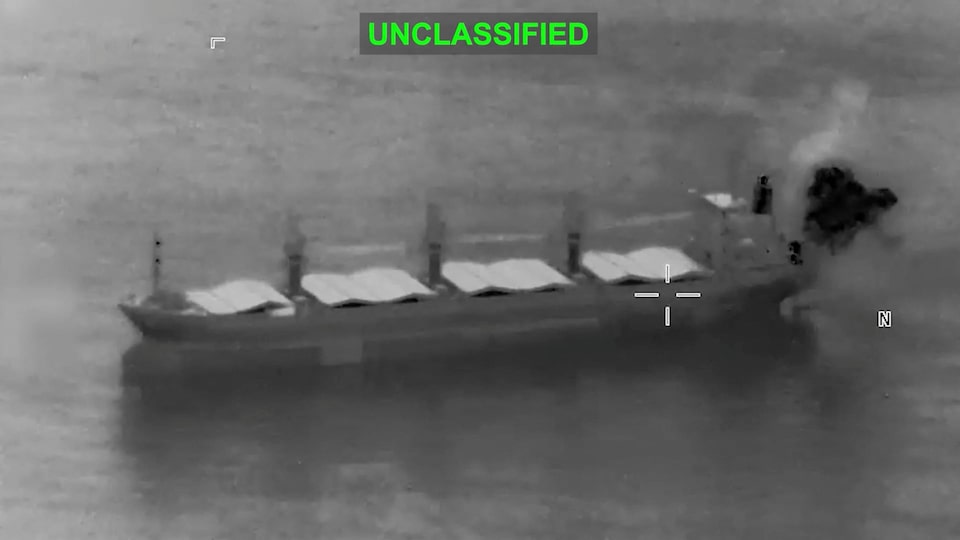
While Iran continued its attacks on commercial vessels transiting the region, US forces disabled a bulk carrier that Washington accused of repeatedly attempting to breach its naval blockade of Iranian ports.
According to US Central Command (CENTCOM), the St Kitts and Nevis-flagged bulker Huda was targeted on 7 November after making several attempts to pass through the blockade. The vessel's crew allegedly ignored repeated warnings issued by US forces.
CENTCOM said a US military aircraft subsequently fired precision munitions at the ship's stern, disabling it. American forces also instructed the crew to abandon the targeted areas of the vessel.
The bulk carrier had reportedly called at an Iranian port and was attempting to leave regional waters when the incident occurred.
According to maritime intelligence provider Pole Star Global, the Huda is owned by Turkey-based Embrace Shipping Management.
US blockade enforcement intensifies
The incident highlights the continued enforcement of Washington's restrictions on maritime traffic connected to Iranian ports.
CENTCOM said that since the US reimposed its blockade in July, American forces have redirected 147 vessels and disabled five merchant ships that refused to comply with their instructions.
The US military also stated that its forces had previously destroyed 10 oil tankers identified as part of Iran's so-called shadow fleet.
These operations reflect the increasing risks facing commercial shipping operating in and around Iranian waters, where military activity and restrictions on maritime movements continue to disrupt normal operations.
Two tanker incidents reported in the Strait of Hormuz
Iran's attacks on commercial shipping also continued over the weekend, with the United Kingdom Maritime Trade Operations (UKMTO) reporting two separate incidents involving tankers on 7 November.
The first incident occurred approximately eight nautical miles northwest of Khasab, Oman.
UKMTO received a delayed report indicating that a tanker had caught fire. Military authorities subsequently reported that the vessel's crew had abandoned ship. At the time of the alert, no additional information was available regarding the condition of the vessel or the whereabouts and status of its crew.
The UKMTO warning notice placed the incident at 19:20 UTC on 7 November.
A second attack was reported approximately one hour later, at 20:20 UTC, within the Strait of Hormuz.
In this case, a tanker travelling outbound through the strait was struck by an unidentified projectile. UKMTO confirmed that all crew members were safe and accounted for following the incident.
With these latest reports, the number of vessels confirmed to have been attacked by Iran in the Strait of Hormuz and the surrounding Gulf region since the beginning of November has reached nine.
Filipino seafarer killed in earlier tanker attack
The latest incidents follow another deadly attack on 5 November involving the Marshall Islands-flagged tanker Velos Sapphire in the Arabian Gulf.
The Philippines' Department of Migrant Workers (DMW) confirmed that one Filipino seafarer died following an explosion on board the vessel. The blast was potentially caused by a drone, although its exact origin was not definitively established.
The department added that the 21 other Filipino crew members aboard the tanker were reported unharmed.
Migrant Workers Secretary Hans Leo J. Cacdac expressed his condolences and assured the victim's family of government support during the difficult period.
"We will provide all the support and guidance the bereaved family needs during this difficult time. As the President has consistently reminded us, we must always take care of the families of our Filipino seafarers," Cacdac said.
The succession of attacks, vessel abandonments and military interventions underscores the deteriorating security environment for merchant shipping in the Gulf. With nine vessels confirmed attacked since the beginning of November, the Strait of Hormuz remains a particularly dangerous area for commercial operators, shipowners and seafarers navigating the region.
END OF REPORT