Business Nov 11, 2026
CarParts.com grows its in-house last mile delivery network to cut costs and speed shipping
The U.S. automotive parts retailer is boosting its in-house delivery operations to deliver 300,000 packages a year, or about 5% of its total outbound volume. The company has greater control over transportation costs, delivery times and the customer experience, which CEO David Meniane believes is a route to significant cost savings.
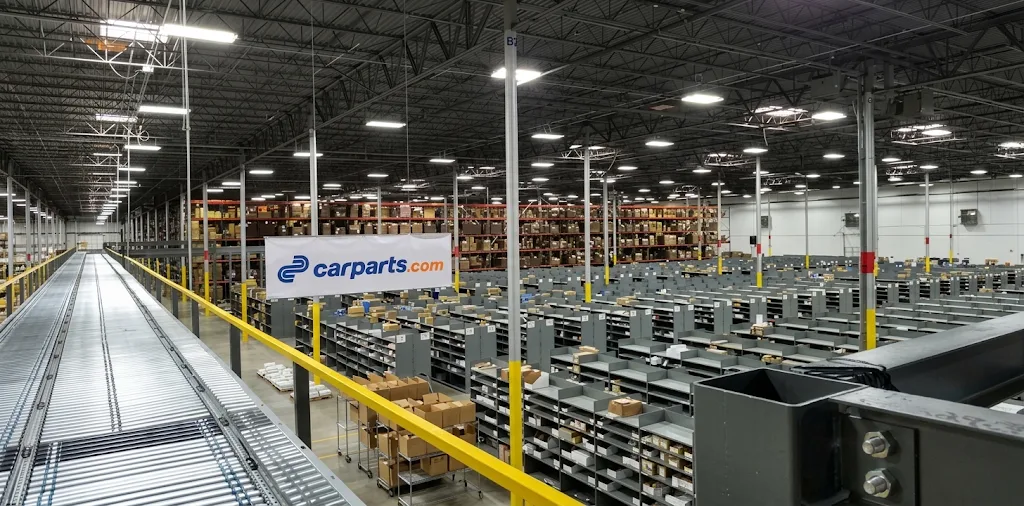
CarParts.com Expands Its Own Delivery Operations
CarParts.com is speeding up the expansion of its own last-mile delivery network to lower its shipping costs and improve delivery performance. The company processed more than 6,000 packages through its internal network in the third quarter that ended October 3, according to its Q3 2026 financial results.
This is about double the number of deliveries in the previous quarter. “The expansion is on schedule,” CEO David Meniane said during the company’s Oct. 29 earnings call.
In the medium term the company plans to process 300,000 parcels per year with its own delivery infrastructure. That would amount to roughly 5% of its total outbound shipments.
The company had already laid out this ambition during its May earnings call when Meniane said the company planned to hit the target within the next 12 to 24 months.
The strategy is mainly focused on large and bulky automotive parts, which tend to incur higher transportation costs when handled by external carriers.
In-house delivery for better cost control
There are significant financial and operational benefits for CarParts.com to own its own last-mile delivery network. “At scale, when we get to our annual deliveries target, the savings could be significant,” Meniane said.
It also gives the retailer more control over the transportation of orders, when they arrive and how customers experience the delivery process.
“Every package that we move through our own network versus a national carrier is an opportunity for us to control the cost of transportation, the delivery schedule and the customer experience overall,” Meniane said during the October earnings call.
The move comes as shipping rates continue to climb, adding more pressure to retailers and their logistics budgets.
The financial benefits are already starting to show. CarParts.com’s gross margin was up about 30 basis points year-over-year in Q3. Interim CFO Mark DiSiena said the improvement was primarily driven by lower freight costs as the company implemented last-mile initiatives and diversified more broadly among carriers.
Bulky shipments provide more savings opportunities
Focusing on big and heavy automotive parts is critical to the economics of the project.
If you use a major third-party carrier, such as FedEx or UPS, to ship oversized products, there may be additional fees. These surcharges can add significantly to the cost of transportation, and put further strain on shippers’ budgets.
CarParts.com hopes to bring more of these deliveries in-house to reduce the cost of serving customers and its exposure to additional carrier fees.
It’s not the only company taking this approach. As part of its efforts to lower customer fulfillment costs, Tractor Supply also is increasing the number of large-item orders it is delivering through its own operations.
Faster delivery across a growing distribution network
Cost reduction is just one part of CarParts.com’s logistics strategy. The company is also working to reduce delivery times by expanding next-day shipping capabilities across its distribution network.
Three of its four distribution centers already have next-day delivery services. These facilities are located in Dallas, Las Vegas, and Jacksonville, Florida.
Meniane confirmed the same capability will be rolled out at the company’s Chicago distribution center in the fourth quarter of 2026.
CarParts.com offers overnight and two-day shipping for most small and medium-sized packages, its website states.
Other orders usually take a few days to reach customers. Larger, bulkier products may take longer due to additional preparation and packaging requirements.
CarParts.com wants to leverage its own last-mile capabilities, as well as faster distribution, to be more efficient in delivery and less reliant on outside carriers. The planned increase to 300,000 deliveries per year is another step toward more control over transportation costs and the customer fulfillment process.
END OF REPORT