Business Nov 11, 2026
Honda to invest $3 billion in Ohio to expand hybrid vehicle production
The new manufacturing facility, scheduled to begin operations in 2029, will have an annual production capacity of 240,000 vehicles and create more than 2,000 jobs. The project forms part of Honda’s broader strategy to strengthen its North American manufacturing network and accelerate the development of hybrid models.
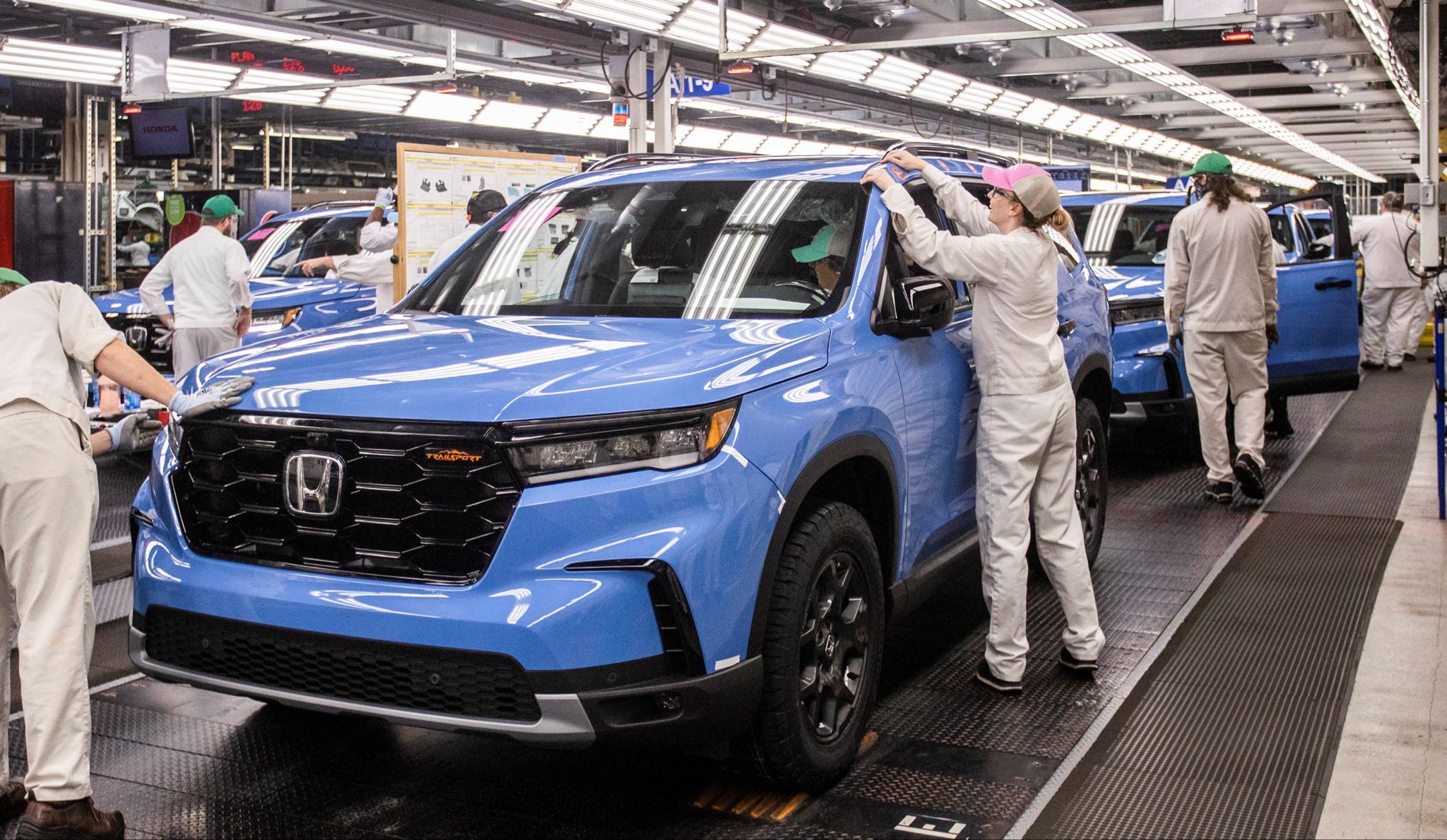
Honda strengthens its manufacturing presence in Ohio with a $3 billion investment
Honda is preparing a major expansion of its manufacturing operations in the United States with a planned investment of $3 billion in a new production facility in Central Ohio. The project, announced on Monday, November 9, 2026, is designed to respond to growing demand for hybrid vehicles across North America while reinforcing the automaker’s existing industrial footprint in the region.
Located between Honda’s established East Liberty and Marysville plants, the new facility will focus on manufacturing hybrid vehicles, engines and hybrid systems. Once operational, it is expected to deliver an annual production capacity of 240,000 vehicles and generate more than 2,000 jobs. Production is scheduled to begin in 2029, subject to final government approvals.
The investment is part of a wider industrial development programme involving Honda facilities in Ohio, Alabama and Georgia. Through these projects, the Japanese automaker aims to establish a more integrated manufacturing network capable of supporting both future hybrid and gasoline-powered vehicles.
According to Honda, the combined investments will increase its annual vehicle production capacity in the United States to approximately 1.3 million units. Across North America, total capacity is expected to reach around 1.9 million vehicles.
Ohio at the centre of Honda’s hybrid production strategy
The expansion will significantly reinforce Honda’s hybrid manufacturing capabilities in Ohio. The company estimates that the new facility, alongside its other planned investments, will increase its hybrid production capacity in the state by 250%.
The choice of Ohio reflects several strategic considerations. Honda highlighted the region’s proximity to its supplier network, research and development operations, existing manufacturing facilities and L-H Battery Company. The latter, initially established as a joint venture with LG, is now expected to supply batteries for both hybrid and electric vehicles.
Honda also intends to equip the new plant with advanced manufacturing technologies. The facility is expected to become one of the most technologically sophisticated in the company’s global network, incorporating extensive automation, data-driven processes and flexible production systems.
These capabilities are intended to improve operational efficiency, product quality and industrial competitiveness while allowing production to adapt more quickly to changing market requirements.
The project also builds on Honda’s long-standing industrial presence in Ohio. The company was the first Japanese automaker to manufacture products in the United States, beginning motorcycle production in Marysville in 1979 before launching automobile manufacturing there in 1982.
Investments extend across Alabama and Canada
Honda’s Ohio project is only one component of a broader effort to strengthen its North American manufacturing infrastructure.
In Alabama, the automaker plans to increase production capacity at its Auto Plant, providing greater flexibility for manufacturing the Passport SUV. The investment will also support the expansion of production for a new V-6 hybrid engine at an adjacent facility.
In Ohio, Honda is additionally retooling its transmission plant to manufacture two hybrid systems intended for compact and midsize vehicles sold across North America. The facility will serve as the lead production site for the larger of these two systems.
The company's industrial expansion also extends into Canada. Honda has announced a capital investment of 166 million Canadian dollars, equivalent to approximately $118 million, in its Canadian manufacturing operations. This forms part of a wider commitment of 867 million Canadian dollars aimed at maintaining its workforce of more than 4,000 employees in the country and reinforcing an integrated North American production network.
Further investments are planned at Honda’s Alliston facility in Ontario. These developments will support the next generation of hybrid and gasoline-powered vehicles, including the planned reintroduction of engine manufacturing at the site.
A faster development model for responding to changing market conditions
Besides increasing production capacity, Honda also is making changes to its organizational structure to better respond to developments in the automotive market.
The company wants to intensify the collaboration between its research and development units and its manufacturing operations. This closer coordination is expected to foster faster industrial development, more flexible production planning and a stronger long-term competitive position in North America for the new Ohio site.
The strategic shift comes at a difficult time for Honda’s electric vehicle business. In February 2026, the automaker reported an operating loss of $1.7 billion over nine months as U.S. electric vehicle policies shift and market growth has been slower than expected.
Honda said at the time that work on automotive and software defined vehicle development would be moved to Honda R&D. The goal was to allow the company to respond to market changes more agilely and quickly.
This repositioning comes after a strategic shift in May 2025, when Honda announced it would cut planned electric vehicle investments by $21 billion and focus on expanding its hybrid portfolio.
Since then the company has announced an ambitious product development program. Last month, it confirmed plans to roll out 15 next generation hybrid models by 2030, mostly in North American markets. Also in development are several next-generation hybrid models for its Acura brand.
Honda, for its part, is aligning its manufacturing capabilities with this evolving product strategy with its new Ohio facility and complementary investments across the United States and Canada. The aim is to develop a more flexible regional production network capable of supporting both hybrid and conventional vehicles and responding to changes in customer demand and the technological environment of the automotive industry.
END OF REPORT