Air Nov 10, 2026
Cathay Cargo Redirects Europe-Bound Freighters Through India Amid Middle East Disruptions
With Dubai no longer part of its network, the Hong Kong carrier is shifting technical stops to Navi Mumbai and Bengaluru while adding an A330 converted freighter and preparing for the arrival of its first A350F aircraft in 2028.
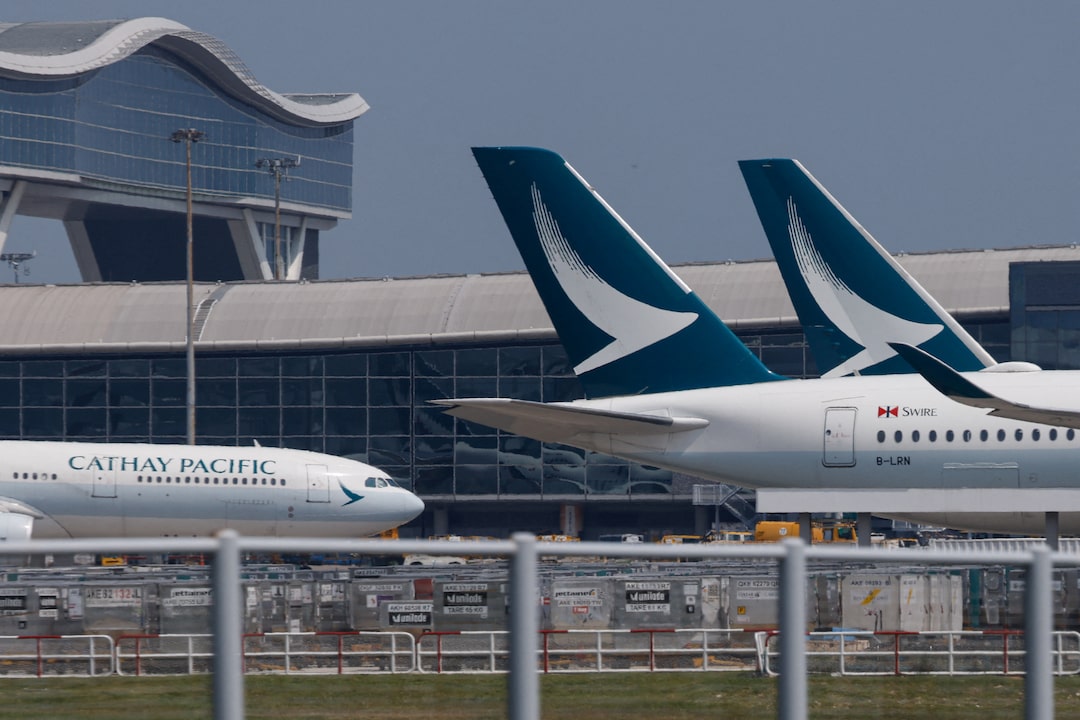
Cathay Cargo is reshaping its European freighter operations this winter, introducing new technical stopovers in India as the ongoing conflict in the Middle East continues to disrupt its established flight routes. The airline will use Navi Mumbai International Airport and Bengaluru for its Europe-bound cargo aircraft, replacing the previous stopover arrangements through Dubai and, more recently, Astana in Kazakhstan.
The operational changes were outlined by Dominic Perret, Director of Cargo at Cathay Cargo, during an exclusive interview with STAT Publishing Group in Miami, on the sidelines of The International Air Cargo Association (TIACA) Air Cargo Forum. The discussion formed part of the latest season of Conversations, presented by AGOS Aviation.
Cathay Cargo has suspended its flights to Dubai and Riyadh since the Middle East conflict began at the end of February. Dubai previously served as a midpoint stop for five of the airline's weekly freighter services to Europe. Operating these flights directly without an intermediate stop would result in an estimated 20% reduction in payload capacity, according to Perret.
During the summer season, the affected aircraft used Astana, Kazakhstan, for technical stops. However, with winter weather conditions expected to become increasingly challenging there, the airline has decided to relocate these operations to India. Perret credited Cathay Cargo's local India operations team with establishing both new routings.
The weekly freighter service previously operating to Riyadh has also been reassigned to other markets, including Southeast Asia.
Alongside these network adjustments, Cathay Cargo is preparing to expand its regional capacity with an additional Airbus A330P2F converted freighter. The aircraft, already in Hong Kong, is being introduced under a long-term lease agreement with Air Transport Services Group (ATSG) and is expected to enter service by mid-November.
The A330P2F will primarily support regional feeder operations connecting the Chinese mainland, Southeast Asia and India.
The lease arrangement was announced in June when Air Hong Kong signed a long term deal with ATSG. The aircraft is owned by ATSG’s leasing arm, Cargo Aircraft Management (CAM). Cathay-owned Air Hong Kong operates only in the cargo sector, with its freighters forming part of the wider Cathay Cargo network. The aircraft is expected to be delivered to the group in the fourth quarter of 2026 and will support the group’s continuing operational expansion.
First Airbus A350F deliveries in second half of 2028
Cathay Cargo is also eyeing a longer-term fleet transformation, with its first A350F freighter from Airbus now expected to arrive in the second half of 2028. In the coming years, there will be additional aircraft deliveries.
The airline had originally ordered six A350Fs, and had 20 further purchase rights. It exercised two of those options earlier this year, bringing its firm order total to eight aircraft and holding 18 additional purchase rights.
“The decision to increase the order from six to eight aircraft was a reflection of the company’s confidence in Hong Kong, the air cargo industry and future prospects of Cathay Cargo,” Perret said.
The first eight planes are primarily meant to increase capacity of the carrier, rather than replace its current fleet right away. The replacement of its six Boeing 747-400ERF freighters will be considered at a later stage. Those aircraft are now between 17 and 18 years old.
Cathay Cargo also operates 14 Boeing 747-8F freighters, which are about 13 years old.
In addition to its dedicated freighter operations, the airline continues to rely heavily on passenger aircraft to carry cargo. About 50% of Cathay's cargo is carried in belly holds of its passenger aircraft.
The group’s passenger fleet is also set to grow considerably, with 96 aircraft now on order. That includes 35 Boeing 777-9 jets, which are due to start arriving next year.
AI, data centre demand to drive cargo growth beyond 2027
Perret said that market developments should keep the strong demand for artificial intelligence equipment and data centre infrastructure an important driver of air cargo volumes through 2027 and perhaps beyond.
This month, Perret is finishing his first year as cargo director after more than 26 years with Cathay. He believes that the current boom is not over yet and cites the continued positive feedback from customers.
The airline’s financial and operational numbers reflect the strength of this demand. Cargo revenues grew some 23.9% in the first half of the year and tonnage leapt 9% between January and September compared with the same period last year. Perret is also expecting a strong finish in the fourth quarter.
A large part of the extra cargo activity has been shipments of server racks, central processing units (CPUs) and graphics processing units (GPUs). These movements have increased, both within Asia, and on routes connecting Asia to North America.
Cathay Cargo’s business is still diversified across a number of segments including e-commerce, pharmaceuticals and perishables. Perret said this balance helps the airline weather fluctuations in demand across different sectors.
Operating expenses are rising, which is a big concern. The biggest challenge for the business this year, he said, was cost, especially stubbornly high jet fuel prices.
AI tools launched to enhance compliance, customer services
Technology is also playing an increasingly important role in Cathay Cargo’s operations, particularly in regulatory compliance and customer experience.
In September, the airline launched an artificial intelligence-powered screening tool using large language models to manage import and export controls. The system is intended to help Cathay Cargo meet its regulatory requirements in the various jurisdictions in which it operates.
“The technology provides much faster feedback and increases the accuracy in detecting shipments that need more checks,” said Perret.
The company has been expanding its digital services for freight forwarders as well. In March, it launched its Manage My Booking platform, which allows customers to make flight changes, adjust shipment weight or cancel reservations without the need for manual support.

Cathay Cargo is now exploring the use of agentic AI to handle customer enquiries around the clock. The objective is to provide customers with greater visibility over their shipments, more control over bookings and increased operational flexibility.
Perret emphasized that improving these three areas remains a central priority in the airline's digital transformation strategy.
The Greater Bay Area: An Import Market on the Rise
Perret also said the opportunities in China’s Greater Bay Area is a particularly promising region for Cathay Cargo to tap into. The region is now becoming an increasingly important export hub with a GDP of over US$2 trillion, and also a key destination for imported goods.
The growing middle class is driving higher consumption and creating more demand for international products.
In this market, Cathay Cargo runs its Air-Land Fresh Lane, a specialised logistics service designed to expedite the distribution of temperature-sensitive goods.
Fast customs clearance procedures allow shipments of cherries from Chile, grapes from Melbourne and salmon from Norway to arrive in Hong Kong in the morning and be delivered to wholesale markets, supermarkets and restaurants across the Greater Bay Area by the same evening.
It also offers three daily flights to Guangzhou and ferry services from Hong Kong International Airport to Dongguan, strengthening its regional distribution network.
Cathay Cargo looks to quality not size of fleet
Looking ahead, Cathay Cargo’s new five-year strategy is to be the best air cargo carrier in the world, not the biggest.
The airline’s goal is to differentiate itself in service quality, operational performance and customer satisfaction rather than simply growing its fleet or market share.
Recent industry honours include being named ATW Cargo Operator of the Year for the fourth time, and Cargo Operator of the Year by AirlineRatings.com.
“Ultimately, the airline’s performance and reputation is defined by customer satisfaction,” said Perret.
He sees particularly strong growth opportunities across South-east Asia for 2027, with Malaysia, Thailand and Vietnam among the priority markets. India, the Chinese mainland and cargo corridors linking Asia with North America are also expected to offer significant potential.
But he cautioned shippers budgeting for next year to keep in mind the uncertainties surrounding fuel. He emphasised the necessity of continuing operations in a sustainable and commercially viable manner, but it is hard to say how long the high fuel prices will last.
Cathay Cargo is reconfiguring its European network, increasing its regional freighter capacity and investing in next-generation aircraft and digital technologies as it positions itself to respond to changing global trade patterns while maintaining its focus on service quality and operational resilience.
END OF REPORT